
One Root Chakra Stone or Several for Meditation
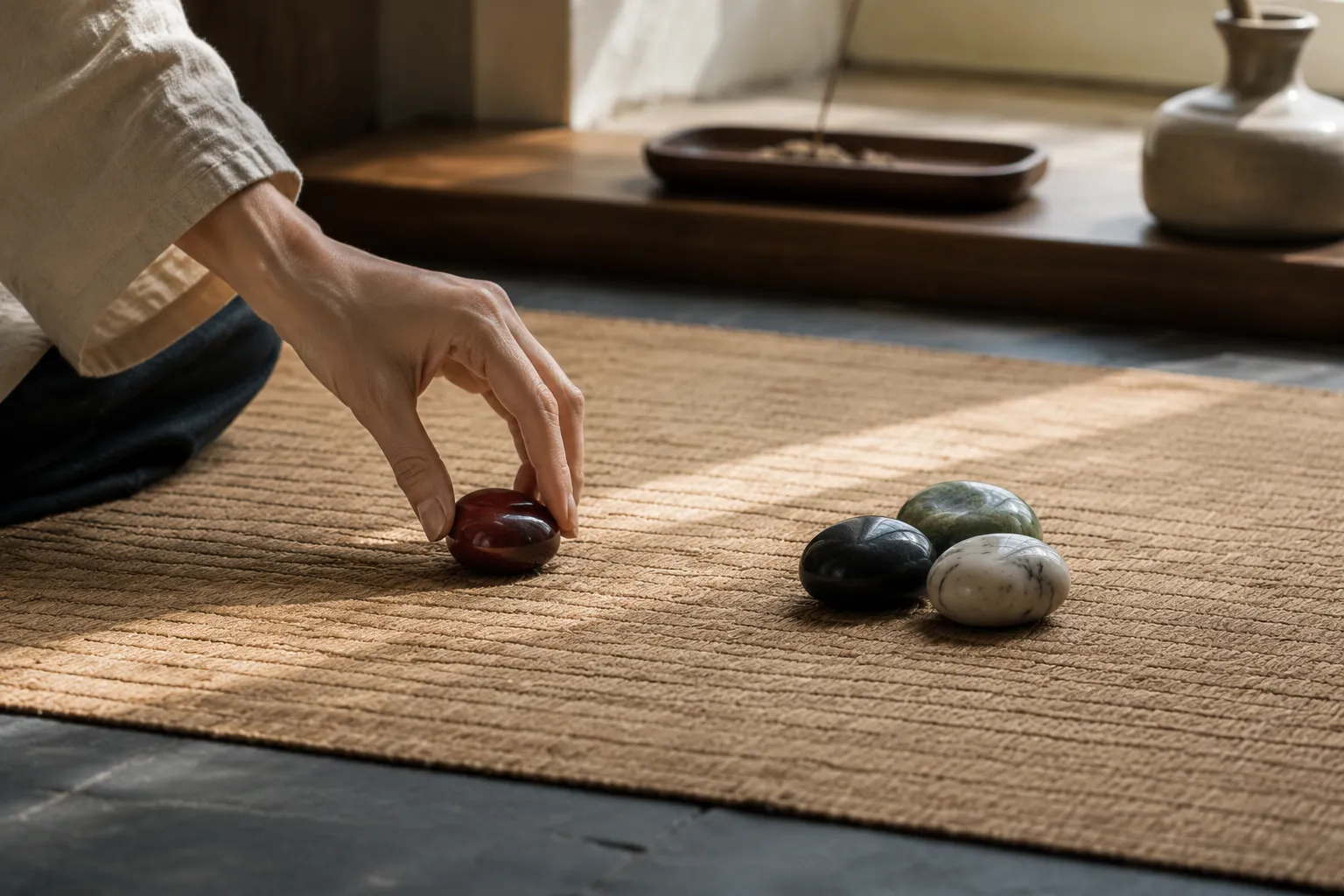
For a personal meditation practice, either one root chakra stone or several may fit. Choose one when you want a clear focal point and fewer decisions. Choose several when arranging stones is already part of your ritual or when different symbolic associations matter to you. There is no universal rule about the number.
In chakra traditions and crystal communities, these meanings are interpretive. They are not established as scientific, diagnostic, or guaranteed effects. The practical question is simpler: Which arrangement helps you stay connected to your meditation method?
upward
Start with the broader guide
Use the broader guide first if you need the full scope before this page.
When one root chakra stone may suit you
A single crystal meditation setup gives you one object to see, hold, or revisit when your attention wanders. That simplicity can be useful if you are new to meditation with stones, have limited space, or do not want the session to become a comparison of colors, names, and meanings.
One stone may fit especially well when:
- You want a short, repeatable ritual.
- You are getting familiar with one particular stone.
- You prefer one visual or tactile point of attention.
- Your meditation space is small.
- Several objects make the setup feel busy.
- You want to notice your own response before adding more symbolism.
A stone may enter a root chakra-themed practice because of its color, texture, shape, or the meaning you associate with it. In some crystal communities, the phrase “root chakra stone” is used for pieces linked symbolically with grounding, stability, or physical presence. Those links belong to a belief-based framework; they do not give the material a confirmed effect on the body or emotions.
The ritual itself can remain modest. Place the stone where you can comfortably see it, take a few quiet minutes, and notice its surface, edges, weight, or marks in the light. Then return to breathing, posture, or another meditation method you already follow. The stone can provide context without becoming responsible for an outcome.
When several stones may fit better
Using multiple crystals in meditation can make sense when the arrangement has personal meaning. You might place two or three stones together, hold one in each hand, or create a small layout beside your seat. The point is symbolic organization, not a confirmed difference in effect.
Several stones may feel natural when:
- You already enjoy arranging objects before a session.
- You want to include more than one color or texture.
- You are exploring different personal associations.
- A small group feels more meaningful than one focal object.
- Your ritual practice includes several placements.
- You can keep the layout stable and uncluttered.
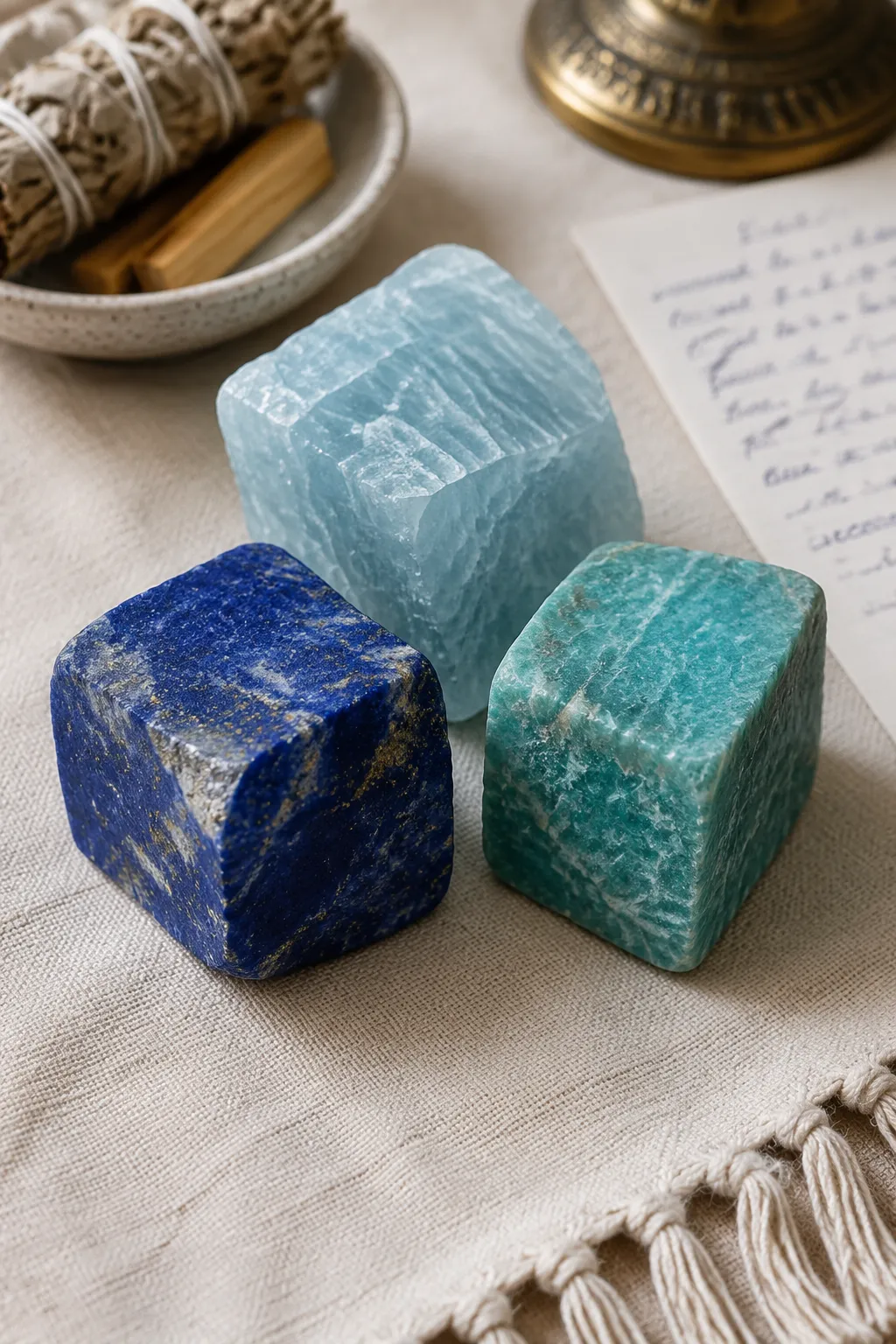
For example, someone might place lapis lazuli, aquamarine, or amazonite together while using a root chakra theme. Their blue or green-blue appearance may differ from the red or earth-toned imagery often associated with the root chakra. That difference does not automatically exclude them. Chakra communities use more than one color vocabulary, and a practitioner may connect a selected blue-green crystal with a grounded ritual question for personal reasons.
Keep two layers separate: what you can observe and what you interpret. You can observe differences in color, shape, surface, or size. You can also interpret those features through a chakra tradition or your own symbolic language. The interpretation remains personal rather than an established property of the stone.
Several pieces can also create more decisions. You may spend the session changing the layout, assigning roles to each stone, or wondering whether one is “working” differently from another. When arrangement becomes the main activity, returning to one stone may make the practice easier to follow.
The choice comes down to attention, space, and meaning
The difference between one stone and several is usually a difference in ritual structure. One piece keeps the setup minimal; several create more visual and symbolic material. Your choice can change from one session to the next.
Your attention
Ask whether you want one object to revisit whenever your attention drifts, or whether moving between several points feels natural. If a group distracts you, reduce it to one. If one piece feels too plain for the ritual you have in mind, add another for a specific reason.
The stone does not need to force concentration. Select an arrangement that leaves room for the meditation method itself.
Your available space
A small surface beside a chair or cushion may favor one piece. A larger, stable area can hold several without crowding your hands, notebook, or other items. Keep the arrangement easy to reach and unlikely to be knocked over.
A complex layout is not required for a meditation practice to feel meaningful. A simple placement may carry just as much personal significance, depending on how you understand the ritual.
Your symbolic intention
Before selecting stones, put the root chakra theme into ordinary language. For you, it might refer to a color association, a feeling of steadiness, a connection to a chakra tradition, or simply a subject for quiet reflection. Naming the theme first keeps the list of stones from deciding the meaning on your behalf.
Lapis lazuli, aquamarine, and amazonite can appear in a blue-green collection even when the meditation theme uses grounding language. Their inclusion might reflect personal symbolism, color contrast, or a practitioner’s chosen system. It is not a universal classification.
A simple way to compare one stone with several
You can try both arrangements as a personal reflection exercise. This does not test a measurable property of the stones or establish that one setup produces a particular result. Keep the conditions reasonably similar and record only what helps you understand your own preference.
For one session, choose a single stone and note:
- What you selected and why.
- Where you placed it.
- Whether the arrangement felt clear or incomplete.
- What helped you return to the meditation method.
- Whether you would use the same setup again.
On another occasion, choose two or three stones and record the same points. A short routine might be:
- Decide on the number of stones before sitting down.
- Place them somewhere stable.
- Name the meditation theme in ordinary language.
- Follow your chosen meditation method.
- Observe the stones only when that supports the practice.
- Record afterward whether the arrangement felt clear, distracting, comfortable, or unnecessary.
A preference that changes from one day to another is not a problem. Available time, space, and the purpose of the session can all affect which arrangement feels appropriate.
Common misunderstanding about a root chakra stone set
A root chakra stone set is not automatically more suitable than a single crystal. The number of pieces does not establish a deeper ritual, a stronger connection, or a particular result. A set may appeal because it offers variety and makes symbolic combinations easier to explore. It may also make the practice less focused when every piece is included without a clear purpose.
A stone’s color does not have to match one narrow visual idea of the root chakra, either. A blue-green stone can have a place in a root chakra-themed meditation when that connection comes from a practitioner’s tradition or an individual interpretation. The color is the observable feature; the chakra meaning is the interpretive layer.
You may also choose a stone simply because you like its surface, weight, or appearance. That is a complete practical reason. A personal ritual does not need an elaborate explanation to be meaningful or repeatable.
Keeping the choice in proportion
The supplied material does not identify research or topic-specific sources establishing whether one stone or several is preferable for meditation. That limitation does not support or disprove crystal practice. It means the answer should remain personal, cultural, and belief-based.
Use a stone as a meditation object, visual reminder, or part of a private ritual if that framing suits you. Keep its symbolic meaning separate from claims about changing health, identifying an energy problem, or guaranteeing a physical or emotional outcome.
The direct answer is straightforward: choose one when simplicity and a single focal point help; choose several when a small, intentional arrangement adds meaning without distracting you. Start with the setup you can explain in one sentence, then adjust it as your practice develops. Keep the stone’s appearance, your interpretation, and the limits of the practice distinct.