
Where to Put Root Chakra Stones During Meditation
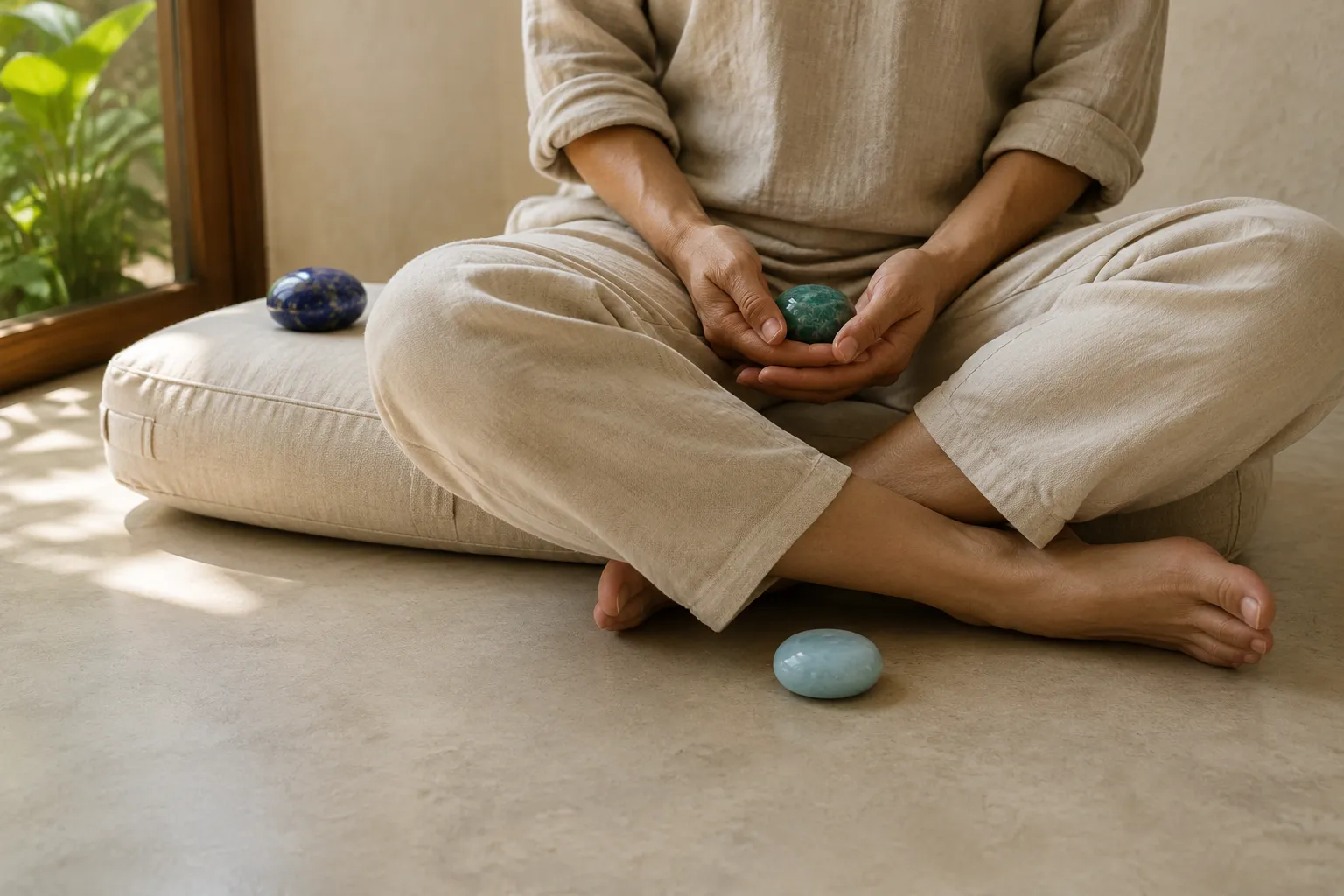
For a simple answer to where to put root chakra stones during meditation, place one stone near the base of the spine, on the floor between your feet, beside your meditation seat, or loosely in one or both hands. These are optional personal ritual placements, not required steps or source-backed instructions.
The most practical root chakra stone position is the one that lets you sit steadily without pressure, fidgeting, or repeated adjustment. In chakra communities, the base of the spine and the area below the body are often used as symbolic reference points for root chakra practice. For a beginner, comfort should decide the final placement more than any strict rule.
upward
Read the full overview first
Use the broader guide first if you need the full scope before this page.
The Four Practical Placement Options
A root chakra meditation stones placement does not need to be elaborate. The stone can touch the body, sit close to the body, or simply stay visible nearby. The difference is mostly about how the object works in your personal ritual: as a tactile anchor, a visual cue, or a quiet symbolic object in the room.
Near the base of the spine
This is the placement many people imagine first. If you meditate lying down, a small, smooth stone may be placed near the lower back or just below the hips, as long as it does not press into the body. If you sit upright, placing a stone directly under the body is usually awkward, so the same idea can be adapted by setting the stone behind the seat or near the back edge of a cushion.
On the floor between the feet
This works well for seated meditation in a chair. It keeps the stone in the lower part of your physical space, which fits the root chakra theme without forcing contact with the body. This is also useful if the stone is larger, uneven, or distracting to hold.
Beside the meditation seat
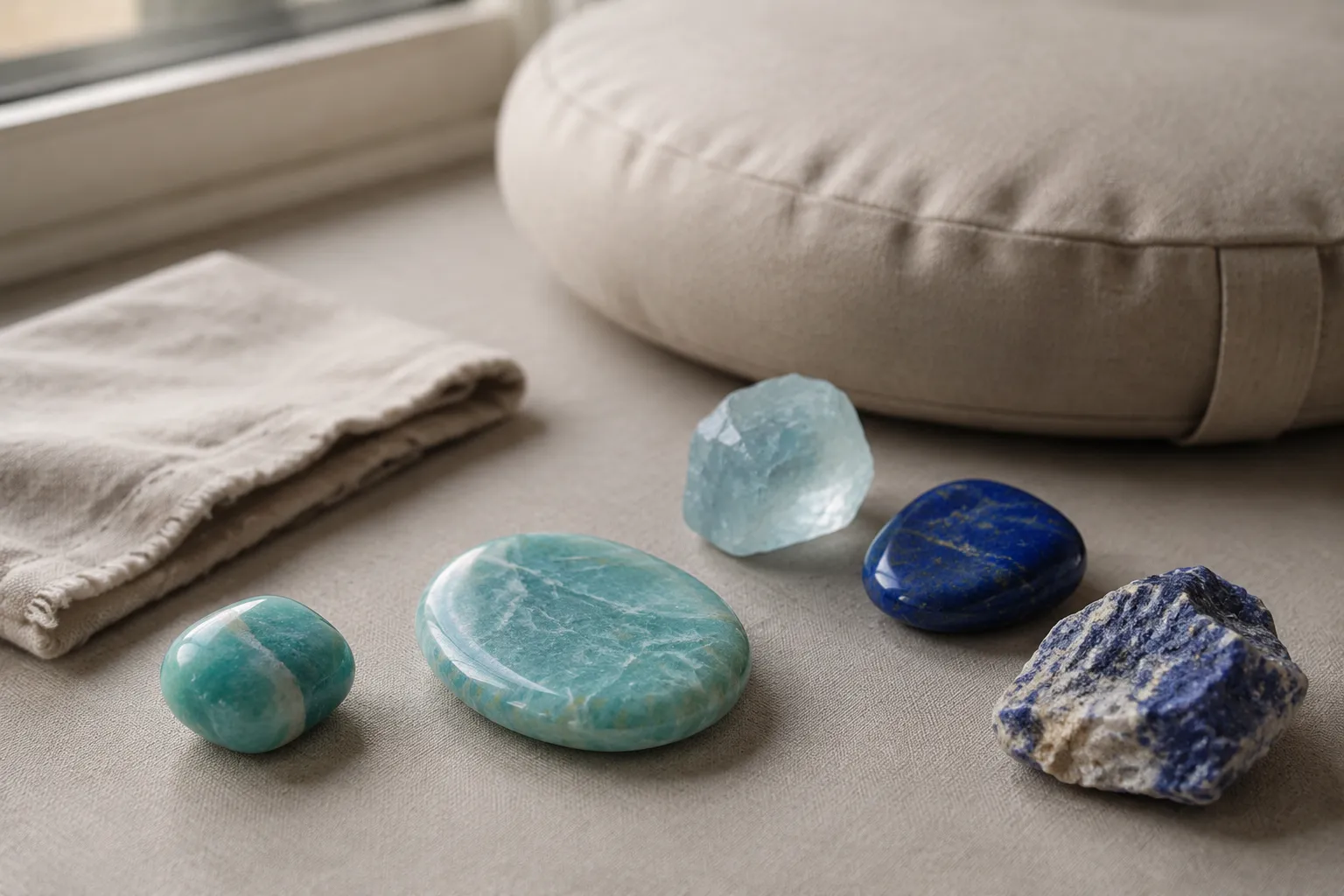
This is the most flexible option. A piece of lapis lazuli, aquamarine, amazonite, jasper, hematite, or another stone used in a root chakra frame can sit on a small cloth, tray, shelf, or floor space near you. The stone becomes part of the setting rather than something you have to manage during the session.
In the hands
This is a good choice when touch helps you stay with the practice. A tumbled stone is usually easier to hold than a sharp point, rough cluster, or fragile-looking specimen. Holding a stone also lets you notice weight, temperature, smoothness, and surface texture; those are observable qualities, separate from any chakra meaning assigned to the piece.
How to Choose a Root Chakra Stone Position
Beginner root chakra stone placement should start with posture. If you sit cross-legged, a stone on the floor in front of the pelvis or beside one knee may be easier than trying to place it behind you. If you sit in a chair, the floor between the feet or a nearby side table may feel more stable. If you lie down, a small stone near the lower body may work, but only if it stays put and does not create discomfort.
The size and shape of the stone matter. A small tumbled piece can be held, placed on a cloth, or set beside the body with little fuss. A larger palm stone may be better beside the seat. A pointed, carved, rough, or heavy piece is usually more practical as a nearby object than as something placed on the body.
Stone appearance can also shape the choice. Lapis lazuli blue with gold flecks, pale aquamarine, and green-blue amazonite may not visually match the red, brown, or black tones many readers expect from root chakra language. Still, some personal practices include selected blue-green crystals in a root chakra-themed setting because the person is working with their own symbolism, collection, or intention. That is a matter of interpretation. The color itself does not create a promised result.
If you use more traditional-looking root chakra stones, the same placement logic still applies. Put the stone where it supports attention without taking over the session. The placement should not become a puzzle you keep solving while trying to meditate.
When Touching the Body Is Optional
A common confusion is the idea that root chakra crystal placement must touch the exact chakra area to “count.” For a cautious beginner answer, that is too rigid. In belief-based chakra practice, contact may feel meaningful to some people, but placement can also be symbolic, visual, or environmental.
If a stone near the base of the spine feels awkward, use the floor. If holding it makes your hand tense, put it beside you. If you keep checking whether it is in the correct spot, move it somewhere simple and leave it there for the rest of the session.
The point of personal ritual crystal placement is usually to create a repeatable cue. For one person, that cue may be a smooth stone held in the left hand. For another, it may be an amazonite or lapis lazuli piece resting beside the cushion. For someone using a chair, the cue may be a small stone placed between both feet before meditation begins.
There is no need to stack several stones on the body, arrange a complicated pattern, or use a layout that makes your posture unstable. A single stone in one steady location is enough for this narrow placement question.
A Simple Placement Routine for Beginners
Choose one stone before you sit down. If you are using lapis lazuli, aquamarine, amazonite, or another selected crystal in a root chakra context, look at the piece first as an object: color, shape, polish, edges, and size. This keeps the practice grounded in something observable before you add symbolic meaning.
Sitting on a cushion
Place the stone in front of the pelvis or beside the cushion. It is easy to see or sense without adjusting posture.
Sitting in a chair
Place the stone on the floor between the feet. This keeps it in the lower part of the meditation space.
Lying down
Place the stone near the hips or lower body, if comfortable. This keeps the root chakra theme close without forcing pressure.
Any posture
Hold the stone loosely in the hands. This may be useful when touch is part of the personal ritual.
Once the stone is placed, leave it alone for the session. If you keep moving it, the placement has become the focus. For a short meditation, a stable nearby position is often more useful than a dramatic arrangement that needs attention.
Afterward, notice one practical point: did the placement help you settle into the session, or did it distract you? This is not a test of whether the stone “worked.” It is simply a way to choose a better position next time.
What Can Change the Answer
The right place to put root chakra stones during meditation changes with the stone, the posture, and the room.
A polished palm stone can sit comfortably in the hand. A rough specimen may be better on a shelf or cloth. A small stone can be placed near the feet without getting in the way. A heavy piece should stay somewhere stable. If a stone can roll, chip, snag fabric, or distract you, keep it off the body.
The surface matters too. A stone on a hardwood floor may slide. A stone on a thick blanket may disappear from view. A low tray, cloth, or small bowl can make the placement feel intentional without turning the session into a display arrangement.
The answer also changes if you use multiple stones. For a narrow root chakra meditation stone placement, one stone is clearer. If you use two or three, place them symmetrically beside the seat or choose one main stone and keep the others nearby. A crowded layout can make the practice feel busy, especially for beginners.
Common Misunderstandings About Crystal Placement During Meditation
One misunderstanding is that the lowest placement is always the strongest placement. That is a belief claim, not something this page can present as fact. A stone between the feet, beside the cushion, or in the hand can all fit a personal root chakra frame if the placement makes sense to the person using it.
Another misunderstanding is that blue-green stones cannot appear in root chakra-themed practice. Many readers associate lapis lazuli, aquamarine, and amazonite with other color systems or meanings, and that is understandable. Still, a personal ritual may include a blue-green stone because the person connects with its look, name, collection history, or symbolic association. This placement answer does not depend on proving that one color belongs in one exact role.
A third misunderstanding is that placement creates a dependable outcome. Root chakra stones during meditation can be used as personal objects in a symbolic routine, but the stone’s position should not be treated as health guidance or as a replacement for appropriate support when that is needed.
A Small Checklist Before You Begin
Use this quick check before settling on a root chakra stone position:
- The stone is stable and will not roll into your posture.
- The surface is smooth enough for holding or body-adjacent placement.
- The position does not create pressure, strain, or repeated adjustment.
- The placement fits your meditation posture rather than forcing one.
- The meaning stays inside a personal or tradition-influenced ritual frame.
If those points are met, the exact location can stay simple. Near the base of the spine, between the feet, beside the seat, or in the hands are all workable answers for a beginner meditation stone placement question.
The Short Version
Put root chakra stones where they can be part of the meditation without becoming a distraction: near the base of the spine if lying down, on the floor between the feet if seated in a chair, beside the cushion if sitting upright, or in the hands if touch helps you focus.
The placement is optional and interpretive. Choose the position that supports a steady personal ritual, and keep the stone’s meaning within belief-based chakra practice rather than treating the location as a promised result-making method.