
Posture choice
Seated vs Lying Down Root Chakra Stone Meditation
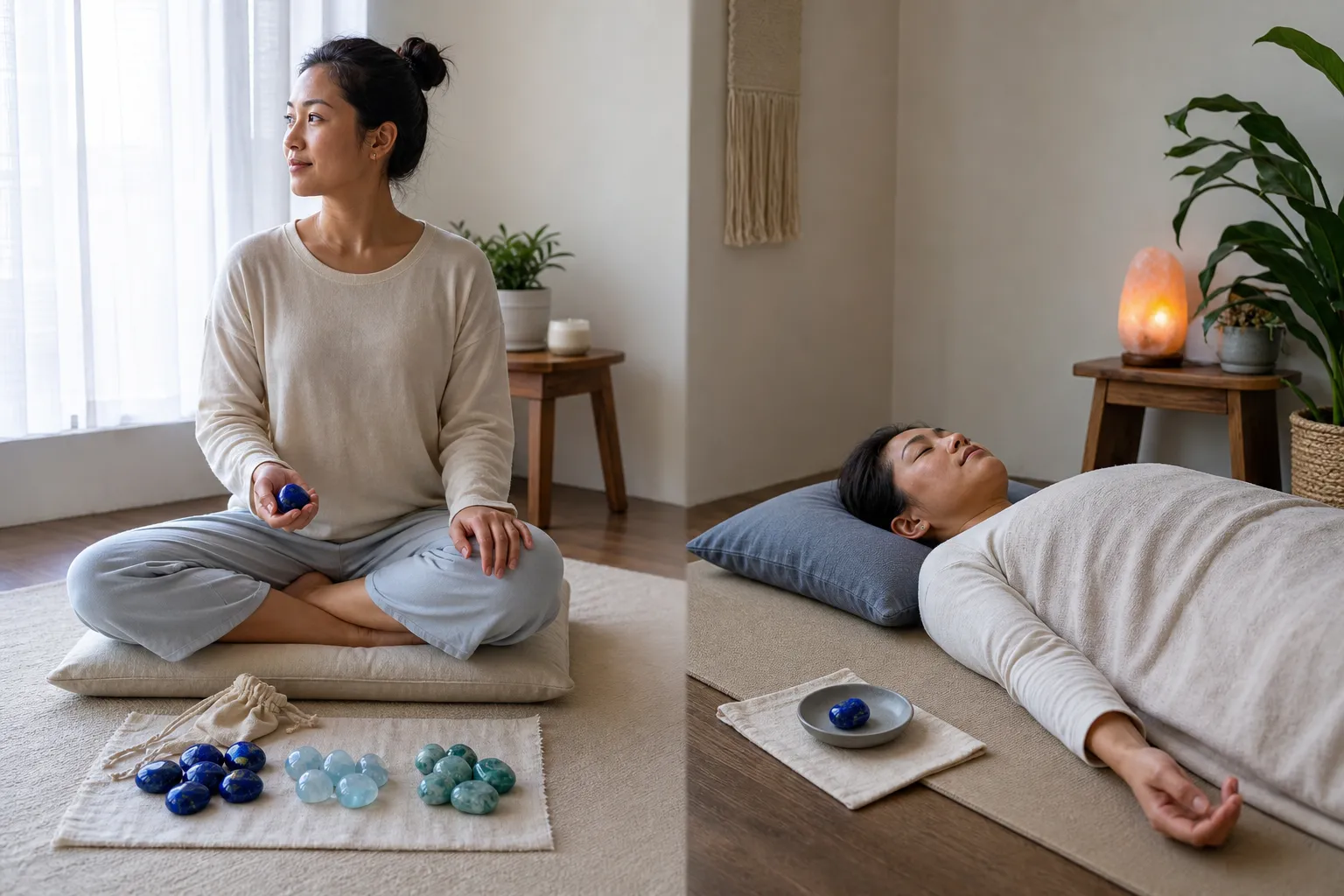
If you are choosing between seated and lying down root chakra stone meditation, start with the posture that makes the stone easiest to use without distraction. Seated practice usually works better when you want to stay alert, hold a root chakra stone, or keep the piece visible on a cloth, tray, or low table. Lying down practice usually works better when you want a quieter setup, less effort in the back and shoulders, or a stable place to rest the stone nearby.
Neither posture is the correct one for everyone. In chakra communities, root chakra stone meditation is usually framed as personal and symbolic. The posture choice is best treated as a matter of comfort, attention, and stone placement, not as a stronger spiritual method.
upward
Start with the broader guide
Use the broader guide first if you need the full scope before this page.
Quick Answer: Choose Seated for Alertness, Lying Down for Rest
Choose seated root chakra meditation if you want:
- An alert seated meditation for a short morning or midday ritual.
- Easy hand placement without worrying that the stone will roll away.
- A visible focal point on a cloth, tray, shelf, or low table.
- A posture that feels deliberate without becoming stiff.
- A setup you can repeat in a chair, on a cushion, or beside a small stone display.
Choose lying down root chakra meditation if you want:
- A more restful setup when sitting upright feels distracting.
- Less effort in the spine, shoulders, or hands.
- A stable place for placing a chakra stone nearby instead of gripping it.
- A slower ritual where the stone is part of the setting.
- A posture that lets comfort come before symbolism.
A seated crystal meditation gives the body a clear upright shape. That can help a beginner keep the session brief, intentional, and easy to end. It also makes hand placement simple: a piece of lapis lazuli, aquamarine, amazonite, or another stone chosen for a root chakra-themed ritual can rest in one palm, between both hands, or on the floor in front of the body.
A lying down crystal meditation changes the feel of the ritual. The body has more contact with the floor, mat, bed, or blanket, and the stone does not have to be held. For some beginners, that makes the practice feel quieter and less fussy. For others, it makes it easier to drift off or lose the thread of the ritual.
The best root chakra meditation posture is the one that lets you stay with the ritual without turning the stone into a problem to manage.
How Stone Placement Changes the Decision
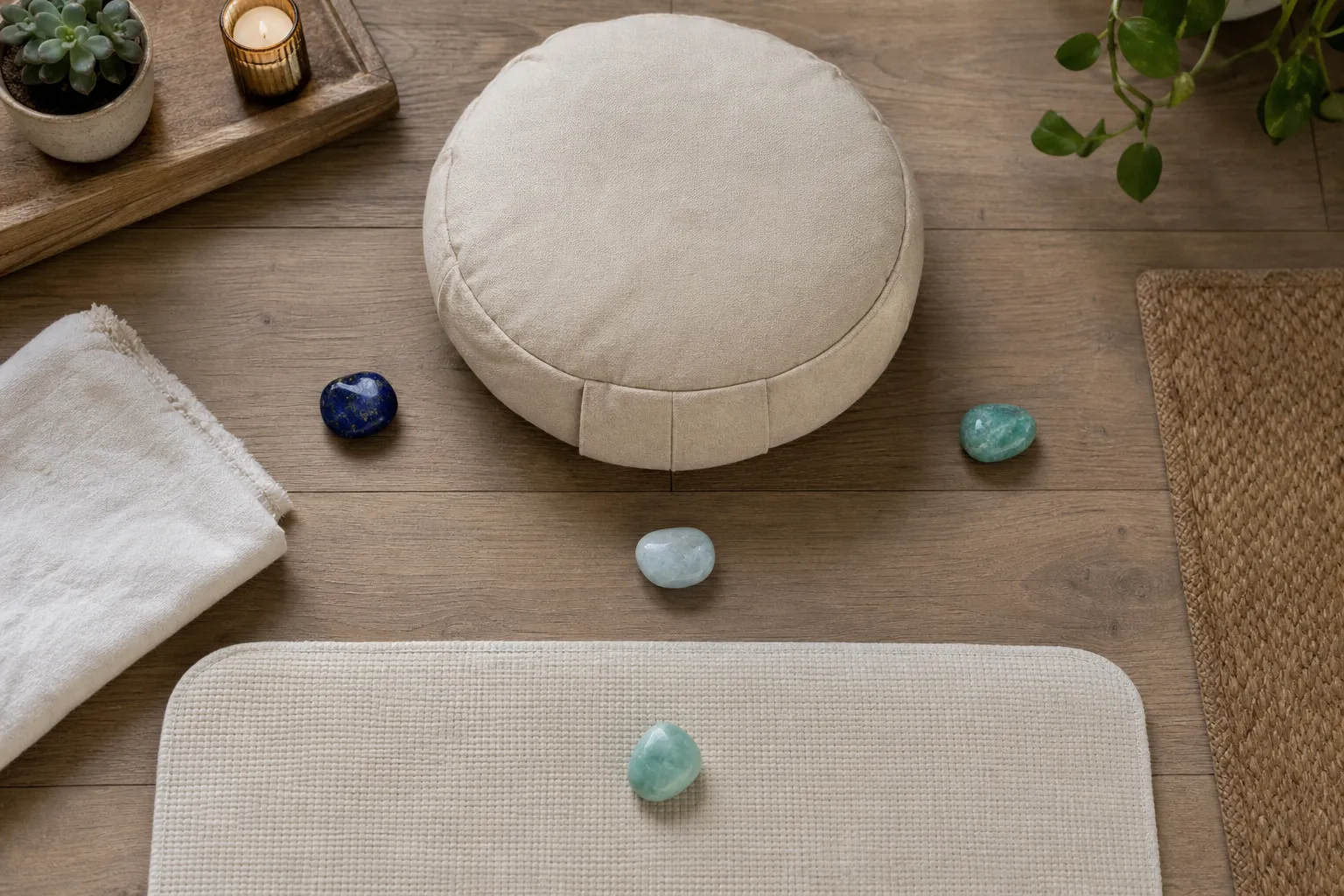
Stone placement is often the detail that decides seated vs lying down meditation. In a seated crystal meditation, the most beginner-friendly option is usually to hold the stone or place it in front of you. This keeps the piece easy to see and easy to move. A smooth tumbled stone may sit well in the palm; a pointed, sharp-edged, heavy, or delicate piece may be better on a cloth or small dish.
Lapis lazuli is often recognized by deep blue color and, in some pieces, small gold-toned flecks. Aquamarine is commonly described around pale blue to blue-green tones. Amazonite is often green-blue, sometimes with lighter streaking or a soft mottled look. Those visible qualities can make a stone feel meaningful in a personal ritual, but appearance and chakra meaning are not the same thing. Color, surface, weight, and shape are observable. The chakra meaning is interpretive.
In a lying down setup, avoid turning the body into a display shelf. A stone can sit beside the hip, near the feet, on a nearby tray, or on a folded cloth within reach. If you place a stone on the body, it should not press, wobble, slide, or distract you. A small tumbled stone is usually easier to manage than a tall point, rough cluster, or heavy palm stone.
For beginner chakra stone meditation, “nearby” is enough. The stone does not need to touch one exact point for the ritual to feel personal. Many crystal practitioners use placement as a symbolic cue; the practical choice can stay simple: hold it, set it down, or keep it within sight.
What Can Change Your Answer
The posture that sounds right in theory may not be the one that works in the room. A few ordinary details can change the better choice.
If you tend to get sleepy when reclining, seated practice may keep the ritual clearer. That does not make seated meditation more spiritually effective; it simply means the posture may support attention for you. A chair can work as well as a floor cushion. The point is not to imitate a perfect pose, but to choose a position you can keep without constant adjustment.
If sitting upright makes you fidget, lying down may be the better starting point. Use a mat, blanket, or firm surface, then place the stone where it will not roll. The more stable the stone is, the less you have to think about it. If the piece keeps sliding, move it to a tray or beside the body.
If you want to hold the stone, seated practice is usually easier. Holding a root chakra stone can make the ritual feel more tactile: cool surface, rounded edge, weight in the palm. If the stone is too large, fragile, rough, or awkward, holding it may become the main distraction. In that case, placing a chakra stone nearby may work better.
If your ritual includes journaling, lighting a candle, reading a short note, or arranging several stones, seated practice is usually more practical. You can see the objects and reach them without breaking the setup. If your ritual is only a few quiet minutes with one stone, lying down can be just as coherent.
If you are using selected blue-green crystals in a root chakra frame, such as aquamarine or amazonite, keep the symbolism clear in your own mind. Some readers choose these stones because they like the color, surface, retail description, or contrast between blue-green stones and root chakra language. That is a personal interpretation, not a rule that overrides comfort.
Common Confusion About Root Chakra Stone Posture
Stillness is not automatically stronger
One common confusion is the idea that lying down must be “deeper” because the body is still. Stillness can make a ritual feel quieter, but that is not the same as a stronger result. For a personal meditation posture preference, stillness is only one factor. Alertness, comfort, and ease of stone placement matter too.
Discipline is not the same as stiffness
Another confusion is that seated posture must be more disciplined. It can feel focused, especially when the stone is held in the hand or placed directly in view. But if the posture becomes stiff, performative, or uncomfortable, it may pull attention away from the ritual. A relaxed chair posture can be more useful than forcing a floor position that does not suit you.
One exact placement is not required
A third confusion is that the stone has to be placed on the lower body to “count” as root chakra stone meditation. In belief-based chakra meditation, some people prefer placement near the lower body because the root chakra is commonly discussed in that symbolic region. For a beginner, though, a stone beside the body, in the hand, or on a nearby surface can still serve as the ritual object. The meaning comes from how the practice is framed, not from a single required placement.
Shape matters more than the stone name
There is also a misconception that one posture is more correct for lapis lazuli, aquamarine, or amazonite. The stone’s shape matters more than the name here. A small smooth amazonite piece may be easy to hold while seated. A larger aquamarine display piece may be better kept nearby. A lapis lazuli cabochon, bead strand, or palm stone will each behave differently in the hand or on a blanket.
A Simple Way to Try Both
Try two short sessions on different days, using the same stone and the same basic wording. This keeps the comparison practical.
For a seated version, sit in a chair or on a cushion. Place both feet or legs in a position you can maintain. Hold the stone in one hand, between both hands, or set it in front of you. Let the stone be a visual or tactile cue. If your mind wanders, return to the object, its color, its surface, and the intention you chose for the ritual.
For a lying down version, use a surface where the stone will not slide into an awkward position. Place it beside the lower body, near the feet, or on a small cloth within reach. If you choose to rest it on the body, check whether it stays still and feels unobtrusive. If it keeps drawing attention for the wrong reason, move it beside you.
After each version, ask only practical questions:
- Did the posture help me stay with the ritual?
- Was the stone easy to hold, see, or place?
- Did I spend more time adjusting my body than noticing the stone?
- Did the setup feel calm without becoming complicated?
- Would I repeat this posture next time?
This is enough verification for a personal ritual choice. You do not need a special sign that one posture is superior.
The Useful Limit
The available material for this specific topic does not support claims that seated posture, lying-down posture, or any root chakra stone creates guaranteed physical, emotional, or energetic outcomes. That limit matters because posture advice can easily drift into stronger promises than the subject can carry.
What can be said plainly is practical: seated practice may be better for alertness, visibility, and holding a stone; lying down practice may be better for comfort, stillness, and placing a stone nearby. Chakra and crystal meanings belong in the language of tradition, practitioner interpretation, and personal ritual. They should not be presented as measured effects.
That boundary does not make the ritual meaningless. It simply keeps the meaning where it belongs: in the reader’s chosen symbolism, the visible qualities of the stone, and the way the object is handled, displayed, or returned to storage afterward.
Bottom Line
For most beginners, seated root chakra meditation is the better first choice when you want alertness and easy hand placement. Lying down root chakra meditation is the better first choice when comfort and stillness matter more. If neither is clearly better, try both with the same stone and keep the one that feels easier to repeat.
Let the stone remain a personal ritual object: visible, comfortable to handle, and interpreted within belief-based chakra practice rather than presented as a promised outcome.