
Beginner Guide
Everyday Uses for Root Chakra Stones
Everyday uses for root chakra stones are easiest to understand as small personal practices: holding a stone during quiet reflection, carrying one as a reminder, placing one where you will see it, pairing it with journaling, or including it in a short chakra ritual. The stone itself is a visible object you can choose, touch, arrange, store, and care for. The root chakra meaning belongs to belief-framed crystal practice, where many practitioners use stones as symbols of steadiness, place, routine, and personal intention.
This page keeps those layers separate. It offers a beginner map for using root chakra stones in ordinary settings without presenting stones as sources of health results, personal safety, or measurable energetic change. If a situation calls for professional health, mental health, legal, financial, or safety support, a stone routine should not stand in for that support.
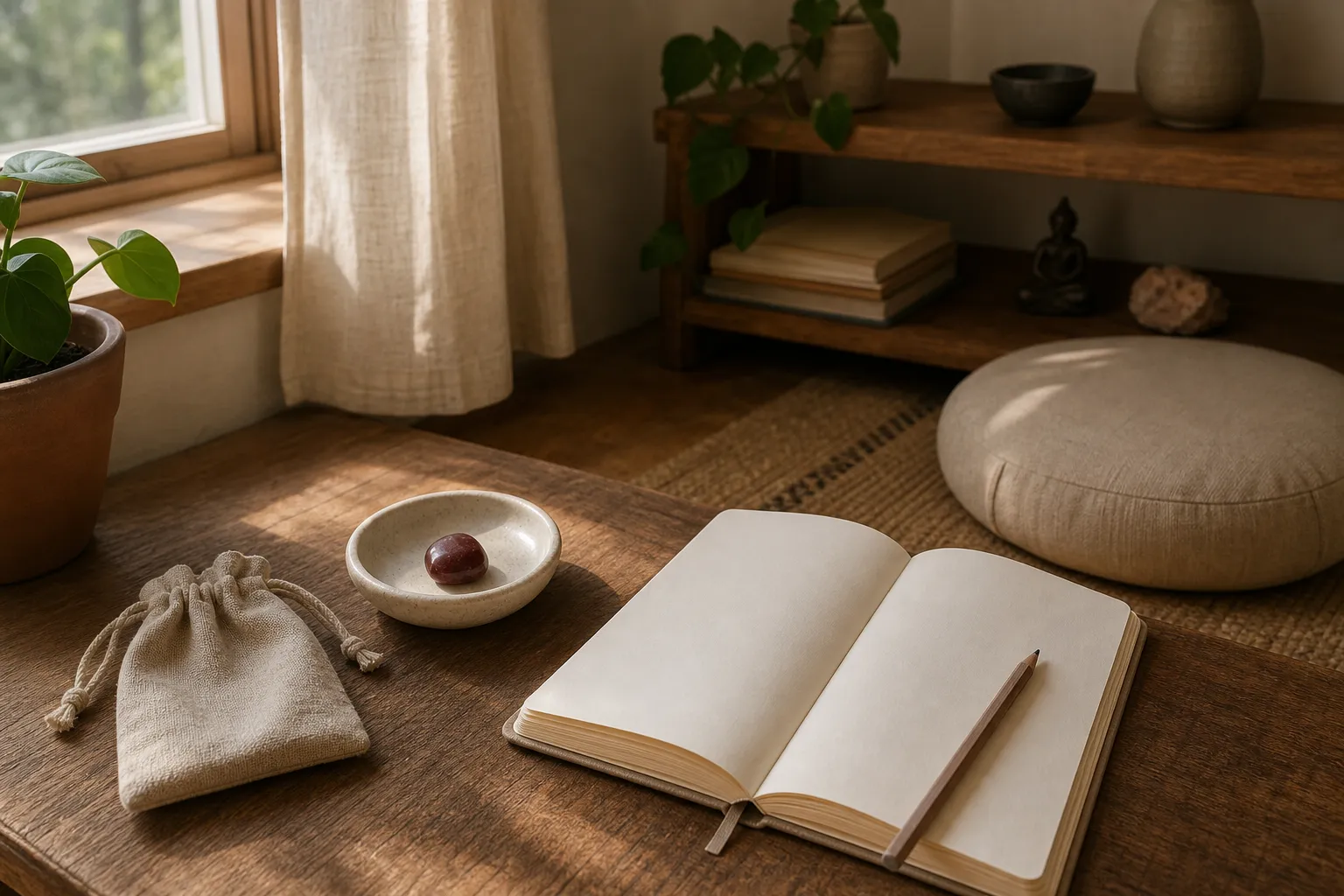
A Beginner Framework for Root Chakra Stone Practice
Root chakra stone practice often starts with a practical question: “What do I actually do with the stone?” The answer can be simple. Begin with one stone, one setting, and one purpose you can repeat.
| Everyday Setting | What You Actually Do | What the Meaning Layer Adds |
|---|---|---|
| Meditation | Hold a stone or place it nearby while sitting quietly | A focus point for root chakra-themed reflection |
| Daily carry | Keep a small stone in a pocket, pouch, bag pocket, or jewelry piece | A reminder of an intention chosen by the user |
| Home placement | Set stones on a shelf, desk, entry table, bedside table, or practice corner | A visible cue tied to place, routine, or atmosphere |
| Journaling | Place the stone near a notebook before writing | A ritual marker for reflection |
| Short chakra ritual | Begin, focus, and close a brief practice with the stone present | A belief-based structure for personal meaning |
That distinction is the heart of the topic. A stone can be handled, displayed, carried, and used as a visual reminder. Any chakra meaning attached to it should be described as symbolic, traditional, practitioner-associated, or personal rather than as a factual result.
For beginners, this is useful rather than limiting. You do not need to accept every claim made in crystal marketing to use a stone in a calm, thoughtful way. You can choose a piece because you like its color, weight, finish, shape, or association, then decide how much meaning you want the routine to carry.
A helpful beginner sentence is: “I am using this stone as a reminder of the intention I chose.” It keeps the practice clear, modest, and honest.
Observable Use and Belief-Framed Meaning
Observable use is the part anyone can describe directly. A stone may be smooth, rough, polished, tumbled, carved, set in jewelry, stored in a pouch, placed on a shelf, or held in the hand. It may be sold under a common name such as red jasper, black tourmaline, smoky quartz, hematite, garnet, obsidian, lapis lazuli, aquamarine, or amazonite.
Those names can be useful in shops and personal notes, but they are not always enough to settle identity, quality, treatment, or durability. If exact material identity matters, look for reliable mineral information or a seller who can explain the item plainly without leaning on outcome promises.
Belief-framed meaning is different. In chakra traditions and crystal communities, root chakra stones are often associated with steadiness, stability, presence, the lower body, the earth, or a sense of being placed in daily life. On this page, those ideas are treated as meanings people may use in personal practice, not as measured effects.
This separation lets the article stay practical. You can say, “This stone represents steadiness to me,” while still recognizing that the visible object and the symbolic meaning are different kinds of information.
Choosing Everyday Uses by Setting
A root page should not turn every use case into a full separate guide. The main task here is to help you choose the right path. The setting matters because a stone used in meditation has different practical needs than a stone carried in a bag or placed on a windowsill.
| Setting | Best First Step | Practical Question to Ask |
|---|---|---|
| Quiet practice | Choose one stone and one short focus | Will holding the stone help, or would nearby placement be easier? |
| Daily carry | Pick a small, smooth, protected piece | Can it be carried without scratching, snagging, or getting lost? |
| Home placement | Put the stone in a visible, stable spot | Will I actually notice it there? |
| Journaling | Place the stone beside the notebook | What am I observing, and what am I assigning meaning to? |
| Beginner ritual | Use a repeatable start, focus, and ending | Is the sequence simple enough to keep? |
Everyday use matters because it keeps the practice realistic. Instead of waiting for a long ceremony, a perfect altar, or a large collection, a beginner can start with common situations:
- Sitting quietly for five minutes with a stone nearby.
- Keeping a pocket stone in a pouch so it does not scratch other items.
- Placing a stone where it can be seen without being in the way.
- Writing a short intention in a journal before beginning the day.
- Returning the stone to the same storage place after use.
Small actions are easier to repeat than elaborate rituals. They also reduce the temptation to overstate what the stone is doing. The routine belongs to the person using it; the object helps mark the moment.
Root Chakra Stones in Meditation
Beginners looking for root chakra stones in meditation usually need a basic sequence, not a complicated system. A simple approach is enough for most personal practice.
Start by choosing one stone. It may be a stone commonly presented in root chakra practice, or it may be a piece you personally connect with the intention of the session. Place it in your hand, on a cloth, near your feet, or somewhere in view. The exact placement matters less than comfort, consistency, and clarity.
Short phrase or focus question
- “What does steadiness mean in my day?”
- “What routine do I want to return to?”
- “What part of my space helps me feel present?”
- “What am I choosing to notice right now?”
Sit for a short period. If your attention wanders, let the stone be a visual or tactile cue to return to the chosen focus. When you finish, close plainly: place the stone back, write one note if you keep a journal, and move on with your day.
| Placement | Practical Use | Good For |
|---|---|---|
| In the hand | Tactile focus while sitting | Readers who like touch-based reminders |
| Nearby on a cloth | Visible object without needing to hold it | Readers who want fewer distractions |
| In a small display | Part of a repeat practice area | Readers building a meditation corner |
If holding a stone distracts you, place it nearby. If a display becomes cluttered, use only one or two pieces. A clear beginning and ending often matter more than adding more stones.
Carrying Root Chakra Stones During the Day
Carrying root chakra stones is mainly a question of size, surface, and purpose. A stone that looks beautiful on a shelf may be awkward in a pocket. A rough piece may catch on fabric. A small polished piece may be easier to keep in a pouch.
| Carry Method | Practical Strength | Watch For |
|---|---|---|
| Pocket stone | Simple, private, easy to notice by touch | Scratches from keys or coins |
| Small pouch | Keeps the stone separate | Easy to misplace without a return spot |
| Jewelry | Visible reminder, easy to wear | Comfort, settings, and daily wear |
| Bag pocket | Less contact with clothing or skin | Easy to forget unless placed intentionally |
| Desk-to-pocket routine | Links home, work, or study habits | Needs a consistent return place |
A carried stone is not a substitute for action. Its most realistic everyday role is as a cue. You touch it, see it, or remember it, then return to the intention you chose.
For daily carry, choose a stone that fits the setting. A pocket stone should be small enough to carry comfortably and smooth enough that it will not snag. A jewelry stone should be comfortable and secure for the day’s activities. A pouch stone can be slightly less polished, but it still needs protection from hard objects.
If the stone has sentimental value, is expensive, or is difficult to identify, home display may be better than daily carry. Everyday use should not put a meaningful object at unnecessary risk.
Where to Place Root Chakra Stones at Home
Readers asking where to place root chakra stones usually want both meaning and practicality. The practical layer comes first: choose a stable, visible, low-clutter place where the stone will not be knocked over, damaged, forgotten, or confused with unrelated objects.
| Home Area | Everyday Role | Practical Note |
|---|---|---|
| Entry table | A reminder when arriving or leaving | Use a tray so stones do not roll |
| Desk | A work or study cue | Keep it out of spill zones |
| Bedside table | A quiet end-of-day object | Avoid clutter that makes it invisible |
| Meditation corner | A dedicated practice marker | Keep the setup simple enough to maintain |
| Shelf or display bowl | Decorative and symbolic presence | Separate delicate pieces if needed |
The symbolic layer depends on the user’s practice. Some people associate root chakra placement with floor-level spaces, entryways, heavier objects, or areas that feel tied to routine and home. This page does not present any placement as required. Treat placement as a personal choice within a belief-framed crystal practice.
A home setup works better when it is easy to reset. One tray, one cloth, or one small bowl can do more than a crowded display. If you use several stones, group them by purpose:
- One stone for meditation.
- One stone for journaling.
- One stone for daily carry.
- One display stone that stays in place.
This structure helps you avoid buying or arranging stones without knowing how you will use them. Decoration is fine, but it should be named honestly if the piece is mainly decorative.
Journaling, Reflection, and Short Rituals
Pairing stones with journaling is one of the lowest-pressure ways to explore root chakra stone practice. The stone can sit beside the notebook while you choose a word for the day, write a short prompt, or reflect on how a routine is working.
Useful prompts
- “What do I want this stone to remind me of today?”
- “Where do I feel most steady in my current routine?”
- “What ordinary habit would make my space feel more settled?”
- “Which stone did I choose, and what visible quality drew me to it?”
- “Am I using this object as a reminder, a symbol, a decoration, or all three?”
The value of journaling is clarity. It separates what you observe from what you believe, and it lets your practice stay personal without turning into broad claims.
A modest ritual sequence
- Choose the stone.
- Name the setting.
- State the intention.
- Spend a short time in reflection.
- Close and return the stone.
Plain phrases
- “I am choosing one habit.”
- “I am making this corner easier to return to.”
- “I am using this stone as a reminder.”
- “I am noticing what helps me feel organized.”
- “I am ending this practice now.”
A five-minute version might look like this: place one stone on a cloth or in your palm, say or write one plain intention, sit quietly for a few minutes, notice the stone’s color and surface, write one sentence, and put the stone back in its place.
Plain language works best. If the routine helps you remember a chosen action, keep it. If it becomes confusing, expensive, or burdensome, simplify it.
Using Lapis Lazuli, Aquamarine, and Amazonite with Root Chakra Stones
Lapis lazuli, aquamarine, and amazonite can confuse beginners because root chakra language is often associated with darker or earthier stones, while these pieces are commonly presented in blue, blue-green, or greenish palettes. The simplest approach is not to force them into one system. Treat them as companion stones in a personal layout.
On this site, these blue-green crystals sit beside root chakra stones because readers often compare them in real practice settings: meditation trays, intention sets, jewelry, desk displays, and journaling routines. That does not mean each stone has the same traditional role, color association, or symbolic meaning. It means a user may choose to pair them for personal reasons.
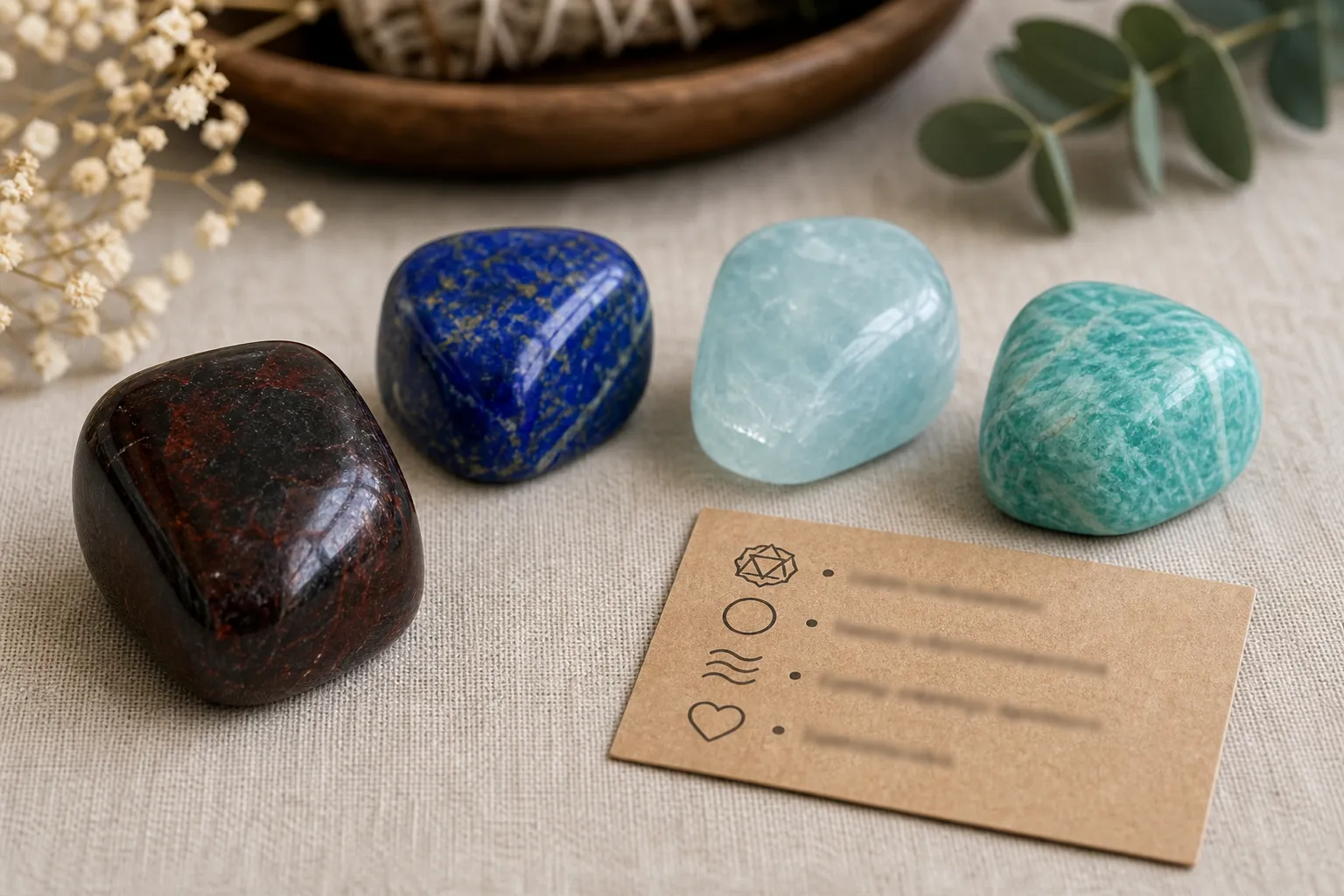
| Stone Group | Possible Everyday Role | How to Keep It Clear |
|---|---|---|
| Root chakra stone | Main focus for root chakra-themed practice | Choose one primary stone per session |
| Lapis lazuli | Companion stone if its color or meaning attracts you | Do not assume it carries the same symbolism as the root stone |
| Aquamarine | Companion stone for a softer visual palette | Use it as a personal association, not a required pairing |
| Amazonite | Companion stone in blue-green or greenish layouts | Write down why you are pairing it |
A clearer sentence is: “I use this darker stone as my root chakra focus, and I place amazonite beside it because I like the visual contrast and personal association.” That is more precise than saying the stones work together in a way you cannot verify.
A small set is usually more useful than a large, unfocused collection:
- One main root chakra stone.
- One blue or blue-green companion stone.
- One notebook or card for the intention.
- One tray, cloth, or bowl.
- One storage place.
The set should answer a practical question: “How will I use this?” If you cannot answer that, the set may be decorative rather than practice-based.
Common Misunderstandings About Everyday Crystal Practice
A root chakra stone page should leave room for personal belief, but it should not blur every distinction. Several misunderstandings appear often when retail language, social posts, and broad wellness wording get mixed together.
| Misunderstanding | Better Way to Think About It |
|---|---|
| A stone must have a dramatic role | A stone can simply be a reminder, decoration, tactile object, symbol, or part of a quiet ritual. |
| More stones make a stronger practice | Fewer pieces often make the routine easier to understand and repeat. |
| Retail names settle everything | Shop labels can help with browsing, but they do not answer every question about identity, treatment, durability, or tradition. |
| Belief language is the same as evidence | “This stone represents steadiness to me” is different from saying the stone causes measurable change. |
| A routine needs special wording | Plain words usually make the practice easier to keep and evaluate. |
The point is not to remove meaning. The point is to keep meaning in the right place. Personal association does not need to pretend to be a formal conclusion.
Practical Ways to Build a Routine
A routine is easier to keep when it has a location, a stone, a cue, and an ending. Instead of asking, “What is the best way to use root chakra stones?” ask, “Where in my day would a small reminder actually fit?”
| Routine Pattern | How It Works | Best For |
|---|---|---|
| Morning tray | Place one stone on a tray with a note card; read the card and choose one ordinary action for the day | Readers who like a visible start point |
| Pocket cue | Keep a small stone in a pouch; notice it during the day and return to the chosen intention | Readers who prefer carrying crystals during the day |
| Desk marker | Place one stone away from spills and clutter; use it as a start-of-work or return-to-task cue | Readers building practical stone placement at home or in a study area |
| Journal pairing | Choose a stone before writing; describe what you see and why you chose it | Readers who want a record of their root chakra stone practice |
| Weekly reset | Gather used stones, clean the display area as appropriate, and return each piece to its place | Readers whose displays become crowded |
Before adding another stone
- What role will this stone have in my routine?
- Where will I keep it?
- Will I carry it, display it, meditate with it, or journal with it?
- Is the material suitable for that use?
- Am I choosing it for appearance, meaning, memory, or comparison?
- Do I already have another stone filling the same role?
These questions keep the collection from becoming vague. They also help separate personal attraction from marketing pressure.
Ordinary Handling and Storage
Ordinary handling and storage are part of everyday use. A stone that is always misplaced, dusty, scratched, or mixed into clutter will not work well as a reminder.
- Give each frequently used stone a return place.
- Use soft pouches or separate compartments for small pieces.
- Avoid dropping stones on hard floors.
- Keep stones away from areas where children or pets may treat them as toys.
- Be cautious with water, sunlight, heat, and cleaners unless you know the material can handle them.
Because this page does not have a material-specific source set, it does not give stone-by-stone cleaning rules. When a piece is delicate, valuable, porous, dyed, set in metal, or hard to identify, keep cleaning gentle and minimal until you can verify the material.
A Reader Path Through the Topic
This root page is a map. If you are new to the topic, choose the branch that matches your next real decision rather than trying to learn every variation at once.
| If You Want To… | Start With This Topic | What It Covers |
|---|---|---|
| Sit quietly with a stone | How to use root chakra stones in meditation | Simple placement, focus, and closing steps |
| Keep a stone with you | Carrying root chakra stones during the day | Pocket stones, pouches, jewelry, and carry habits |
| Arrange stones at home | Where to place root chakra stones | Shelves, desks, entry areas, bedside tables, and practice corners |
| Try a short personal routine | Beginner root chakra stone rituals | Intention setting, quiet reflection, and a clear ending |
| Pair blue-green crystals with root stones | Lapis lazuli, aquamarine, and amazonite companion layouts | Visual pairing, role assignment, and meaning boundaries |
The path matters because each topic has its own practical questions. Meditation is about attention and setup. Carrying is about comfort and durability. Home placement is about visibility and care. Rituals are about sequence. Pairing stones is about clarity of meaning.
Trying to answer all of those questions at once usually creates confusion. Choose one everyday setting first.
Final Takeaway
Root chakra stones can fit into everyday life as focus objects, reminders, display pieces, journaling companions, and parts of simple personal rituals. The strongest beginner approach is practical: choose one setting, one stone, one purpose, and one clear way to close the practice.
The visible object and the symbolic meaning do not have to compete. You can notice the stone’s color, shape, weight, finish, and placement while also using it within a belief-framed crystal practice. The key is to keep the claim modest. A stone can mark a moment, hold a personal association, or make a routine more visible. It should not be presented as a source of promised health results, personal safety, or measurable energetic change.
If you are just starting, begin with the simplest route: place one stone near a journal or meditation space, write one intention in plain words, use the stone as a reminder, and return it to the same place when you are done. That is enough to make the practice clear, repeatable, and honest.