
Careful reading guide
Common Misconceptions About Root Chakra Stone Meditation
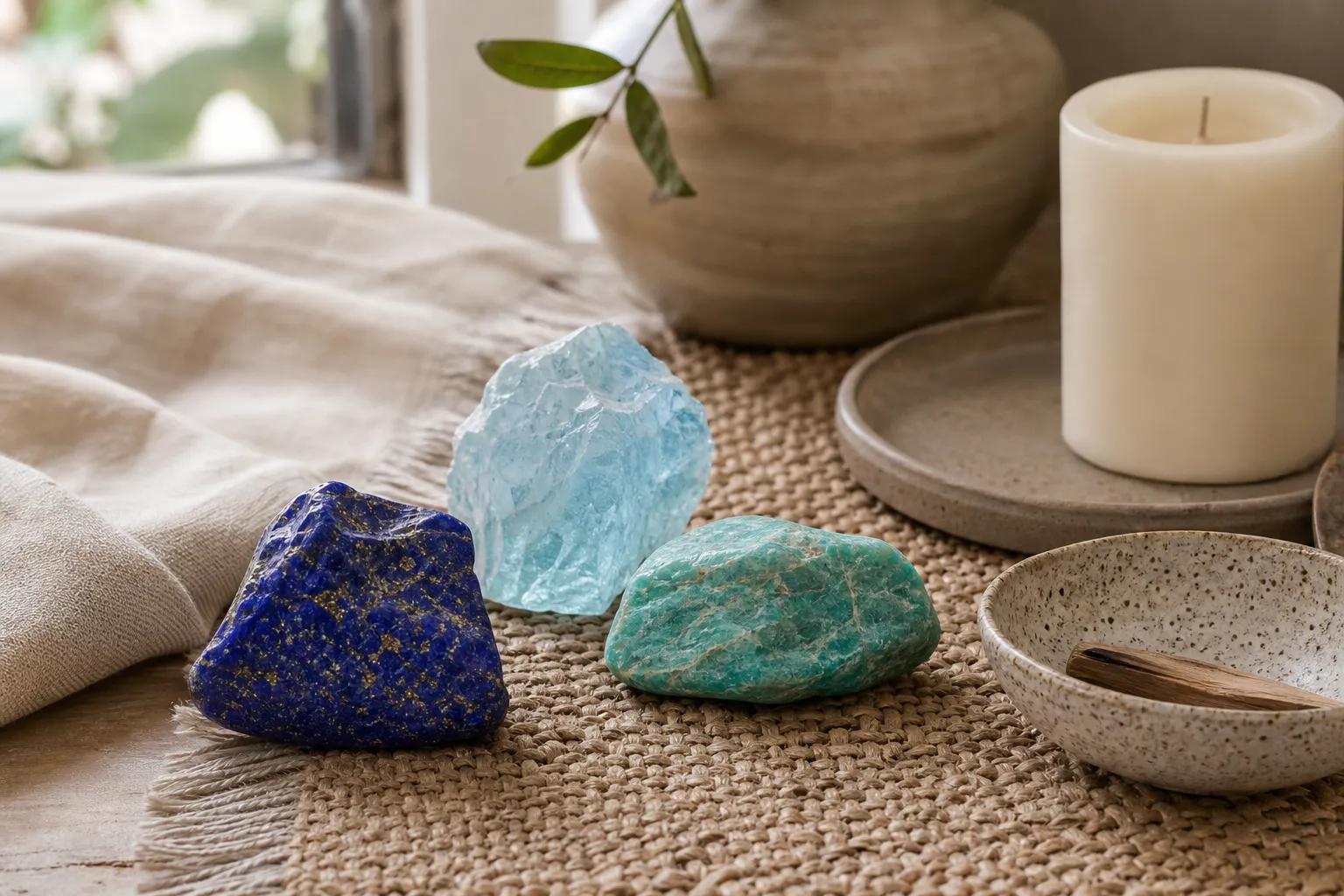
A blue stone in your palm, a green-blue amazonite beside a candle, or a dark lapis lazuli piece near the base of a meditation seat can carry personal meaning. It should not be treated as a source of assured results.
The clearest answer to common root chakra stone meditation misconceptions is this: the stones are best understood as symbolic focus objects within belief-based chakra practice. Many crystal practitioners associate them with steadiness, presence, and personal ritual, but that is different from saying the stone causes those experiences. The meaning belongs inside the practice context.
upward
Read the full overview first
Use the broader guide first if you need the full scope before this page.
Misconception 1: The Stone Creates the Result
The most common confusion is treating a root chakra stone as the active cause of whatever happens during meditation. In careful language, the stone is part of the setting. It may be held, placed nearby, displayed on a mat, or used as a visual reminder of an intention. The person still brings the breath, posture, attention, belief, and interpretation.
This matters because root chakra stones meaning is often written in absolute language elsewhere. A beginner may see claims that turn a crystal into the source of a specific inner state. A more grounded reading is that some people use stones to give shape to a meditation theme. The stone can support the ritual as a focus object, but the experience remains personal.
Lapis lazuli may be chosen for its deep blue color and speckled appearance, aquamarine for a pale blue-green look, and amazonite for its soft green-blue surface. In root chakra-themed practice, those colors may seem surprising because the root chakra is often linked with lower-body stability and earthlike imagery. Some practitioners still include selected blue-green crystals because they prefer a calmer visual tone, a personal association, or a layered color symbol. That is a personal ritual choice, not a universal rule.
Misconception 2: “Root Chakra Stone” Means One Correct Stone
The phrase “root chakra stone” can sound like a fixed category. In crystal communities, it is often more flexible. A stone may be described as root-related because of its color, its common meaning in a seller’s description, its use in a personal ritual, or the way a practitioner frames it.
That does not make every listing equally clear. A beginner should separate visible stone descriptions from meaning claims. Visible details include color range, shape, polish, inclusions, banding, translucency, and size. Meaning claims are the symbolic associations attached to the stone. Both may appear together in retail language, but they are not the same kind of information.
A useful check
- Ask what you can actually observe about this piece, such as color, texture, polish, or size.
- Ask what meaning you are adding through chakra tradition, personal symbolism, or a seller’s wording.
That split prevents many crystal meditation myths from becoming confusing. If a lapis lazuli palm stone is dark blue with lighter markings, that is an appearance note. If someone places it in a root chakra meditation because it represents a certain inner theme for them, that belongs in belief-based chakra language.
Misconception 3: More Stones Make the Practice Stronger
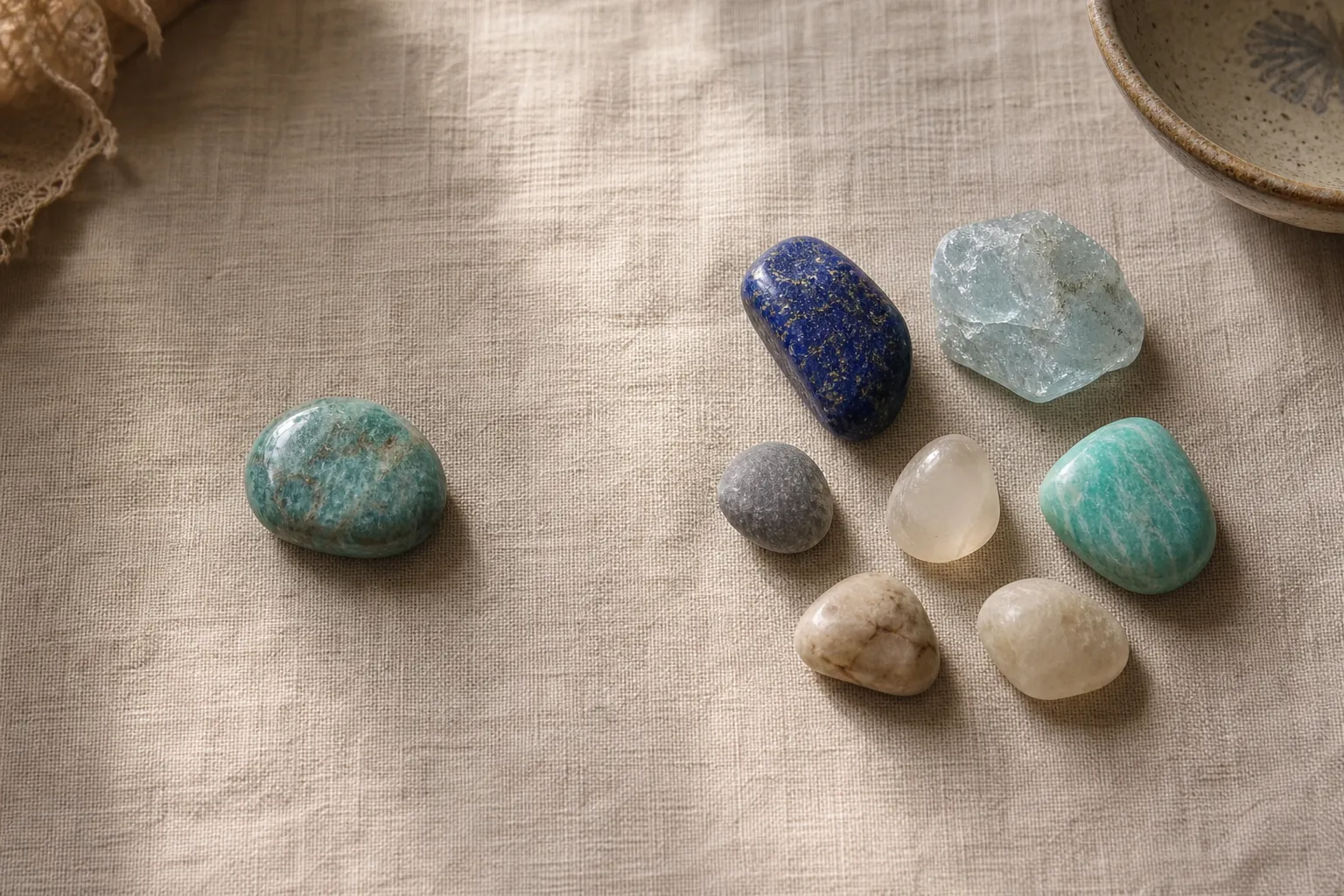
A small layout of stones can feel visually satisfying, but more pieces do not automatically make a meditation more meaningful. For beginners, too many stones can blur the purpose of the practice. If the question is root chakra meditation stones meaning, one clearly chosen object may be easier to understand than a crowded arrangement.
This is especially true when mixing red, black, blue, and green-blue stones. Some people enjoy combining traditional root-associated colors with lapis lazuli, aquamarine, or amazonite. Others prefer one piece because it gives them a simple focal point. Neither approach needs to be ranked as better.
One stone
A single stone can act as a tactile cue: hold it, notice its surface, return attention when the mind wanders, then place it aside.
A group of stones
A group works more like a symbolic display, where each piece represents a different idea within the same personal ritual frame.
The misconception is not the layout itself; it is the assumption that quantity proves depth.
Care and storage matter more than dramatic claims. A polished stone kept clean, dry, and away from rough handling is easier to use repeatedly. If a piece is delicate, porous, dyed, or set with metal, ordinary caution around water, abrasion, and storage is more useful than adding extra meaning to every mark or chip.
Misconception 4: Personal Meaning Is the Same as Shared Evidence
Personal ritual framing can be sincere without becoming a broad claim. Someone may sit with amazonite and associate its green-blue color with calm attention. Another person may prefer aquamarine because its pale tone feels spacious. A third may use lapis lazuli because the dark surface gives the practice a more inward mood. These are subjective meanings.
The problem begins when subjective meaning is written as a general result for everyone. There are no suitable public references for this page that would support scientific, health-outcome, or assured-effect statements about root chakra stone meditation. That does not make personal practice meaningless. It means the wording should stay honest about what kind of statement is being made.
A careful sentence sounds like this: “Some people use stones as focus objects during root chakra-themed meditation.” A risky sentence turns that practice description into a broad outcome claim. The first describes use. The second asks the reader to accept more than the available material can carry.
This distinction helps beginners read crystal meditation claims more clearly. Look for the difference between “many crystal practitioners associate this stone with…” and language that presents an effect as settled fact. The first leaves room for belief, culture, and personal interpretation. The second overreaches.
Misconception 5: If It Feels Meaningful, Every Claim Around It Is Reliable
A ritual can feel meaningful while still being surrounded by weak marketing language. Those two things can exist at the same time. A reader’s experience of focus, quiet, or symbolism does not verify every statement attached to a stone.
This is where crystal meditation limitations are useful, not discouraging. A limitation tells you what the practice should not be asked to prove. Root chakra stone meditation can be treated as a reflective habit, a symbolic pause, or a way to organize personal intention. It should not be used in place of qualified support for health or mental-health concerns, and it should not be described as identifying hidden problems in the body or mind.
There is also no need to mock the practice. Many people use objects in reflective settings: a bead, a shell, a candle, a photograph, a smooth stone. The object helps mark the moment. In chakra communities, the stone may also carry layered symbolic language. The careful move is to respect the practice while keeping unsupported wellness claims outside the frame.
How to Read Root Chakra Stone Language More Carefully
When a description sounds intense, slow it down. Ask what type of statement it is making.
If it names a visible feature, such as “blue-green,” “polished,” “tumbled,” “opaque,” or “speckled,” you can compare that with the stone in front of you. If it names a symbolic association, such as steadiness, rootedness, or personal security, treat it as chakra-community interpretation. If it promises a specific result, read it with caution.
Beginner-friendly reading method
- Keep appearance separate from meaning.
- Treat chakra language as tradition-associated or personal, not universal.
- Avoid using stone preference as a sign that something is wrong with you.
- Choose one practice purpose at a time, such as focus, reflection, or display.
- Let care and storage stay practical rather than mystical.
This keeps symbolic crystal practice usable without making it carry more weight than it can. It also helps when blue-green stones appear in a root chakra frame. Aquamarine and amazonite may not match the most common root-color expectations, but a practitioner may still use them because of personal association, visual preference, or a layered meditation theme. The key is to name that choice as interpretive.
Quick FAQ
Can I use blue-green stones for root chakra meditation?
Yes, if you are using them as personal focus objects within a root chakra-themed practice. Aquamarine, amazonite, or lapis lazuli may not match the most common root-color associations, but some people choose them for their appearance, mood, or personal symbolism.
Does a stone need to be labeled “root chakra” to use it?
No. The label is a meaning frame, not a fixed identity test. Look first at the visible stone, then decide whether its symbolism fits your own practice.
What is the safest way to understand strong crystal meditation claims?
Separate the practice from the promise. Holding or displaying a stone is a personal ritual choice. Claims that assign certain outcomes to the stone should be treated carefully, especially when no strong source is available.
A Simple Boundary for Beginners
Root chakra stone meditation is clearest when the stone is treated as a meaningful object, not an authority. You can choose lapis lazuli for its dark blue surface, aquamarine for its pale blue-green clarity, or amazonite for its soft green-blue look. You can place the stone near you, hold it briefly, or use it as a quiet visual cue.
What changes the answer is the claim attached to the stone. If the claim describes appearance, handling, display, or personal meaning, it can stay within a careful crystal practice page. If it promises a specific outcome, assigns a hidden condition, or presents chakra symbolism as settled fact, it goes beyond what this page can support.
That is the most useful way to approach root chakra stone meditation misconceptions: keep the stone real, the meaning personal, the language careful, and the practice modest.