
Practical timing
How Long Should You Meditate With Root Chakra Stones
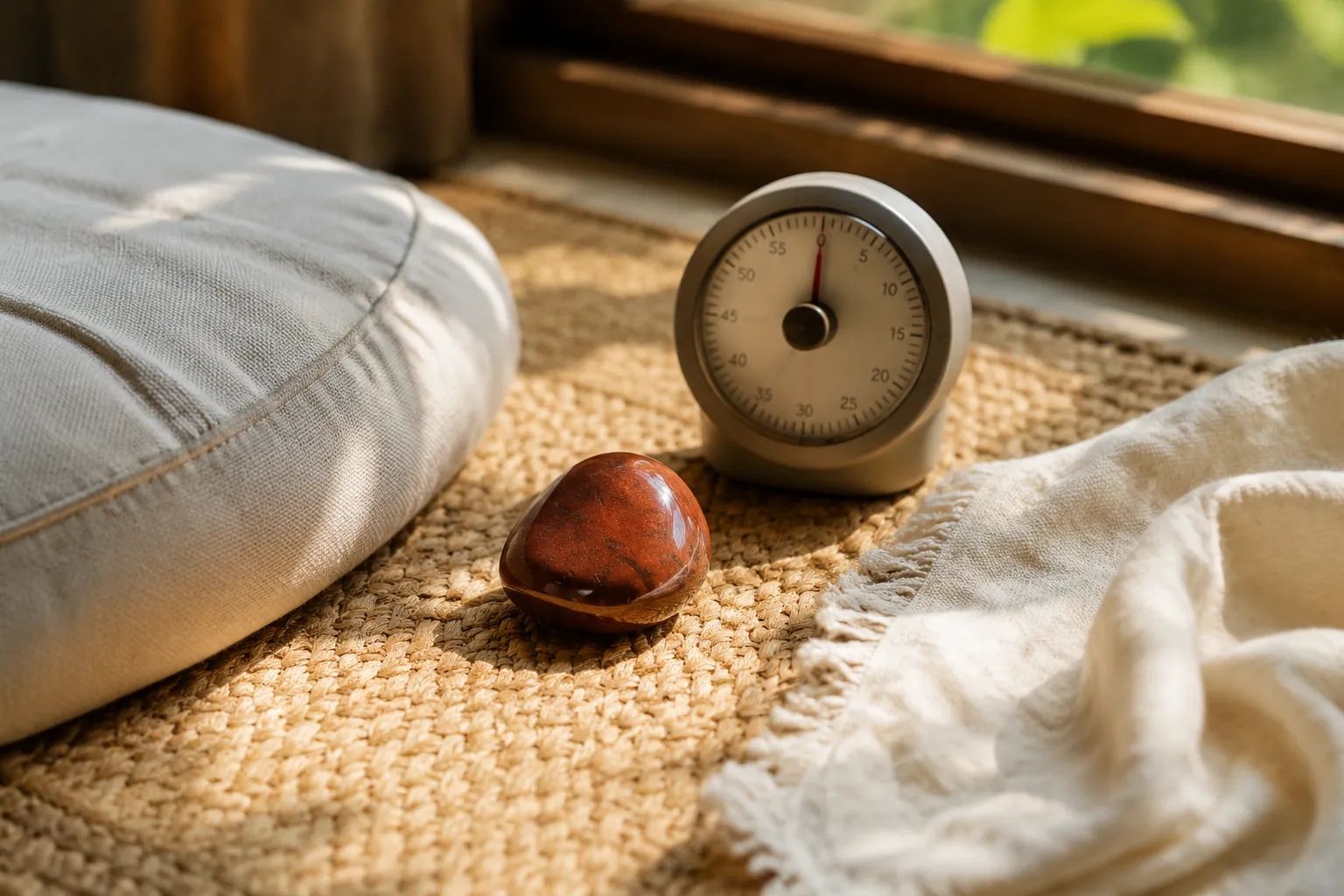
For most beginners, a root chakra stone session can stay short: 3 to 5 minutes is a reasonable starting point, and 10 to 15 minutes is usually enough for someone who already feels comfortable sitting quietly. There is no official or source-backed rule for how long to meditate with root chakra stones. Treat the timing as a personal ritual choice, not a required number.
A five minute crystal meditation often works better than forcing a long session. Hold the stone, place it nearby, or rest it where it feels comfortable; then stop when attention fades, the body feels restless, or the practice starts to feel strained. In chakra communities, root chakra stones are used symbolically. More minutes do not prove that something specific has happened.
upward
Start with the broader guide
Use the broader guide first if you need the full scope before this page.
A Practical Starting Length
A short beginner root chakra meditation can be as simple as one stone, one quiet place, and a few minutes of steady attention. Three minutes may be enough if you are testing the practice for the first time. Five minutes gives a little more room to settle without turning the session into a task. Ten minutes can work if you already like quiet sitting and the stone feels easy to hold or place.
The point is not to reach a special threshold. With root chakra stones, timing is best treated as flexible meditation timing: long enough to notice the weight in your hand, the color in front of you, or the symbolic intention you brought to the session, but not so long that the practice becomes uncomfortable.
Experience with quiet sitting
Comfortable session length to try
When to stop
New to meditation or crystal ritual
3 to 5 minutes
When attention feels forced or the body feels tense
Some meditation experience
5 to 10 minutes
When the ritual starts to feel mechanical
Already comfortable with longer sitting
10 to 15 minutes
When comfort, focus, or interest fades
These are practical ranges for a personal ritual, not evidence-based standards. Since there are no usable public references for exact root chakra stone session length, the most honest answer is comfort based meditation length: start small, notice how the session feels, and adjust next time.
Why Short Sessions Often Make Sense
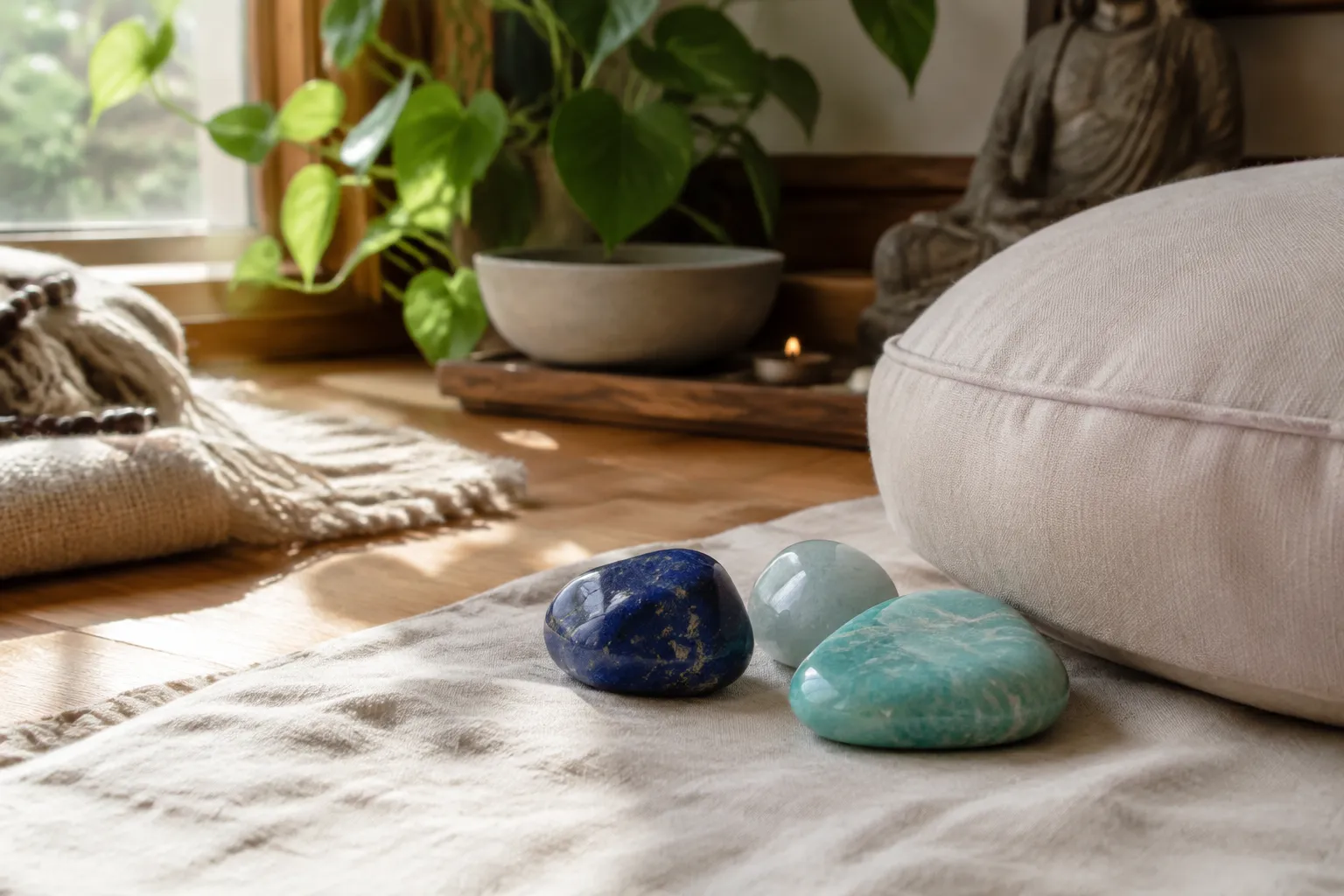
A short crystal meditation keeps the stone from becoming the pressure point of the practice. Lapis lazuli, aquamarine, amazonite, and other stones used in root chakra-themed settings have visible qualities people may find meaningful: deep blue with gold-colored flecks, pale blue-green clarity, or green-blue bands and patches. Those details can give attention something tactile or visual to return to, but they do not require a long session.
Many crystal practitioners use stones as symbolic objects in personal ritual. In that frame, the stone may stand for steadiness, place, attention, or a chosen intention. A shorter session can still hold that meaning. Sitting longer does not automatically make the symbolism stronger.
For beginners, very long sessions can blur the purpose. If you spend most of the time wondering whether you are doing it correctly, the session is probably too long for today. A five minute crystal meditation with a clear beginning and ending is easier to repeat than a thirty-minute practice that feels vague or demanding.
The useful question is not “How long until the stone works?” A better question is: “How long can I stay present with this object and this intention without pushing past comfort?” That keeps the practice inside personal meaning rather than turning it into a claim about results.
Holding or Placing the Stone
The timing changes slightly depending on how you use the stone. Holding root chakra stones can make the session feel more direct because you notice weight, temperature, edges, polish, or shape. A tumbled stone may sit easily in the palm; a rougher piece may be better placed nearby if the surface distracts you.
Placing root chakra stones beside you can make a short beginner meditation feel less fussy. You might set the stone on a cloth, a small dish, a bedside table, or the floor near your seat. This works especially well if the stone is large, delicate, sharp-edged, or simply not comfortable to hold for several minutes.
Some readers use blue-green stones in a root chakra frame even though red, brown, and black stones are more commonly linked with root chakra language. In personal practice, a piece of lapis lazuli, aquamarine, or amazonite may be chosen for appearance, association, memory, or preference. That is a symbolic choice, not a technical requirement.
A simple root chakra ritual might look like this
- Choose one stone and decide whether to hold it or place it in view.
- Set a short timer for 3 to 5 minutes.
- Notice the stone’s color, weight, polish, or natural markings.
- Use a plain intention, such as returning attention to the present moment.
- End when the timer sounds, or earlier if comfort fades.
The stone does not need complicated handling. If the object becomes distracting, place it down. If the timer makes the practice feel rushed, skip the timer and end after a few steady breaths. The right length is the one you can repeat without turning the ritual into a performance.
What Can Change the Session Length
The best crystal meditation session length depends less on the stone and more on the person using it. A beginner who is tired, restless, or sitting in a noisy room may get more from two quiet minutes than from a long session. Someone with a regular meditation habit may prefer ten minutes because the sitting itself is familiar.
The size and shape of the stone matter in a practical way. A small smooth piece is easier to hold than a pointed or uneven one. A heavy palm stone may feel steady in a symbolic sense to some practitioners, but it can also become annoying if held too long. A delicate crystal, a beaded bracelet, or a display piece may be better placed nearby rather than handled through the whole session.
Your reason for using the stone also changes the length. If the practice is a brief pause before leaving home, three minutes may be enough. If it is part of a longer evening routine with journaling, stretching, or quiet sitting, the stone portion can remain short while the whole routine lasts longer. The stone does not have to occupy every minute.
Comfort should have the final say. Stopping when comfort fades is not a failed practice. It is a sensible way to keep the session modest and repeatable.
Common Confusion About Timing
One common misunderstanding is that root chakra stones need a fixed number of minutes before they can be used properly. The available material for this page does not support that kind of rule. There is no confirmed timing chart or evidence-based minute count to follow.
Another confusion is that longer is automatically better. In personal ritual, longer may simply mean longer. It may give more time for quiet attention, but it can also create impatience, discomfort, or the feeling that the session has become an obligation. A short session done with care is often a more realistic choice for beginners than a long session built around expectation.
It is also easy to mix symbolic language with factual claims. Chakra communities may describe root chakra stones through ideas of stability, belonging, or connection to the earth. Those meanings belong to spiritual and personal-practice traditions. They should not be treated as scientific findings or as promises about mental, physical, or life outcomes.
That distinction matters most when timing advice starts to sound exact. If someone says a stone requires a precise number of minutes to create a specific result, treat that as a claim that would need stronger support than this topic currently has.
A Simple Way to Choose Your Own Length
Choose the shortest session length that still feels intentional. For many beginners, that means starting with 3 minutes for the first few sessions, moving to 5 minutes if the practice feels comfortable, and only trying 10 minutes when sitting quietly no longer feels like a strain.
You can also separate the stone portion from the rest of your routine. For example, hold amazonite or aquamarine for five minutes, then set it down and continue sitting without it. Or place lapis lazuli nearby during a longer quiet period, using it as a visual anchor at the beginning and end rather than as the center of every minute.
A helpful check after each session
- Did I stop before the practice felt forced?
- Was the stone comfortable to hold, or would it be better placed nearby?
- Did the session length fit the setting I was in?
- Would I be willing to repeat this length tomorrow?
If the answer is mostly yes, the length is probably suitable for now. If not, shorten it. A two-minute session that you can actually repeat is more useful than a longer session you avoid.
Keep Expectations Modest
Root chakra stones can be meaningful objects in a personal ritual, especially when their color, texture, weight, or story helps you mark a pause in the day. That is enough for a beginner practice. The stone does not need to be treated as a measured tool with a required session length.
So the practical answer stays simple: begin with 3 to 5 minutes, use 10 to 15 minutes only if it remains comfortable, and stop sooner whenever the session feels strained. Keep the stone clean, store it where it will not be scratched or knocked around, and let the ritual stay personal.
The meaning of symbolic root chakra stones belongs inside belief-based practice. The timing belongs to comfort, attention, and ordinary use.