
Blue-Green Crystal Color Meanings in Root Chakra Context
Blue green crystal color meaning is easiest to understand in two parts: the color you can see, and the symbolic language people attach to it. In a root chakra context, teal, aqua, turquoise-like, and green-blue stones are not the classic color match. Modern chakra color systems usually present the root chakra as red, while crystal-shop categories often extend that look to black, brown, smoky, and earthy stones.
So when a blue-green crystal appears in a root chakra setting, it is usually being used as a personal bridge or contrast: steadiness with expression, earthiness with a cooler color note, or a reminder to feel settled before speaking. That is a symbolic choice, not a guaranteed effect of the stone.
upward
Start with the broader guide
Use the broader guide first if you need the full scope before this page.
Why blue-green can look mismatched with root chakra symbolism
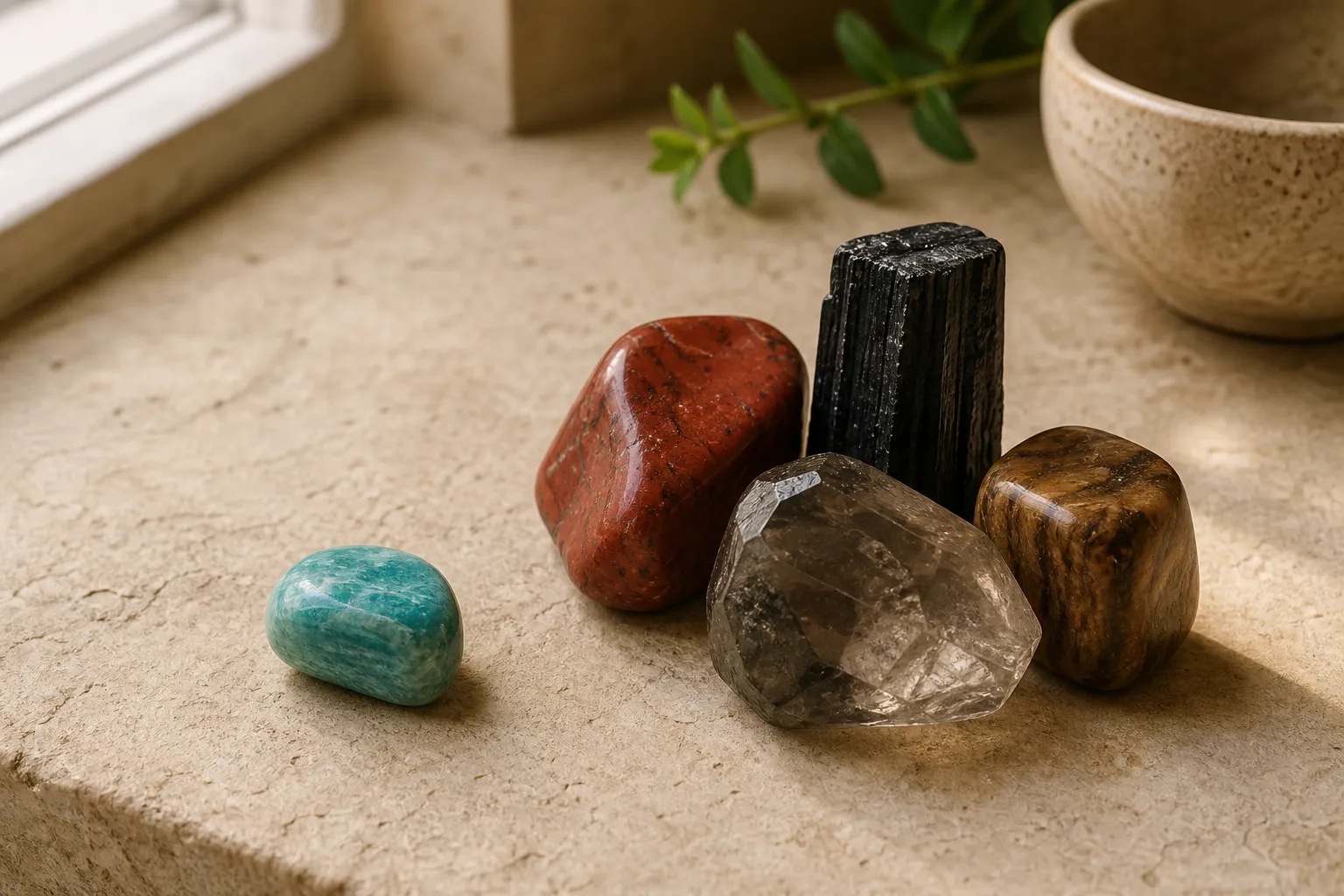
Most beginners meet root chakra color symbolism through red, dark, and earth-toned stones. Red jasper, smoky quartz, hematite, black tourmaline, garnet, and similar-looking stones are commonly grouped into root-themed shop displays because their colors feel dense, grounded, or earthy.
Blue-green belongs to a different visual family. In crystal retail language, blue stones are often described through speech, clarity, truth, or throat-chakra themes. Green stones are often described through heart-centered symbolism, growth, compassion, or emotional language. Teal and aqua stones are commonly presented as a blend of those blue and green associations.
That is where the root chakra color mismatch begins. A blue-green stone can look beautiful beside root-colored pieces, but its color is not usually treated as the main root chakra signal.
A clean way to separate the ideas
- Classic root-color match: red, black, brown, smoky, earthy, or iron-toned stones.
- Blue-green in a root layout: a nontraditional accent or personal bridge.
- Common blue-green shop meaning: expression, calm, clarity, compassion, or blue/green blended symbolism.
- Careful interpretation: a visual reminder or ritual choice, not a promised result.
Color meanings are not fixed facts. They shift by tradition, teacher, shop wording, and personal practice.
What the color tells you before the symbolism does
Before a teal crystal carries any meaning, it has an appearance. Blue-green, green-blue, aqua, sea-green, and turquoise-like are color descriptions. They do not identify the mineral by themselves.
A stone labeled “blue-green” might be opaque, waxy, translucent, banded, mottled, bright, pale, matrixed with darker veins, or glassy-looking. Those details help you describe the piece, but they do not prove what it is.
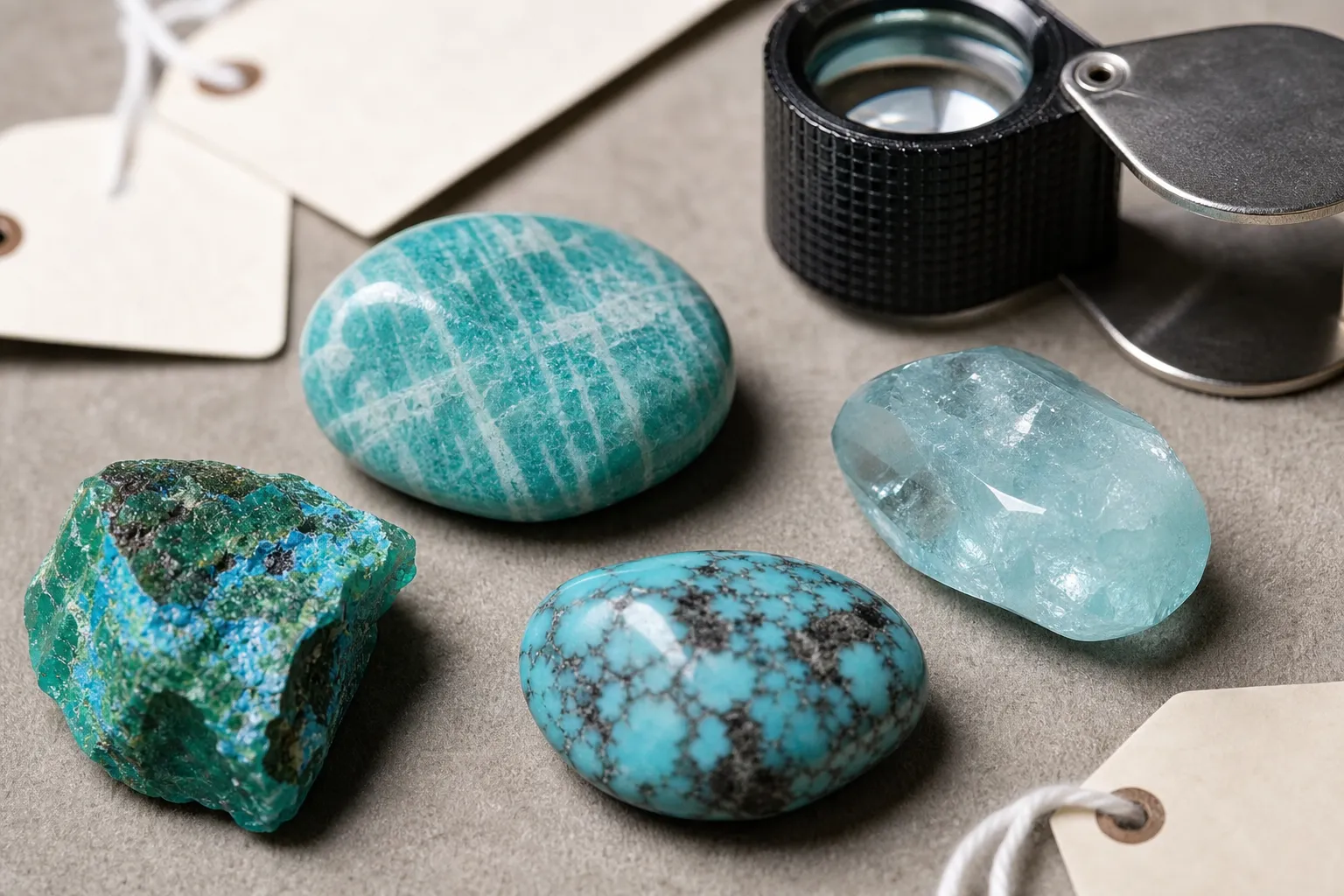
Turquoise
Turquoise is known for blue to greenish-blue color ranges. Research on turquoise color discusses material factors such as copper, iron, zinc, and water content.
Chrysocolla
Chrysocolla is a copper-bearing material often seen in blue-green, green, or turquoise-like tones, sometimes with mottling or matrix.
Amazonite
Amazonite is a blue-green to greenish variety of microcline feldspar, often sold with soft sea-green or teal color descriptions.
Aquamarine
Aquamarine belongs to the beryl family and is commonly associated with pale blue to blue-green tones. Studies of blue-green beryl connect color with transition metal ions, especially iron-related mechanisms.
These examples keep the categories straight. A teal stone may be meaningful in your arrangement, but the teal color alone does not make it a root chakra stone, nor does it identify the mineral.
When shopping, read blue-green color labels as starting points:
- “Teal” describes appearance, not necessarily mineral species.
- “Turquoise color” may mean a shade, not the stone turquoise.
- “Sea-green” is usually poetic retail language.
- “Aqua” can apply to many stones, treated materials, glassy pieces, or trade names.
- “Blue-green crystal” is a color family, not a mineral group.
The label answers “What does it look like?” more reliably than “What exactly is it?” or “What will it do?”
How a blue-green crystal can fit a root chakra setting
The most useful question is not “Is teal secretly a root chakra color?” It is: “What role am I giving this cooler color beside root-colored stones?”
As a bridge between steadiness and expression
Some practitioners use blue-green as a bridge between root symbolism and communication symbolism. In plain language, the stone becomes a visual cue for “settle first, then speak” or “bring steadiness into expression.”
This works best when the layout includes both root-colored stones and one blue-green accent. The red, black, brown, or smoky stones carry the root theme, while the teal piece adds a personal connection to voice, breath, patience, or emotional spaciousness.
As a cooling accent in an earthy palette
Root-themed arrangements can look visually heavy because they often use dark, red, or dense-looking stones. A blue-green crystal can soften that palette. It may look watery, airy, or open beside earthier colors.
This is the most grounded reason to include one: the stone changes the visual mood of the arrangement. That can be enough for a shelf display, pocket-stone pairing, altar setup, or simple personal ritual.
As a personal reminder
A beginner-friendly way to combine teal crystals and root chakra symbolism is to give the stone a modest role:
“I use this teal stone as a reminder to pause, settle, and speak from a steadier place.”
That wording keeps the meaning personal. Another person might use the same color to represent water, breath, patience, softness, or a bridge between body and voice. These are symbolic readings, not universal rules.
As a contrast stone beside root-colored stones
If you want the root chakra theme to remain visually clear, place the blue-green piece beside stones that already match the common root palette. The color logic is simple: the red, black, brown, or smoky stones carry the main root theme, and the blue-green stone becomes the accent.
That makes the arrangement feel intentional rather than confused.
Common confusion around blue-green chakra associations
Most confusion comes from mixing three separate things: mineral identity, color symbolism, and chakra placement.
A shop listing may describe turquoise, chrysocolla, amazonite, or aquamarine with calm, expressive, or heart/throat-style language. Another guide may say root chakra stones are red, black, or brown. Then a beginner sees a blue-green stone and wonders whether it belongs with root chakra practice at all.
The short answer: it can belong if you are using it as a personal accent, but blue-green is not the usual root chakra color code.
A few distinctions help
Similar color does not make stones interchangeable.
Turquoise, chrysocolla, amazonite, and aquamarine may all appear blue-green, but they are different materials with different textures, hardness ranges, porosity, treatments, and care needs.
A chakra color chart is not a mineral identification guide.
A red chart does not identify every red stone as a root stone, and a blue-green label does not identify a stone as turquoise, chrysocolla, or aquamarine.
Retail meaning is not the same as an established result.
Crystal meanings are usually presented as tradition, symbolism, shop language, or personal practice. They should not be read as health, psychological, or physical guarantees.
Blue-green is often pulled toward throat or heart/throat language.
That does not stop you from using it in a root setting. It simply explains why many listings do not describe teal crystals as root chakra stones first.
A useful check is to ask: “Am I choosing this stone for its color, its mineral identity, its symbolic association, or the way it looks with the rest of my arrangement?” The answer usually clears up the mismatch.
A practical check before choosing a teal stone
If you already own a blue-green stone, you do not need to force it into a standard category. Use a simple check instead.
-
1. Describe what you can see.
Is it pale aqua, saturated teal, green-blue, mottled, opaque, translucent, waxy, glassy, or crossed with matrix? Start with appearance.
-
2. Confirm the stone name if the name matters.
Color alone is not enough to identify turquoise, chrysocolla, amazonite, aquamarine, calcite, fluorite, dyed agate, or a trade-named material. Ask for the mineral name, treatment information, and basic care guidance when buying.
-
3. Decide its role in the root layout.
Is it the main stone, a bridge stone, or a contrast stone? For a classic root chakra look, let red, black, brown, smoky, or earthy stones carry the main theme. Let the blue-green stone add a cooler personal note.
-
4. Keep the wording modest.
Better wording: “This teal stone reminds me to feel steady before I speak.”
Less careful wording turns the stone into a promise. Keep it symbolic and personal.
-
5. Handle uncertain stones conservatively.
For mixed, porous, dyed, coated, or unknown stones, avoid harsh chemicals, wipe with a soft cloth, and store pieces separately so harder stones do not scratch softer ones. Do not assume a blue-green stone belongs in water, drinks, baths, or body products. Water suitability depends on the actual mineral, treatments, dyes, coatings, porosity, and inclusions.
The clean takeaway
Blue-green crystal color meaning usually points to blended blue and green symbolism in modern crystal language: expression, coolness, clarity, compassion, or a bridge between voice and heart themes. In a root chakra context, that color is nontraditional. Root chakra color symbolism is more commonly red, with black, brown, smoky, and earthy stones often used in crystal-shop practice.
That does not make a blue-green crystal wrong for a root chakra setting. It means the meaning should be named honestly: a teal crystal is best understood as a personal accent, contrast, or bridge beside root-colored stones. Its color can shape the visual mood of a layout, but mineral identity, care needs, and symbolic meaning should not be collapsed into one label.