
Does Lapis Lazuli Belong in Root Chakra Stone Practices
Lapis lazuli can belong in a root-chakra-themed personal practice, but it is not the usual first-choice stone. The practical answer is: lapis lazuli root chakra use is an unusual pairing because lapis lazuli is blue, and many modern crystal guides place blue stones with throat-chakra symbolism rather than root-chakra symbolism.
If you want a stone that matches common root chakra color correspondences, you would normally start with red, black, brown, or smoky-looking stones. If your practice is personal and symbolic, lapis lazuli can still make sense as a companion stone when your root-focused practice also includes communication, honesty, or voice-related reflection.
upward
Start with the broader guide
Use the broader guide first if you need the full scope before this page.
Why lapis lazuli is not the obvious root chakra stone
The confusion usually starts with color. In many modern chakra charts, the root chakra, often called Muladhara, is linked with the base of the spine, earth imagery, steadiness, place, and red or dark stone colors. In that same modern language, blue stones are more often placed with the throat chakra, where the symbolic vocabulary turns toward speech, listening, expression, and truthfulness.
Lapis lazuli is visually blue. Mineral and conservation sources describe it as a gem material known for intense blue color, largely associated with lazurite, and often marked by golden pyrite inclusions. It may also show lighter calcite areas. That physical appearance is one reason beginners naturally connect it with “blue chakra stone” language.
So if your question is, “What chakra is lapis lazuli usually associated with?” the common modern answer is the throat chakra. If your question is, “Can I include lapis lazuli in root chakra stone practices?” the answer is more flexible: yes, but as a personal symbolic choice rather than the default match.
When lapis lazuli can still make sense
A root-chakra practice does not have to be built only from color matching, especially in personal crystal use. Some people choose stones by a mix of visible qualities, inherited meanings, favorite colors, jewelry habits, touch, and the idea they want to hold during a quiet practice.
Lapis lazuli fits best when the practice combines two themes:
Root side
Root-chakra steadiness symbolism, often represented by red, black, brown, or dark stones.
Lapis side
Communication or truth-telling symbolism, often connected with lapis lazuli in modern crystal language.
For example, someone asking about a “blue stone for root chakra” may not be trying to match a color chart. They may want a practice that feels steady while also helping them reflect on what they say, what they withhold, or how they express themselves. In that case, lapis lazuli works better as a bridge stone than as a standard root stone.
This is also where the phrase lapis lazuli grounding meaning needs careful handling. A clearer reading is symbolic: a person may use lapis lazuli to represent grounded self-expression. That meaning belongs to the personal practice framework, not to a measured effect.
Simple test
- If you want a common root-chakra stone list, lapis lazuli is not the obvious choice.
- If you want a personal pairing around steady communication, lapis lazuli can belong.
How it compares with typical root chakra stones
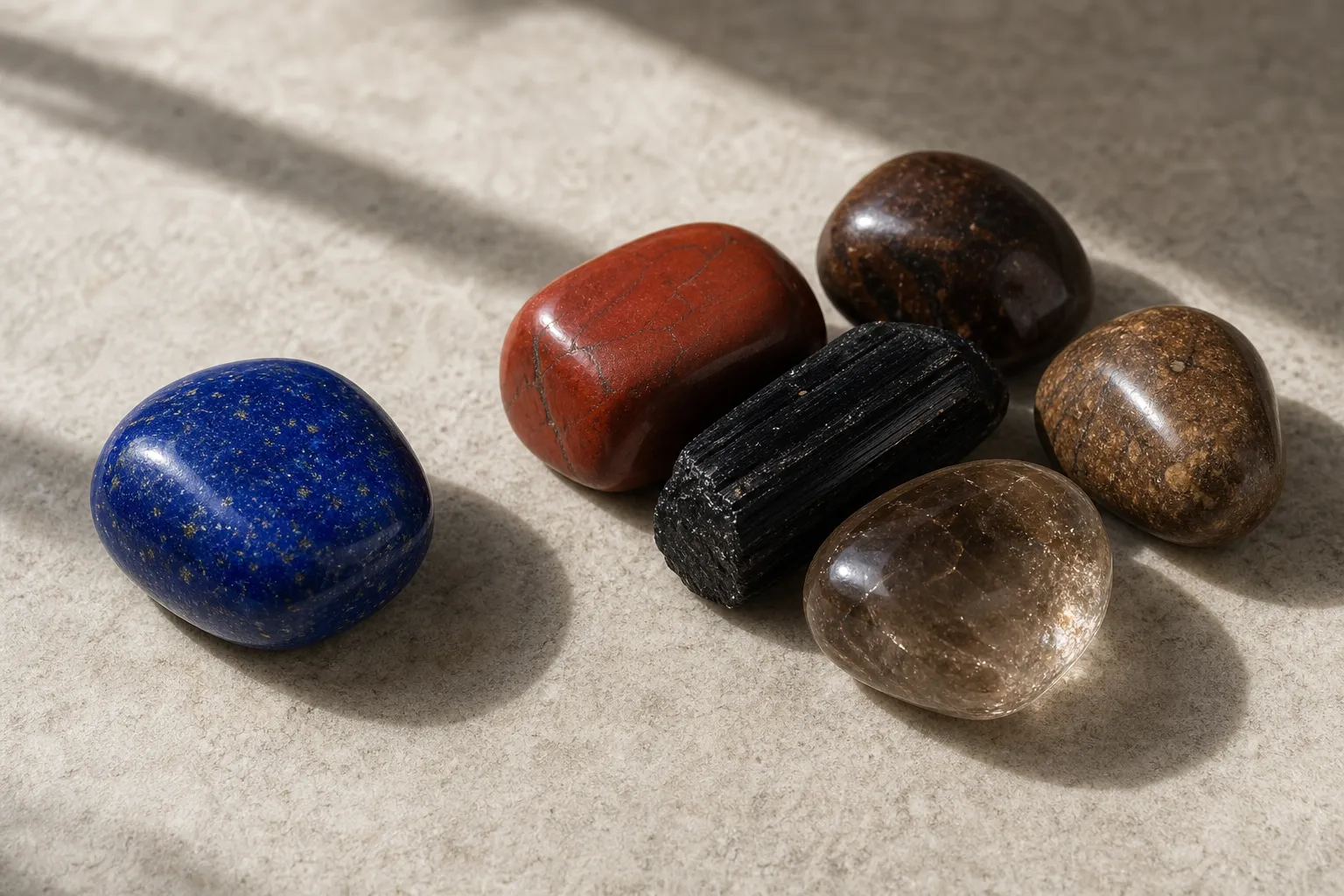
Typical root chakra stones in modern crystal language are usually chosen for color and symbolism first. Red jasper, smoky quartz, hematite, garnet, black tourmaline-type stones, and other red, black, brown, or dark stones are often placed in root-chakra categories because they fit the earth-and-root color family used in many contemporary guides.
Lapis lazuli does not look like those stones. Its deep blue color, possible white calcite areas, and gold-toned pyrite flecks give it a different visual mood. That difference is exactly why it can feel out of place if someone expects root chakra stones to look earthy, dark, or red.
This also prevents a common shopping mistake. If a product page calls lapis lazuli a “chakra stone,” that does not automatically mean it is a root chakra stone. “Chakra stone” is a broad retail phrase. It may simply mean the stone is being placed somewhere in a modern seven-chakra system, most often under throat-chakra themes.
A simple pairing: root stone below, lapis lazuli above
If you want to include lapis lazuli without forcing it to stand alone as a root stone, think in pairs.
A beginner-friendly arrangement might look like this:
- Place or hold a typical root-associated stone, such as red jasper, near the feet or lower body area.
- Keep lapis lazuli near the throat, on a nearby surface, or as jewelry if you already wear it.
- Let the pairing represent “staying steady while speaking clearly” or “bringing steadiness into expression.”
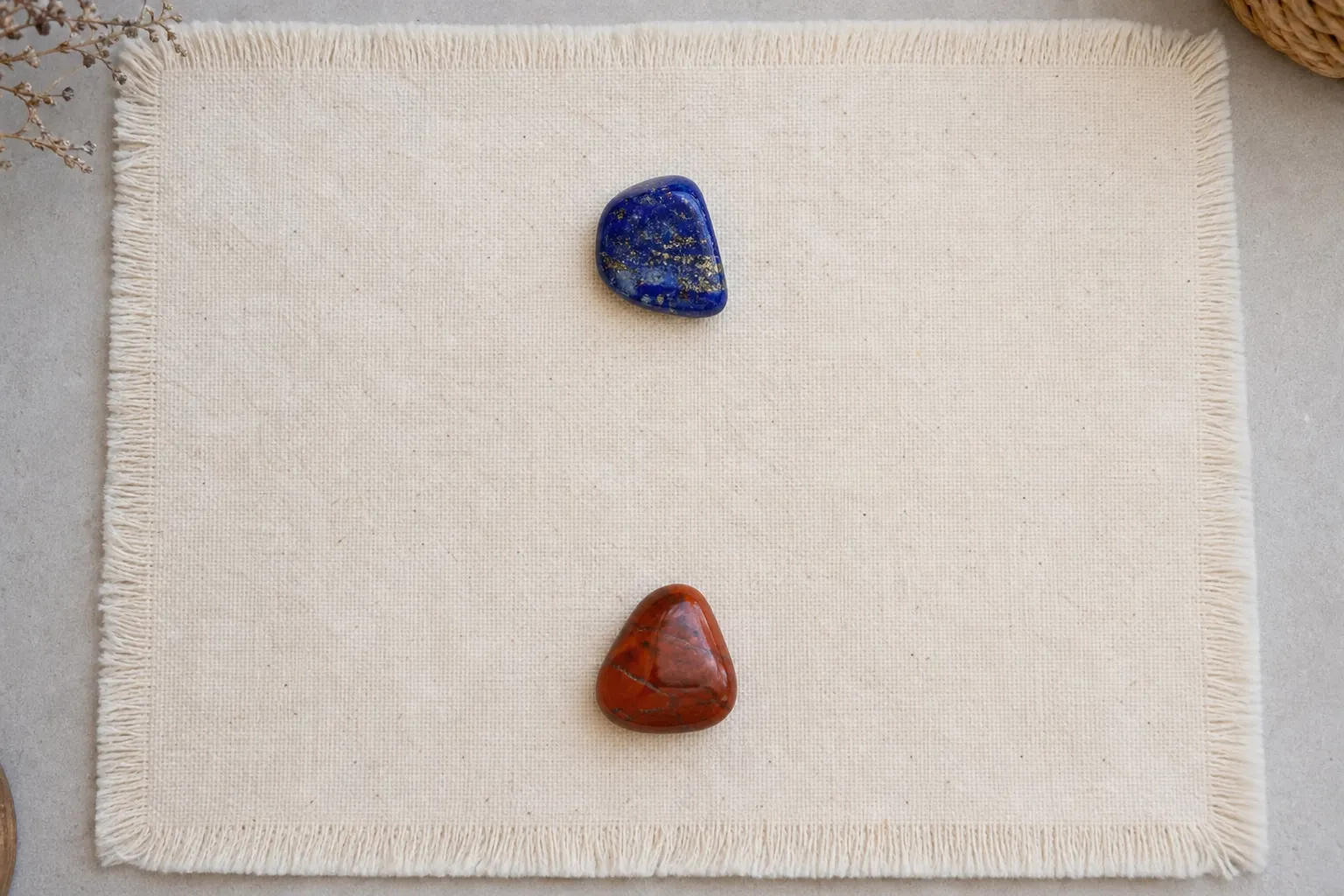
The exact placement is less important than the distinction between the two stones. Red jasper near the feet represents the root-chakra side in a familiar color system. Lapis lazuli near the throat represents the communication side. Together, they create a simple multi-chakra layout without turning lapis lazuli into a standard root chakra stone.
If body placement feels too formal, use a tabletop arrangement. Put the darker or red stone closer to the front edge of your space and lapis lazuli above it. The layout can simply remind you of the two themes.
What common crystal language gets wrong
The phrase lapis lazuli chakra meaning can sound as if there is one fixed answer. In practice, modern chakra associations vary across teachers, shops, yoga-adjacent sources, and personal traditions. Color charts are common, but they are not a single rule used everywhere.
It helps to separate three things:
Observable stone qualities
Lapis lazuli is visibly blue, often with lighter mineral areas and pyrite flecks. It also has a long history as a prized material in objects, pigments, jewelry, amulets, seals, and inlays.
Modern chakra associations
Many modern guides associate blue stones with throat-chakra themes and red, black, or brown stones with root-chakra themes. This is common contemporary symbolic language, not a universal classification system.
Personal practice meaning
You may choose lapis lazuli for your own root-chakra-themed practice if the stone helps you hold an idea such as grounded expression. That makes sense as personal symbolism, not as a claim that the stone produces a specific result.
Commercial crystal writing often blends appearance, tradition, emotion, and outcome language into one smooth paragraph. A more useful approach is to keep the parts separate: what the stone looks like, how it is commonly described, how you personally use it, and what remains a matter of belief or interpretation.
So, should you choose lapis lazuli for root chakra work?
Choose lapis lazuli for a root-chakra-themed practice if you already feel drawn to it and your practice also includes communication, truth, or voice-related symbolism. It is a thoughtful companion stone for a combined root-and-throat theme.
Do not choose it as your clearest first stone if your goal is to match standard root chakra color correspondences. For that, a red, black, brown, or smoky-looking stone will usually fit the common visual language more directly.
A balanced beginner choice would be:
- Use a typical root chakra stone as the anchor.
- Add lapis lazuli only if the practice also includes expression or honesty as a theme.
- Avoid treating any stone list as a rule that overrides your own symbolic intention.
- Keep chakra meanings in the realm of personal, cultural, or spiritual interpretation rather than measurable outcomes.
In short, lapis lazuli belongs in root chakra stone practices only under the right framing. It is not the standard root stone. It is a blue stone more commonly linked with throat-chakra symbolism. But as part of a personal practice that joins root steadiness and communication symbolism, it can have a clear place.