
Color question
Does a Root Chakra Stone Have to Be Red or Black
No. A root chakra stone does not have to be red or black. Red is the classic symbolic color most beginners see on root chakra charts, and black stones are very common in crystal-shop language around “grounding” stones. But neither color is a universal rule.
The confusion usually comes from mixing three things:
- the symbolic color of the root chakra;
- the physical color of an actual stone;
- the way a shop, teacher, book, or personal practice groups certain crystals.
So if you are asking, “does a root chakra stone have to be red or black,” the careful answer is: red and black are common choices, not requirements.
upward
Read the full overview first
Use the broader guide first if you need the full scope before this page.
Red is the root chakra’s symbolic color, not a stone rule
In many popular chakra color systems, the root chakra is shown as red. That is why beginners often see phrases such as “root chakra color,” “red chakra,” or “Muladhara and red.” In that setting, red works as a visual shorthand.
That does not mean every root chakra crystal must be red.
A chakra color chart is a symbolic system. A stone’s color is a visible material feature. Those two systems can overlap, but they are not the same thing.
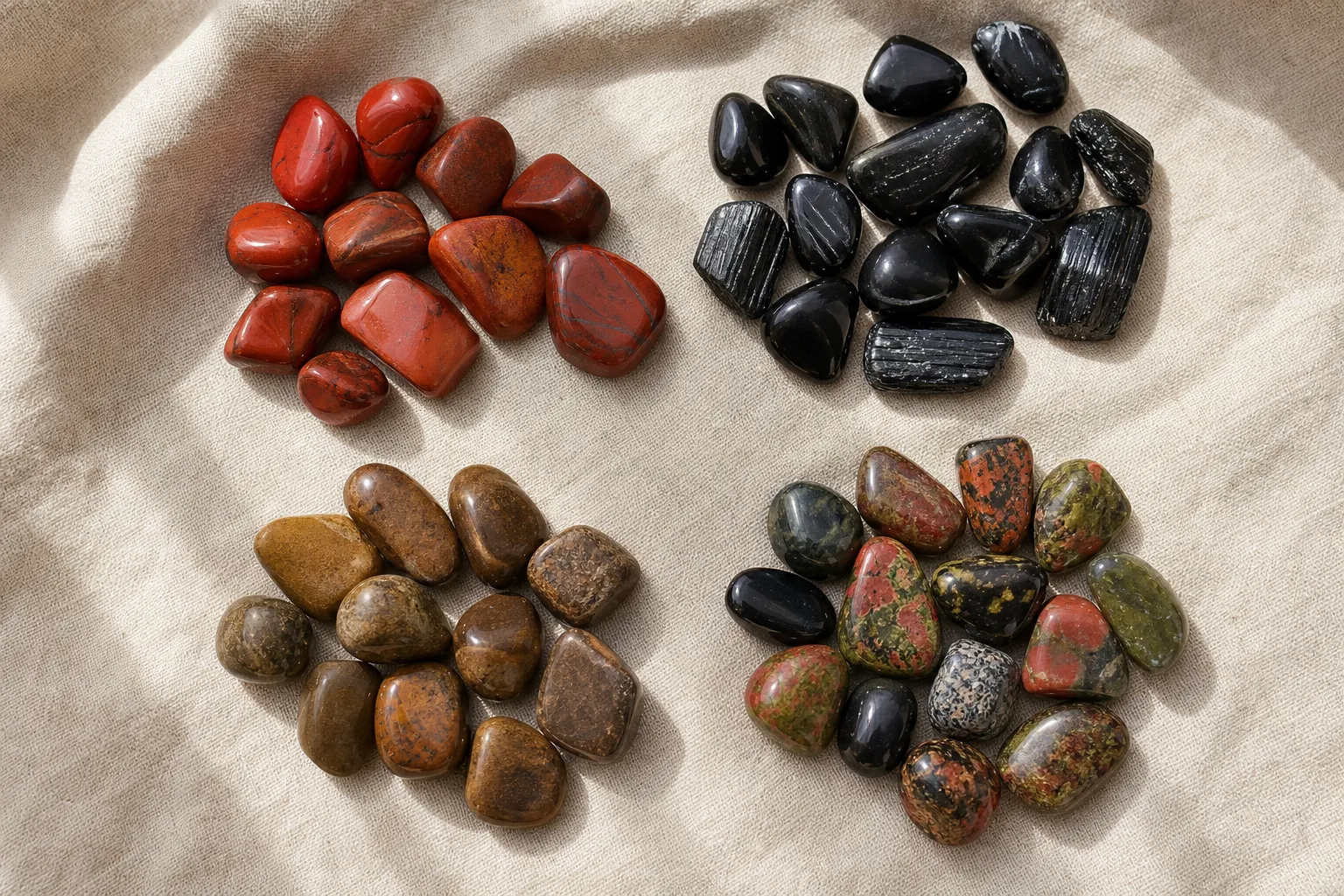
A red stone is often the clearest visual match if you want your root chakra set, altar, pouch, or meditation object to follow the familiar color chart. Red jasper is a typical beginner example because it is usually sold in red, brick-red, rusty, or reddish-brown pieces and is often placed in root chakra sections.
That makes red a simple symbolic choice. It does not make red mandatory.
Why black and brown stones appear in root chakra lists
Black root chakra stones are common because many crystal practitioners and shops use “grounding” language for dark, dense-looking, or earthy stones. Black obsidian and black tourmaline are familiar examples. They are not red, but they often sit beside red jasper in root chakra collections.
Brown stones show up for a similar reason. Brown, tan, rusty, and mottled stones can visually suggest soil, clay, wood, rock, or the ground underfoot. In personal chakra practice, that earthy look is often enough for someone to connect the stone with root chakra themes such as foundation, stability, or the physical world.
Those are symbolic associations. They are not measurable requirements.
This is why one source may say “the root chakra is red,” while a shop sells black tourmaline, black obsidian, brown jasper, or smoky-looking stones in the same category. They are using different kinds of association:
Red
Follows the classic root chakra symbolic color.
Black
Follows common grounding-style crystal language.
Brown and earthy colors
Follow soil, stone, and foundation symbolism.
Mixed stones
May be included because of red markings, dark color, or practitioner convention.
None of these creates an official color rule. They simply explain why red or black root chakra stones are the most familiar options.
Real stones are often less tidy than color labels
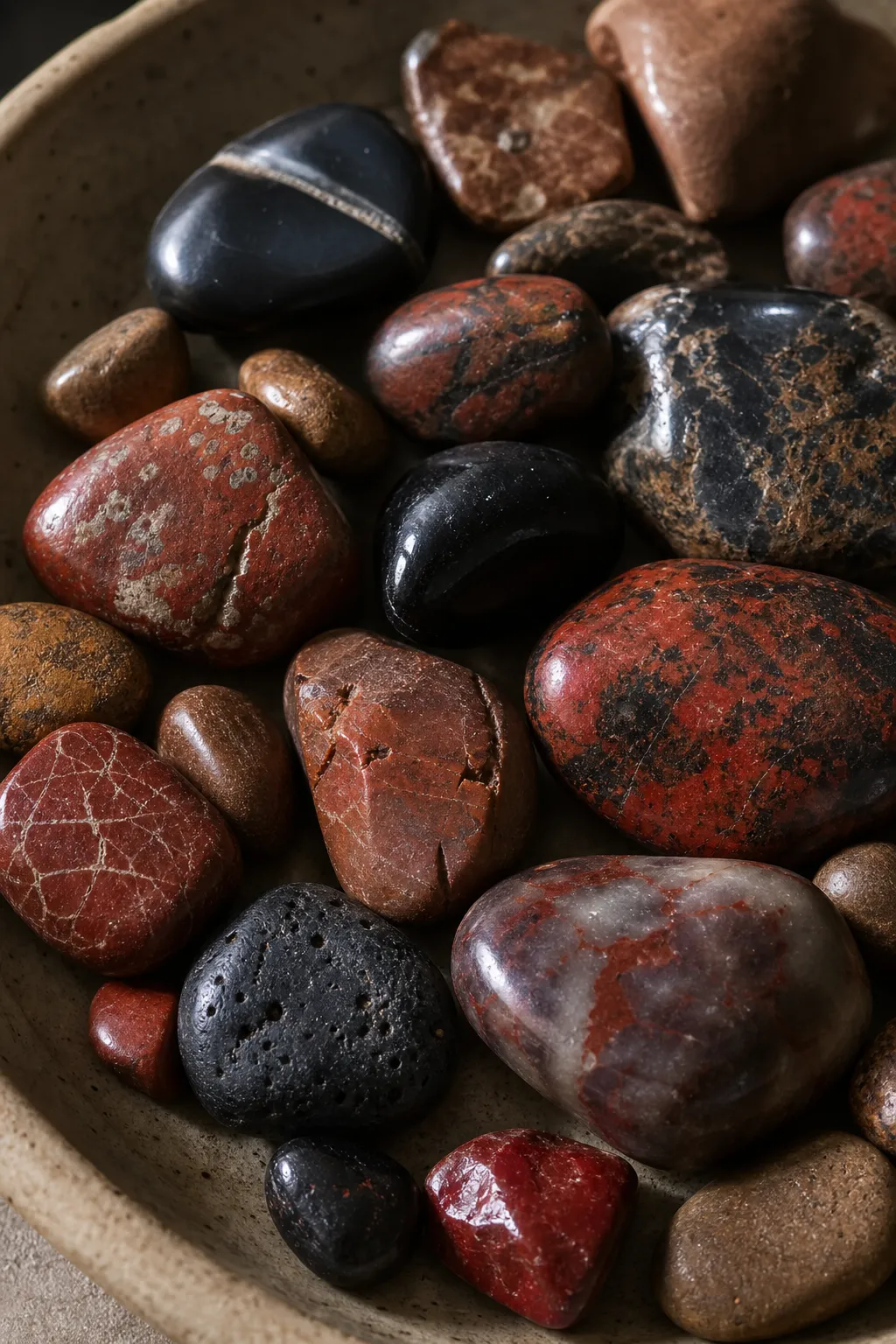
A beginner may expect a root chakra stone to be one clean, obvious color. Real pieces are often more varied. Even when a shop uses a simple label, the stone may be streaked, speckled, banded, cloudy, polished darker on one side, or lighter at the edge.
A few root chakra crystals examples show why strict color rules can become awkward:
- Red jasper may look brick-red, rusty, reddish-brown, or patterned.
- Black obsidian is usually sold as black, but edges can look gray, glassy, or reflective.
- Black tourmaline is typically described as black and often has a rough, ridged, or matte surface.
- Brown jasper or mixed jasper may be grouped with root chakra stones because of its earthy appearance.
- Bloodstone is commonly described as dark green with red or orange-red spots, so it does not fit a simple red-or-black rule.
- Carnelian can be orange, orange-red, yellowish, brownish, or deep reddish depending on the piece.
These examples show the practical issue: the physical color of chakra stones is not always a neat match for the label. If a stone has a root chakra association in the tradition, shop language, or personal practice you follow, a non-red surface does not automatically rule it out. At the same time, a red stone is not automatically a root chakra stone in every system.
Context matters.
A simple way to choose a color
If you are choosing one piece and feel stuck between red, black, brown, or another color, start with the reason you want it.
Choose a red or reddish stone if you want the clearest visual match to the common chakra chart. Red jasper is the easiest beginner example because the color connection is obvious.
Choose a black stone if you are following the common crystal-shop language around grounding crystal colors. Black obsidian and black tourmaline often appear in that style of root chakra practice.
Choose a brown, rusty, smoky, or earthy stone if the soil-and-stone look is what makes the association feel meaningful to you.
If you already own a stone that is not red or black, ask why it is being connected to the root chakra:
- Is it dark or earthy?
- Does it have red, orange-red, or brown markings?
- Is it listed by the teacher, book, or shop you are using?
- Does it fit the way you use your stones for display, meditation, jewelry, or personal ritual?
If the answer is yes, color alone is not the deciding factor.
Helpful rule of thumb
- Choose red for the most literal symbolic-color match.
- Choose black for common grounding-style crystal language.
- Choose brown or earthy mixed colors for a soil, stone, or foundation feeling.
- Choose a non-red, non-black stone when the association makes sense in your source, practice, or personal use.
That keeps the choice practical without pretending there is one universal system.
The common misunderstanding: root chakra color vs. root chakra stone color
The phrase “root chakra stone colors” can be misleading because it sounds as if there is one approved palette.
Usually, people mean one of three things:
- the symbolic color of the root chakra, usually red in popular charts;
- the stones commonly sold for root chakra practice, which may include red, black, brown, orange-red, smoky, or mixed stones;
- the visible color of a physical stone someone can hold, wear, place on a shelf, or use in a small ritual setting.
Those meanings overlap, but they should not be collapsed into one rule.
This is especially useful to remember when reading commercial crystal pages. Shops may use helpful beginner vocabulary, but they may also attach strong outcome language to stones. For this question, you do not need to accept those stronger claims. It is enough to say that many practitioners associate certain stones and colors with root chakra symbolism.
What about non-red root chakra stones?
Non-red root chakra stones are not unusual in modern crystal practice. Black, brown, smoky, rusty, dark green with red specks, and mixed earthy pieces all appear in beginner-facing root chakra lists.
A non-red stone may be included because:
- it looks dark, dense, or earthy;
- it has red or reddish markings;
- it is commonly placed in root chakra crystal sets;
- it is used by a teacher or practitioner in that symbolic role;
- it has personal meaning for the person using it.
Bloodstone is a good example. It is not simply red or black. It is usually described as dark green with red or reddish markings. Yet it often appears in root chakra-related crystal language because the red flecks and darker appearance fit the symbolic frame some people are using.
Carnelian is another flexible example. Some pieces look orange-red or brownish-red, while others appear more orange or yellowish. Some shops include it in root chakra contexts; others connect it with different chakra themes. That variation does not make one casual list universally correct. It shows that chakra-stone groupings vary by source.
Keep the meaning symbolic and personal
Root chakra crystals belong to a belief-based and personal-use context. It is reasonable to choose a stone because its color, weight, pattern, or traditional association feels appropriate for your meditation space, pocket stone, jewelry, shelf, or small ritual layout.
The important limit is that stone color should not be framed as a scientific or health-outcome requirement. A red stone is not automatically stronger than a black one. A black stone is not automatically a root chakra stone in every tradition. A brown stone is not less fitting simply because it does not match a bright red chart.
These are symbolic choices, not universal tests.
So the dependable beginner answer is simple: a root chakra stone does not have to be red or black. Red is the classic symbolic color; black and brown are common grounding-style colors; and some non-red stones are used because of earthy appearance, red markings, practitioner convention, or personal meaning.