
Why Are Blue-Green Crystals Used in Root Chakra Practice
Blue-green stones show up in root chakra practice because many modern crystal practitioners do not treat color matching as an absolute rule. The root chakra, or Muladhara, is commonly shown as red in popular chakra charts, with red, black, brown, and earthy stones often named first. So yes, blue-green crystals are color exceptions.
When people use blue green crystals in root chakra practice, they are usually using them as companion stones, personal anchors, or “bridge” colors rather than as the standard root chakra choice. The stone’s visible look, the person’s symbolic intention, and the way it is paired with more traditional root stones often matter more than matching a chart perfectly.
upward
Start with the broader guide
Use the broader guide first if you need the full scope before this page.
The color mismatch is real
If a blue-green stone looks out of place in a root chakra layout, that reaction makes sense.
In many modern seven-chakra charts:
- red is linked with the root chakra;
- green is linked with the heart chakra;
- blue is linked with the throat chakra.
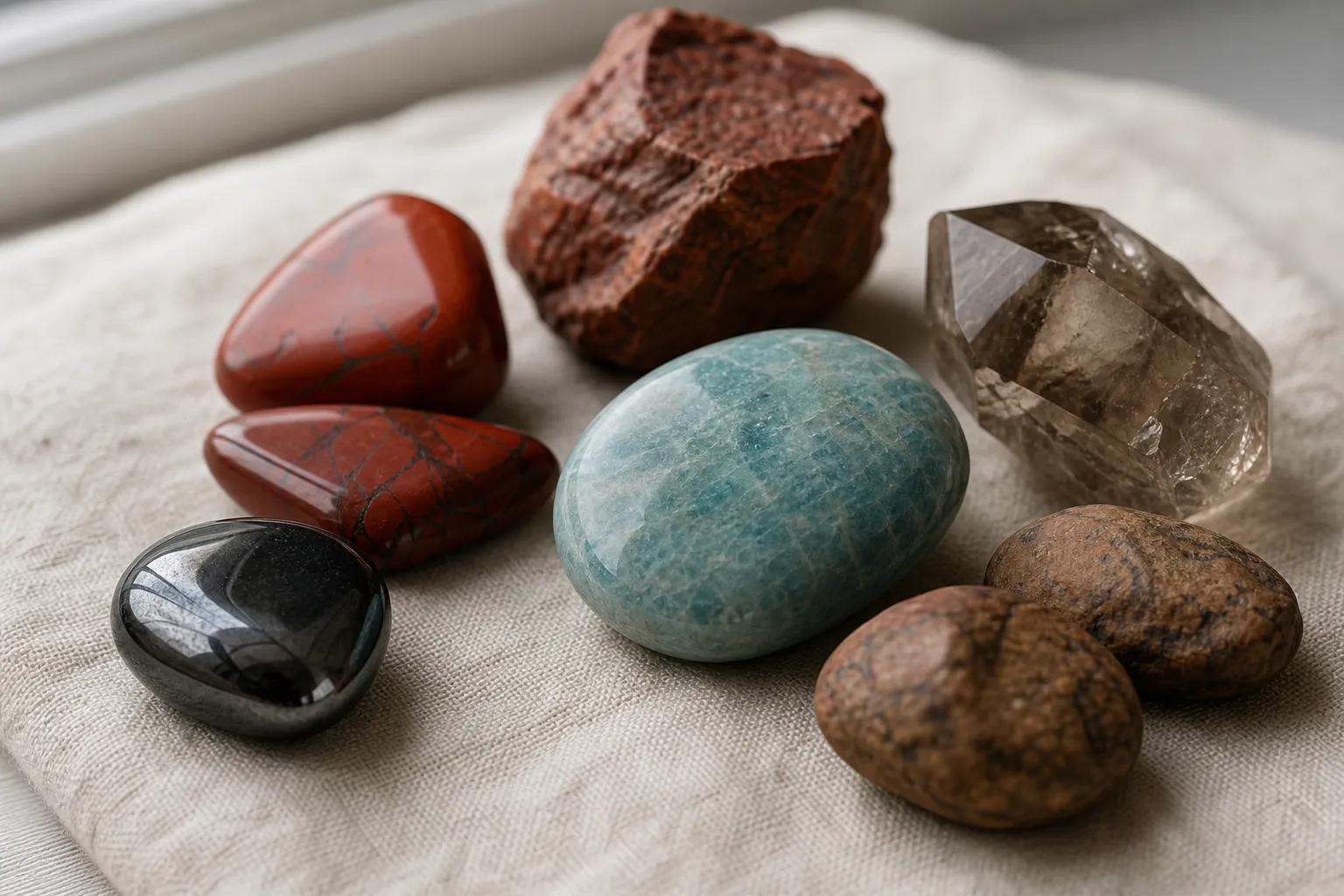
That is why stones such as red jasper, garnet, hematite, smoky quartz, black tourmaline, and other red, black, brown, or earthy-looking pieces are more familiar root chakra choices.
Blue-green chakra stones enter the picture when someone is not choosing by color alone. A practitioner may include one because it has personal meaning, creates contrast, softens a darker layout, or symbolically connects root themes with heart or throat themes. In that use, the blue-green stone is not usually replacing the red root color convention. It is being added as a deliberate exception.
What a blue-green stone actually brings to the layout
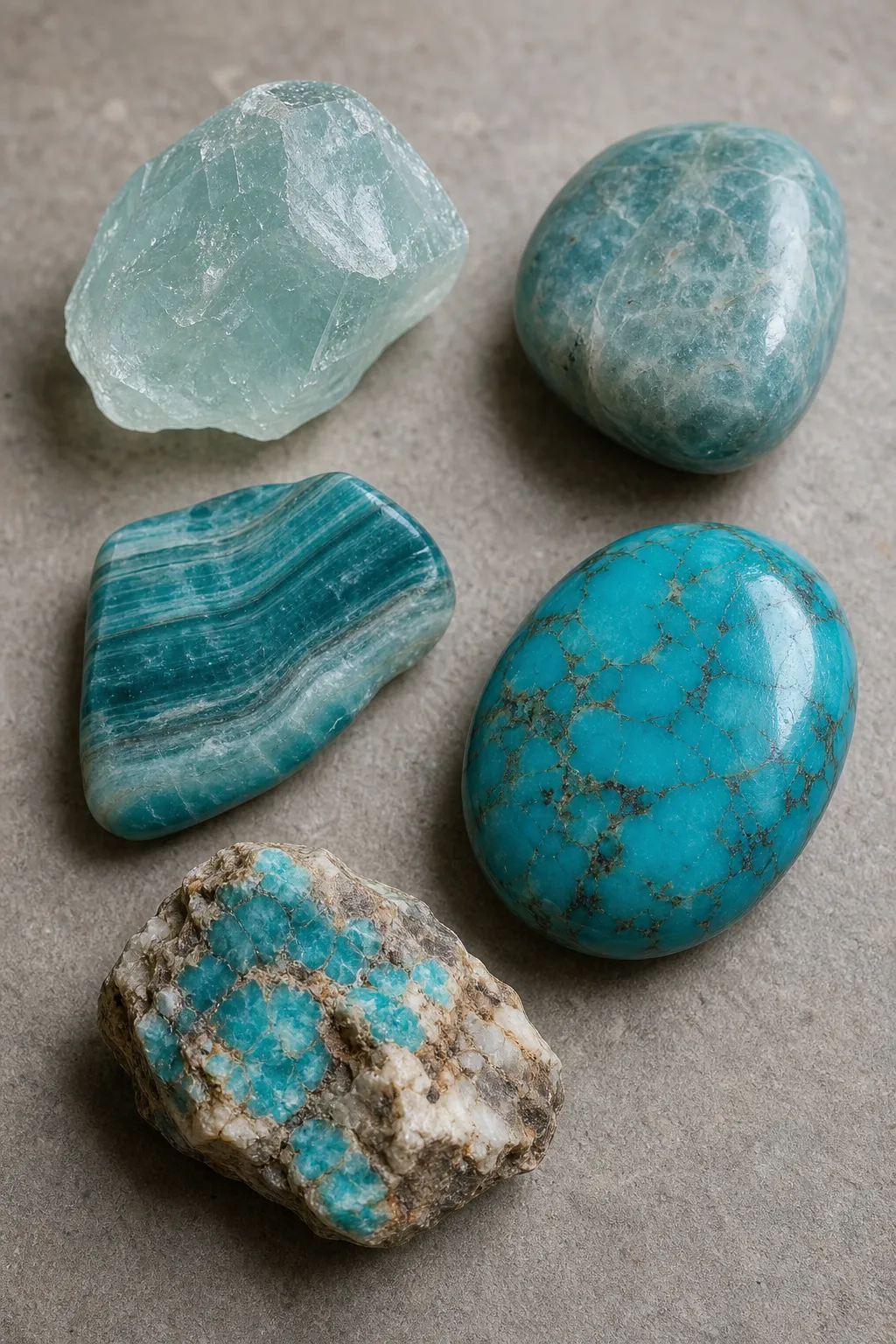
Before any symbolic meaning is added, a blue-green crystal is a visible object. It may be pale, vivid, cloudy, translucent, opaque, banded, mottled, polished, rough, or mixed with white, grey, brown, or earthy matrix.
That physical appearance matters. A pale aquamarine chip, a greenish-blue tourmaline, a blue-green chalcedony, and a turquoise-colored palm stone will not feel the same in a small ritual space. Some look airy and bright. Others look muted, mineral-rich, or more grounded by darker inclusions and matrix.
Gem references describe blue to blue-green colors in stones such as aquamarine and some tourmalines as part of their observable mineral character. Those references help with identification and appearance; they do not turn the stone into a universal chakra tool. The chakra meaning comes from practitioner language, not from gemology.
Common symbolic reasons for including one
- Layout contrast: it breaks up a layout dominated by red, black, and brown.
- Personal reminder: it acts as a personal reminder within a grounding-themed ritual.
- Bridge color: it visually bridges root, heart, and throat color associations.
- Personal story: it carries a personal story, such as a gift, travel piece, or long-kept stone.
- Approachability: it feels more approachable to the person using it than a strict red-stone arrangement.
These are symbolic and personal-use reasons, not settled rules.
Why practitioners make root chakra color exceptions
1. Intention matters more than color matching
Some practitioners choose a stone because of the role they give it in a personal practice. A blue-green crystal may feel steady, cooling, spacious, or familiar to that person, even though it does not match the usual root chakra red color.
This is about personal meaning of crystals, not a universal classification.
2. The stone is used as a companion
Pairing blue green crystals with red, black, or brown stones is a common way to keep the root color cue visible while adding another layer.
For example, someone might place a blue-green stone beside hematite, smoky quartz, or red jasper. The darker or red stone carries the familiar root reference. The blue-green piece adds contrast or a secondary symbolic meaning.
3. The practice has a blended theme
Root chakra practice is often described in modern chakra language around foundation, place, daily routine, belonging, and steadiness. A person may also want to include themes they associate with communication, emotional reflection, or calm focus.
Because green and blue are commonly placed elsewhere on modern chakra charts, blue-green stones can become bridge-color choices. They are used to connect themes, not to erase the usual root/red association.
4. The stone has personal history
Sometimes the reason is simple: the person already owns the stone and feels attached to it. It may have been a gift, a travel find, or a piece they enjoy holding.
In that case, the stone’s story may matter more than strict root chakra color matching.
When a blue-green stone is probably not a root chakra stone
A blue-green stone can be used in a root-themed practice, but that does not mean every blue-green stone should be labeled as a root chakra stone.
Be cautious with charts or shop descriptions that list only blue-green stones for the root chakra while ignoring the more common red, black, brown, and earthy color convention. That may be one practitioner’s interpretation or a retail description, not the standard beginner map.
It also helps to separate three questions:
- What color and material is the stone visibly?
- How is it commonly described in crystal or retail language?
- Why am I choosing it for this specific root-themed practice?
That separation prevents a common misunderstanding: crystal color meanings are not fixed technical categories. They are part of modern symbolic and practitioner language. They can be meaningful in personal use, but they should not be presented as measurable effects or universal rules.
A simple way to decide if the choice makes sense
If you want to include a blue-green stone in a root chakra setup, do not force it into a rigid chart. Give it a clear role.
-
Start with the base color cue
If you want a visually traditional root arrangement, include at least one red, black, brown, or earthy-looking stone. That keeps the root chakra red color association clear.
-
Decide what the blue-green stone is doing
Is it a companion? A contrast stone? A personal object? A bridge between root, heart, and throat themes in your own symbolic language?
-
Look at the actual piece
A blue-green stone with grey, brown, white, or earthy matrix may sit more naturally in a root-themed layout than a bright, glassy blue stone. A small tumbled stone may feel different from a pendant, palm stone, or rough specimen.
A stone can be part of a personal ritual, desk display, meditation object, or intention reminder. Keep the wording modest: it is a symbolic tool in a personal practice, not something that should be framed as changing health outcomes or replacing ordinary care and decision-making.
The main misunderstanding: color charts are guides, not gates
“Root chakra color exceptions” is a useful phrase because it names what is actually happening. Blue-green crystals are exceptions to a common color convention, not proof that the convention never existed.
Color matching is popular because it is easy to remember. Red for root gives beginners a simple entry point. But personal crystal practice often becomes more flexible. People combine stones, adjust meanings, and keep pieces that do not match a chart perfectly.
Clear wording helps:
- “This is a blue-green stone used as a companion in a root-themed practice.”
- “This stone does not match the usual red root color, but some practitioners choose it for personal symbolism.”
- “This pairing keeps a traditional root stone in the layout while adding a blue-green bridge color.”
Less careful wording would make blue-green stones sound like the primary root chakra stones for everyone, or suggest that their color produces a reliable effect. That goes further than this kind of symbolic material can support.
FAQ
Are blue-green crystals traditional root chakra stones?
Usually not in the simple modern color-chart sense. The root chakra is most commonly shown as red, with black, brown, and earthy stones also used in many crystal settings. Blue-green stones are better understood as exceptions, companion stones, or personal choices.
Can I pair a blue-green stone with red jasper or hematite?
Yes, if that pairing makes sense for your personal practice. Red jasper, hematite, smoky quartz, or black tourmaline can keep the root color cue clear, while the blue-green stone adds contrast or a chosen secondary meaning.
Does a blue-green color mean the stone belongs to the heart or throat chakra instead?
In many modern charts, green is associated with heart and blue with throat. That is why blue-green stones are often read through those themes. In root chakra practice, they are usually used as bridge stones rather than as strict root-color matches.
Should beginners start with red or earthy stones first?
If you want the clearest beginner-friendly root chakra color matching, red, black, brown, and earthy-looking stones are easier to understand. A blue-green stone can be added later if you have a specific symbolic reason for including it.
Bottom line
Blue-green crystals are used in root chakra practice because some practitioners treat chakra stone color as flexible, symbolic, and personal rather than strictly chart-based. The root chakra is commonly shown as red, so blue-green stones are best understood as companions, bridge colors, or personal exceptions.
If you use one, describe its visible color honestly, pair it thoughtfully if you want a stronger root color cue, and keep the meaning in the realm of personal crystal practice rather than presenting it as a universal rule.