
Root chakra stone color question
Why Are Black Stones Used for the Root Chakra If the Color Is Red
Black stones are used for the root chakra because modern crystal practice often follows two selection ideas at once. Red is the common symbolic color of the root chakra, while black stones are often chosen for their dark, dense, earthy, or boundary-like appearance.
So black stones for root chakra practice are not usually meant to replace red root chakra symbolism. They are usually included because many crystal practitioners read black, dark gray, metallic, or volcanic-looking stones as visually connected with grounding-style symbolism.
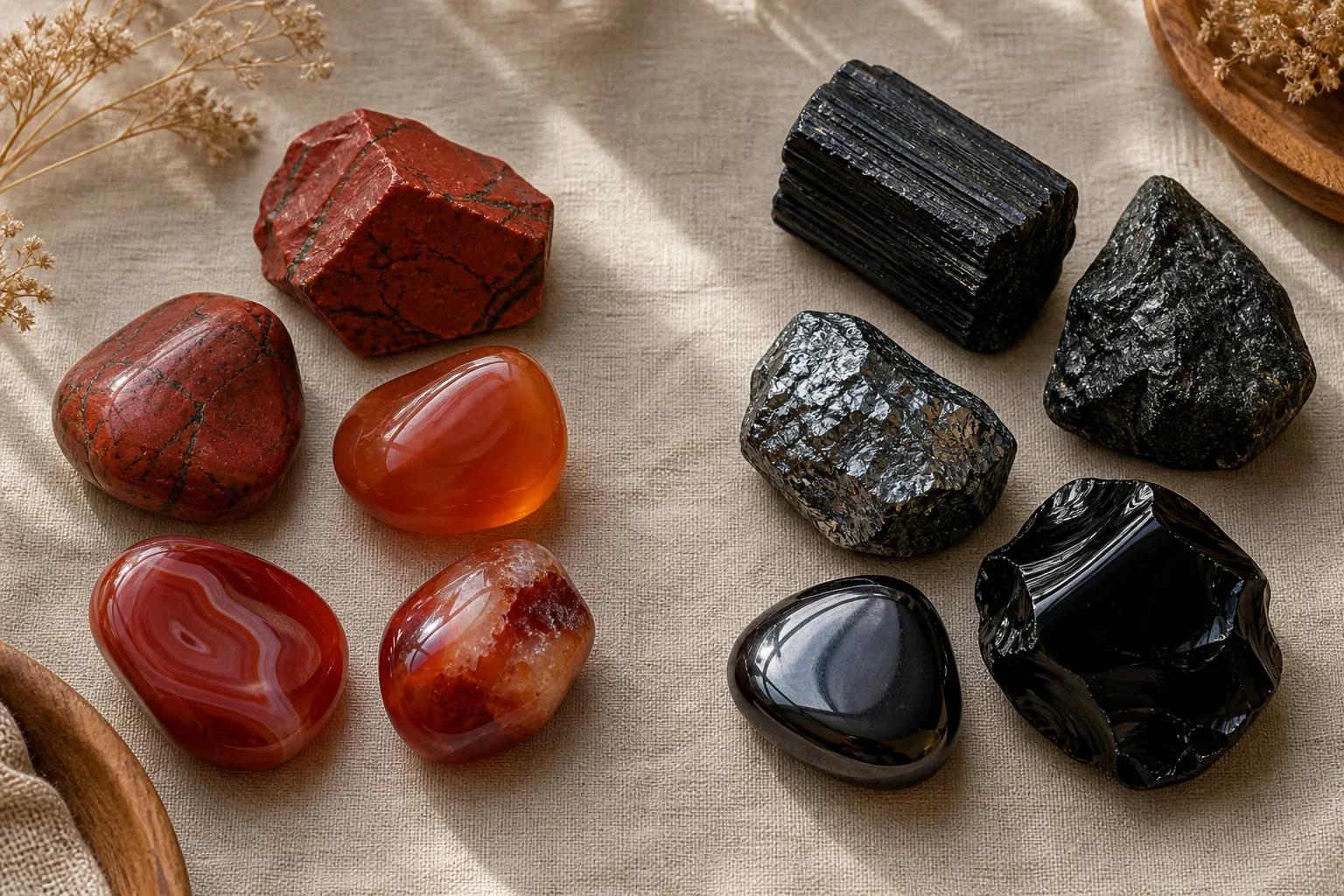
That is why a beginner may see red jasper and carnelian listed beside black tourmaline, hematite, or obsidian. The color chart and the stone list overlap, but they are not the same thing.
upward
Read the full overview first
Use the broader guide first if you need the full scope before this page.
Red Is the Chakra Color; Black Is a Common Stone Association
In many modern chakra and crystal traditions, the root chakra is described as the first chakra and is commonly associated with red. You may also see the Sanskrit name Muladhara in practitioner language. On beginner charts, red works as a simple visual shortcut: it marks the root chakra’s place in the chakra color sequence.
But that does not mean every stone used in root chakra-themed practice has to be red.
Crystal lists are usually looser than color charts. A red stone may be chosen because it directly matches the chakra color. A black stone may be chosen because its appearance suggests a related symbolic idea: earth, weight, stillness, depth, boundaries, or a low, steady visual tone.
A simple way to separate the two:
Color matching
This follows the idea that the root chakra is commonly represented by red.
Common examples: red jasper, red agate, carnelian, red quartz.
Symbolic association
This follows the way dark, dense, earthy-looking stones are read as grounding-style stones.
Common examples: black tourmaline, hematite, obsidian.
This is the main reason phrases like “black root chakra crystals” appear in shops and beginner guides even when those same sources describe the root chakra color meaning as red. They are mixing a chakra color code with a crystal-symbolism code.
Why Black Stones Seem to Fit the Root Chakra Theme
Black stones have a strong visual character. They may look heavy, deep, opaque, metallic, glassy, or volcanic. In modern chakra crystal traditions, those qualities are often translated into symbolic language around steadiness, boundaries, earth connection, or grounding crystal colors.
The important word is “symbolic.” A stone’s color and texture can make it feel suitable for a personal ritual, display, or meditation object. That is different from saying the stone creates a measurable result.
Common examples include:
Black tourmaline
Often sold as rough black crystals, striated pieces, or tumbled stones. Its dark, rugged look makes it one of the most common examples when people ask why black stones are used for root chakra practice.
Hematite
Usually dark gray to black with a metallic-looking surface, especially when polished. Its visual weight is one reason it often appears in root chakra stone lists.
Obsidian
A glossy black volcanic glass with a smooth, dark surface. Its appearance gives it a strong identity in crystal displays and personal collections.
Those descriptions are about appearance and common presentation. Strong claims about life outcomes, health outcomes, or protection promises go beyond what careful sources can support.
Red Stones Still Make Sense
If you prefer direct color matching, red stones are the clearer choice. Red jasper, red agate, carnelian, bloodstone, and other red or red-marked stones are commonly named in root chakra stone lists because they visually echo the red chakra color.
This is the cleanest version of root chakra color matching: red chakra, red stone.
For some beginners, that feels more intuitive. A red stone on a shelf, altar, desk, or meditation mat clearly connects to red root chakra symbolism without needing another layer of explanation. If your main goal is to create a color-coded chakra set, red stones may be easier to understand and organize than black stones.
Black stones enter the picture when the choice is not only about hue. They are chosen when the practitioner or collector is thinking about mood, material impression, or the “feel” of the stone’s appearance. In that sense, black stones and red chakra symbolism can sit together without being a real contradiction.
A useful rule of thumb:
- Choose red stones for root chakra practice when you want a direct color match.
- Choose black stones when the dark, earthy, dense, or boundary-like look is the meaningful part for you.
- Pair red and black stones if you like both systems, but treat the pairing as personal symbolism rather than a requirement.
The Confusion Usually Comes from Retail Language
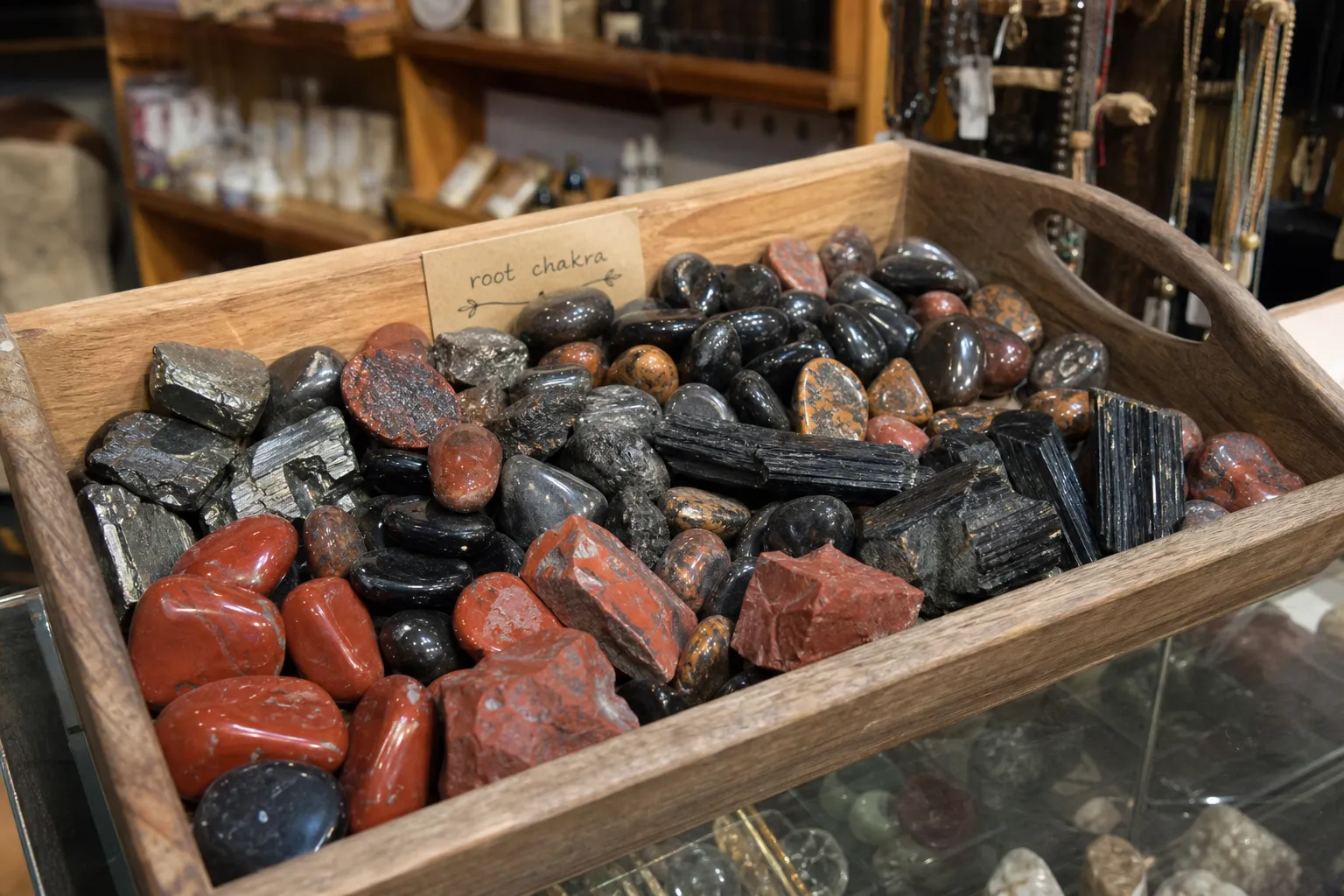
The confusion is understandable because commercial crystal pages often compress several ideas into one short description. A listing may call a stone “for the root chakra,” describe the root chakra as red, and then show black tourmaline, hematite, or obsidian in the same section. To a beginner, that can look inconsistent.
What is usually happening is simpler: the shop or guide is using familiar crystal-practitioner language. It assumes the reader already knows that root chakra stone colors may include red, brown, black, or very dark stones, depending on the symbolic system being used.
This does not make retail wording a rulebook. Many commercial pages also attach strong outcome language to stones, which is where a careful reader should slow down. The steadier interpretation is that those pages show a marketplace convention: black stones are commonly grouped with root chakra themes in modern crystal culture. They do not establish one universal rule, and they do not verify a specific effect.
So when you see phrases like “black tourmaline root chakra,” “hematite root chakra stones,” or “obsidian root chakra stones,” read them as contemporary crystal associations. They do not mean black is the root chakra’s main color.
What Changes the Answer?
The answer depends on which framework you are using.
If you are following a strict color chart, red remains the simplest root chakra color. In that setting, black stones may look like an exception or an optional addition.
If you are following modern crystal associations, the list widens. Dark stones may be included because they visually suggest earth, depth, weight, or boundaries. Brown stones may also appear for similar reasons. Red stones remain relevant, but they are not the only stones people use.
If you are building a personal collection, the practical question is not “Which stone is universally correct?” It is more useful to ask:
- Do I want the stone to match the red chakra color?
- Do I want a dark stone with an earthy or weighty look?
- Am I choosing based on appearance, tradition, retail wording, or personal meaning?
- Am I keeping symbolic practice separate from outcome claims?
That last question matters. Chakra and crystal practices are personal or spiritual practices for many people. They should not be used as a substitute for appropriate professional support when a concern involves health, safety, or urgent life circumstances.
Are Black Stones Better Than Red Stones?
There is no solid basis for saying black stones are better than red stones for the root chakra. The better comparison is not stronger versus weaker; it is different symbolic logic.
Red stones are easier to explain through color matching. Black stones are easier to explain through grounding-style symbolism in contemporary crystal language. One is not automatically more serious, more traditional, or more effective than the other.
For a beginner, the clearest approach is to choose the stone whose role you can explain plainly:
- “I chose red jasper because it matches the red root chakra color.”
- “I chose hematite because its dark metallic look feels visually steady to me.”
- “I chose obsidian because I like the glossy black appearance and the way modern crystal traditions group it with root chakra themes.”
- “I chose black tourmaline because it is commonly presented as a black root chakra crystal, and I understand that as symbolic language.”
That kind of explanation keeps the practice clear. It also avoids turning crystal selection into a rigid rule system.
Short Answers to Common Follow-Up Questions
Is black the root chakra color?
Usually, no. In many modern chakra color charts, red is the root chakra color. Black is more often a stone association used in contemporary crystal practice.
Can I use only red stones?
Yes, if you are working with a color-matching approach. Red stones are the most direct visual match.
Can I use only black stones?
You can, if their appearance and symbolism make sense for your personal practice. Just understand that this is an interpretive choice, not a universal requirement.
Can red and black stones be used together?
Yes. Many people pair them because red answers the chakra color idea, while black adds a darker, earthier visual note.
The Bottom Line
Black stones are used for the root chakra because crystal traditions often select stones by association, not only by color matching. Red remains the common symbolic color of the root chakra, but black tourmaline, hematite, obsidian, and similar dark stones are often included because their appearance suggests earthiness, weight, depth, steadiness, or boundaries to many practitioners.
There is no need to force the choice into a contradiction. Red answers the chakra color question. Black answers a different symbolic question: what kind of stone visually feels connected to grounded, earth-like imagery in modern crystal practice.
For the simplest beginner rule: red stones match the root chakra’s color; black stones are used as symbolic grounding-style stones. Both can appear in root chakra stone lists, but neither should be framed as a promised result or a required choice.