
What Do Red Root Chakra Stones Mean in Crystal Traditions
Red root chakra stones are stones used in crystal traditions to symbolize foundation, steadiness, physical presence, and connection to the root chakra, also called Muladhara or the first chakra. The phrase red root chakra stones meaning is not a mineral category or a scientific label. It is a symbolic and retail-friendly way to connect red, dark, earthy, reddish-orange, or red-flecked stones with root chakra themes.
A simple way to read the label is: this stone is being used as a personal reminder of groundedness, stability imagery, and “foundation” themes. It should not be read as a verified health or body claim.
upward
Start with the broader guide
Use the broader guide first if you need the full scope before this page.
Why red became the root chakra color
In many modern chakra color systems, the root chakra is shown as red. That is why shops, books, and practitioner notes may use phrases such as “red chakra stones,” “first chakra stones,” or “Muladhara stones.” Reference sources describe chakras as part of religious, spiritual, and symbolic systems; crystal traditions later add stones to that framework through color matching, texture, weight, and mood.
For beginners, the important point is that the meaning comes from interpretation. Red chakra symbolism is often linked with words like foundation, steadiness, survival imagery, physical presence, and connection to the earth. Those words are common in crystal and chakra communities, but they are not proof that a stone changes a person’s body or circumstances.
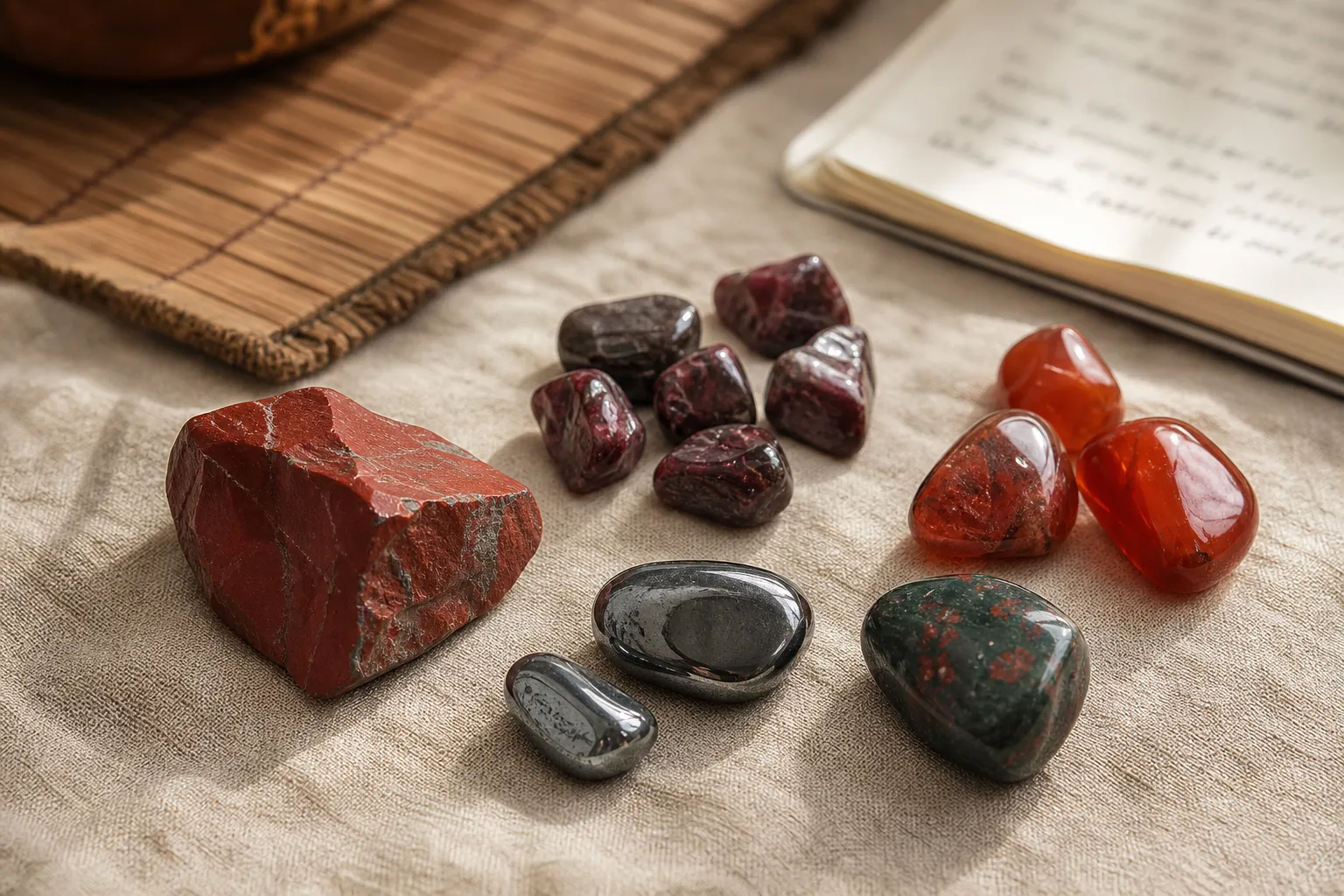
The color link is easy to see. Deep red jasper, dark red garnet, and reddish-orange carnelian visually fit the root chakra colors used in many charts and retail descriptions. The stone becomes a reminder object: something a person may hold, display, carry, or place near a meditation space because its appearance supports the theme they want to focus on.
That is different from saying the stone does the work. Careful wording would be: “In crystal traditions, this stone is associated with root chakra themes.” Less careful shop wording can make the idea sound automatic or universal.
The color cues that make a stone feel “root chakra”
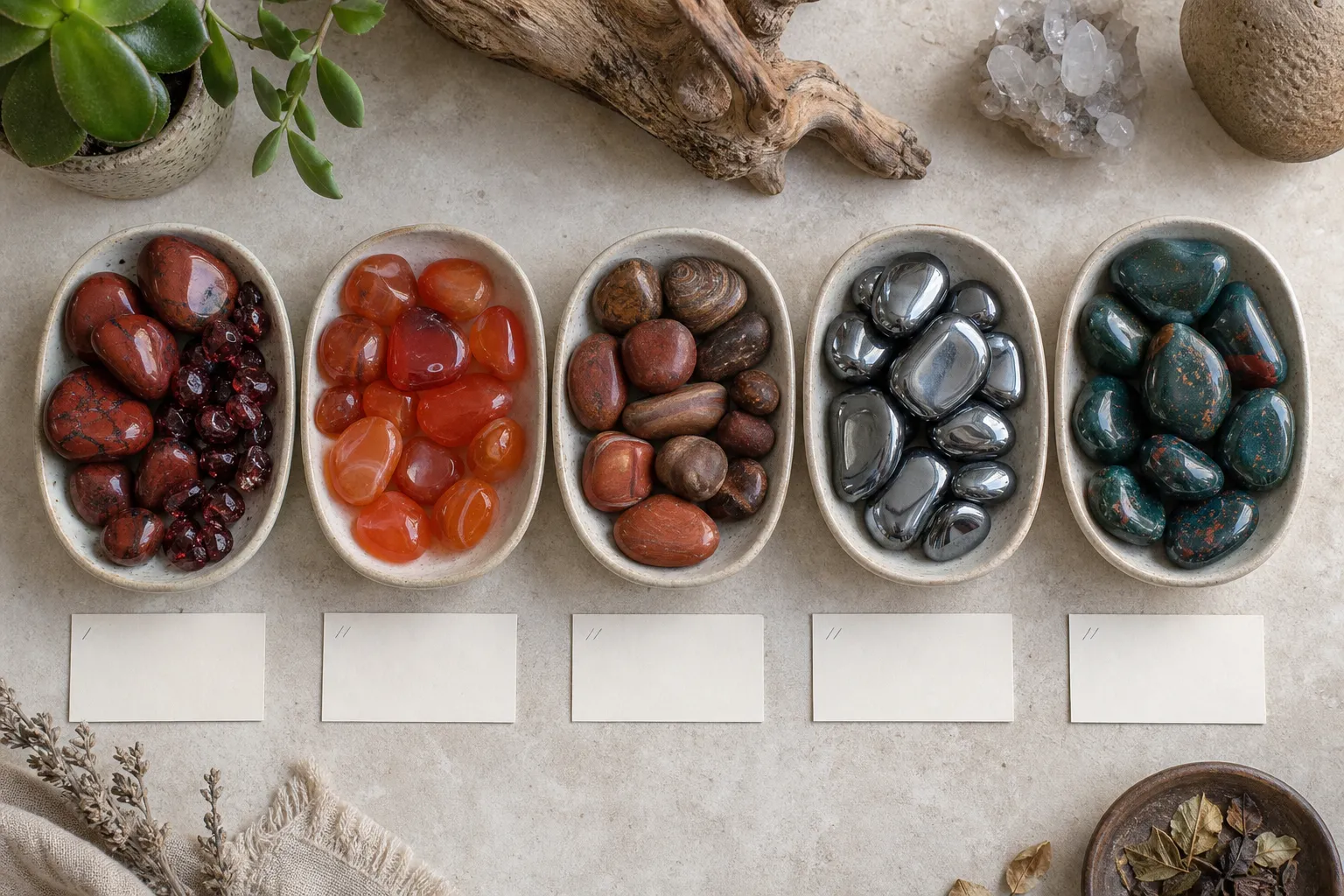
“Red root chakra stones” does not always mean bright red stones. In retail chakra stone wording, the category often stretches across several visual families.
Deep red
Direct match with root chakra colors and red chakra symbolism.
Examples: Red jasper, garnet
Reddish-orange
Warm, earthy color sometimes placed near root or lower-chakra themes.
Example: Carnelian
Brown or brick-red
Soil, clay, weight, and foundation imagery.
Examples: Some jasper varieties
Black or metallic dark
Grounding stone symbolism and dense visual presence.
Examples: Hematite, black stones sold in root chakra sets
Dark green with red flecks
Red markings create a root-chakra link even when the stone is not mostly red.
Example: Bloodstone
This is why black stones may appear beside red chakra stones in root chakra lists. The logic is not only color matching. It is also symbolic grouping. Dark, brown, heavy-looking, or metallic stones are often placed in the root chakra category because practitioners connect them with earthiness, anchoring, and foundation imagery.
Bloodstone is a useful exception. It is not usually a red stone overall; it is better known for dark green coloring with red markings. Yet it may still appear in a bloodstone root chakra category because the red flecks and dense look fit the symbolic vocabulary.
Garnet shows the same split between stone fact and chakra meaning. Gemological sources describe garnet as a group of minerals that can appear in several colors, with red garnets being especially familiar in jewelry. In chakra language, a red or purplish-red garnet may be assigned a root meaning because its color supports the red-root connection. The mineral description and the symbolic use are separate layers.
What common red root chakra stones are meant to represent
These examples are best read as common associations, not fixed rules. Different shops and practitioners may use different wording.
Red jasper
Red jasper is often treated as the most straightforward root chakra stone because it is usually opaque, earthy, and red to brick-red. In personal crystal practice, red jasper root chakra meaning is commonly tied to steadiness, patience, physical presence, and a simple sense of being “rooted.”
Its appearance does much of the symbolic work. It often looks dense, matte or softly polished, and earth-colored rather than delicate or airy. That makes it easy for practitioners to use it as a visual shorthand for foundation themes in crystals.
Garnet
Garnet root chakra meaning is usually linked with deeper red, wine-red, or purplish-red color. Because many garnets used in jewelry have a rich, saturated look, the symbolic language around garnet may feel more intense than the language around jasper.
A careful description would be: some practitioners associate red garnet with strength, commitment, or embodied presence. The gemstone’s visible color supports that association, but the meaning belongs to crystal tradition, not gemology.
Carnelian
Carnelian is often reddish-orange rather than deep red. Mineral and archaeological materials describe carnelian as a red to orange variety of chalcedony, and research on ancient carnelian objects connects its color with iron-bearing features in the material.
In crystal traditions, carnelian often sits near the edge of the root chakra category. Some practitioners place it with root themes because of its warm, earthy color; others connect it more strongly with nearby lower-chakra symbolism. For a beginner, carnelian is not “wrong” in a root chakra set, but it is less visually direct than red jasper.
Dark and metallic stones
Hematite and other dark stones often appear in first chakra stone lists even though they are not red. The reason is symbolic rather than color-based. Their dark tone, metallic sheen, or dense look makes them easy to frame as grounding, anchoring, or foundation objects.
This is also where retail language can become inflated. A balanced reading is that dark stones are used by some people as personal symbols for steadiness, boundary-setting, or contact with the earth element in chakra practice.
How to read shop wording without overreading it
Retail chakra stone wording often compresses several ideas into one sentence: color, chakra name, emotional language, ritual use, and a promised result. Before deciding what a stone means to you, separate those layers.
A practical reading process
- Start with the visible stone. Is it red, reddish-orange, brown, black, metallic, or red-flecked?
- Notice the tradition label. Is it being called a root chakra stone, red chakra stone, Muladhara stone, or first chakra stone?
- Soften absolute wording. Translate strong claims into “is associated with” or “is used as a reminder of.”
- Look for the category logic. Is the stone included because of color, earthiness, darkness, red markings, or common shop convention?
- Choose for appearance and meaning, not promised outcomes. A stone can be meaningful without being framed as producing a specific result.
This keeps the main question clear. In crystal traditions, red root chakra stones represent foundation, rootedness, physical presence, and the symbolic base of an energy map. They are not universal objects with measurable effects.
What can change the meaning
The answer changes depending on which part of the label you emphasize.
If the emphasis is color, red jasper and red garnet are easy root chakra matches because they echo common root chakra colors. If the emphasis is earthiness, brown jasper, smoky-looking stones, or dense dark stones may fit the same theme without being red. If the emphasis is shop category, a stone may be included because modern crystal sellers commonly group it with root chakra sets.
Form changes the feeling too. A polished palm stone feels different from a faceted garnet ring, a rough dark specimen, or a small tumbled bloodstone. That difference does not prove a different effect, but it can change how someone uses the object symbolically. A smooth stone may suit holding during a quiet personal ritual. A ring or pendant may work as a visible reminder. A rough specimen may feel more natural on a shelf or desk.
Personal interpretation matters as well. Some readers respond most to deep red stones. Others find black or brown stones more fitting for root chakra symbolism. In a belief-based practice, the “right” stone is usually the one whose appearance, weight, and meaning feel coherent to the person using it.
Common misunderstandings
One common misunderstanding is that every root chakra stone must be red. In practice, many root chakra lists include black stones, brown stones, metallic stones, and red-flecked stones. The category is partly about root chakra colors and partly about grounding stone symbolism.
Another misunderstanding is treating commercial descriptions as neutral fact. Many shop pages use confident language because they are explaining and selling at the same time. That does not make every phrase useless, but it does mean the wording should be read as metaphysical or retail language.
A third misunderstanding is mixing chakra symbolism with health claims. Chakra systems may use body-location language, such as placing Muladhara at the base of the spine, but a crystal label should not be read as anatomical guidance or as a substitute for qualified care. Government health resources on complementary practices draw a line between personal practices and evidence-based care.
The cleanest way to think about it is to keep three layers separate:
Stone fact
What the stone looks like, what name it is sold under, and how it should be handled.
Tradition meaning
What crystal or chakra communities commonly associate with it.
Personal use
Why you might choose it as a reminder, display piece, jewelry item, or meditation object.
When those layers stay separate, the meaning becomes clearer and less inflated.
A grounded way to choose one
If you are choosing a red root chakra stone, begin with visible qualities rather than dramatic wording. Look at color first: deep red, brick-red, reddish-orange, black, brown, metallic, or red-flecked. Then consider the object itself. Is it comfortable to hold? Is it polished or rough? Does the size suit a pocket, desk, jewelry setting, storage pouch, or personal altar?
For symbolic use, the best choice is usually the stone whose appearance matches the theme you want to remember. Red jasper may feel simple and earthy. Garnet may feel darker and more jewel-like. Carnelian may feel warmer and brighter. Bloodstone may appeal if you like the contrast of dark green and red markings. Dark stones may fit if your idea of root chakra meaning is less about red color and more about weight, stillness, or earth imagery.
Care should stay ordinary. Keep stones dry and padded unless you know the specific material tolerates a cleaning method. Avoid harsh handling, especially with softer, fractured, porous, or unknown stones. If a seller gives care instructions, separate practical handling advice from metaphysical wording.
The short answer
In crystal traditions, red root chakra stones mean symbolic support for root chakra themes: foundation, grounded presence, stability imagery, and connection to the first chakra or Muladhara. The category includes obvious red chakra stones such as red jasper and garnet, but it may also include reddish-orange, brown, black, metallic, or red-flecked stones because modern crystal practice uses both color and symbolism.
The meaning is personal and tradition-based. A red root chakra stone can be a meaningful reminder object, but the label does not verify physical or emotional effects. Read it as symbolic language, choose by visible qualities and personal resonance, and be cautious when retail wording sounds more certain than it needs to be.