
Aquamarine root chakra practice
Why Aquamarine May Appear in Root Chakra Practices
Aquamarine may appear in root chakra practice because some people choose stones by symbolic role, pairing logic, or personal ritual contrast, not only by the usual red-and-earth color system. In a strict color-based layout, it is an unusual choice: aquamarine is blue to slightly greenish blue, while modern root chakra symbolism is commonly tied to red, earth imagery, foundation, and Muladhara at the base of the spine.
So the clean answer is this: aquamarine in a root chakra setting is usually an interpretive choice, not a standard rule. It may sit beside more typical grounding stones, serve as a water-and-earth metaphor, or mark a personal link between throat chakra and root chakra themes.
upward
Read the full overview first
Use the broader guide first if you need the full scope before this page.
The mismatch starts with the stone
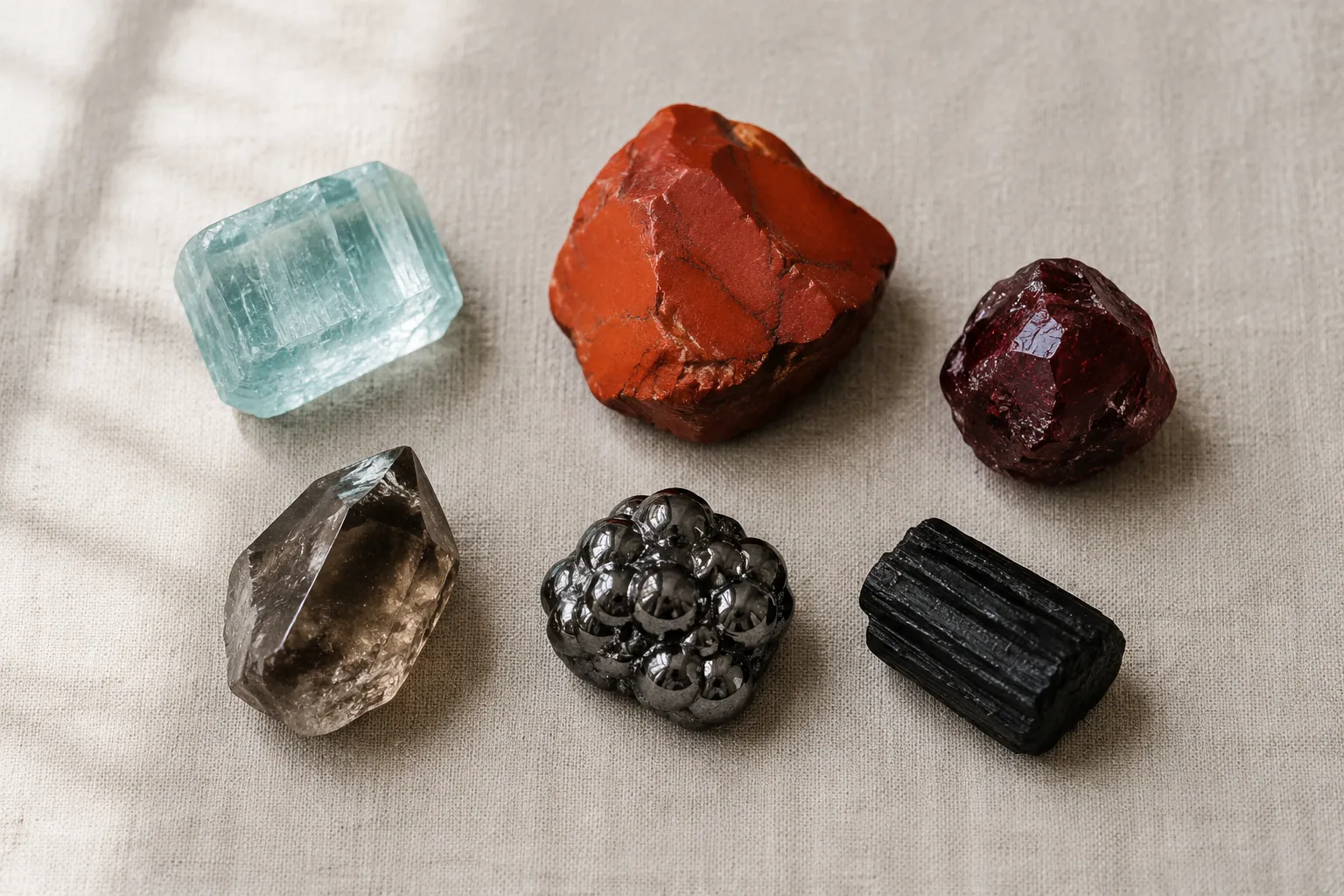
Aquamarine does not look like a classic root chakra stone. GIA describes it as the blue to slightly greenish blue variety of beryl, and many pieces are valued for a clear, transparent, watery appearance. Even the name points toward seawater. That visible identity matters because it explains why aquamarine can feel out of place in a root chakra layout at first glance.
Most beginner root chakra lists lean toward red, black, or dark earthy stones. Red jasper, garnet, smoky quartz, hematite, and black tourmaline fit that visual language more easily because they echo common root chakra color symbolism: red, earth, base, weight, and physical-world steadiness.
Aquamarine sits outside that palette. It brings pale blue, blue-green, and water imagery into a setting where readers often expect red clay, dark stone, or dense mineral color. That contrast is the reason this question comes up at all. If a shop label, ritual layout, or social post places aquamarine near Muladhara, the useful question is not “is this the one correct stone?” but “what frame is being used?”
If the frame is “match each chakra by its common color,” aquamarine is not the obvious root chakra pick. If the frame is “use a stone as a personal cue inside a belief-based ritual,” aquamarine can appear there without replacing the usual red or dark stones.
Why some practitioners include aquamarine anyway
Some chakra communities treat color as one organizing tool among several. Contemporary yoga and chakra education often presents chakra colors as part of a practice lens or visualization system, rather than as a fixed mineral classification. Within that looser approach, a person may choose a stone for its appearance, name, personal association, or relationship to other stones in the layout.
That is where aquamarine can enter a root chakra ritual. Its blue-green surface may be read as water meeting earth: a cool, clear-looking stone placed beside denser, darker, or red stones. This is symbolic language. It can explain why the choice feels meaningful to someone building a personal practice, but it should not be read as an established physical effect.
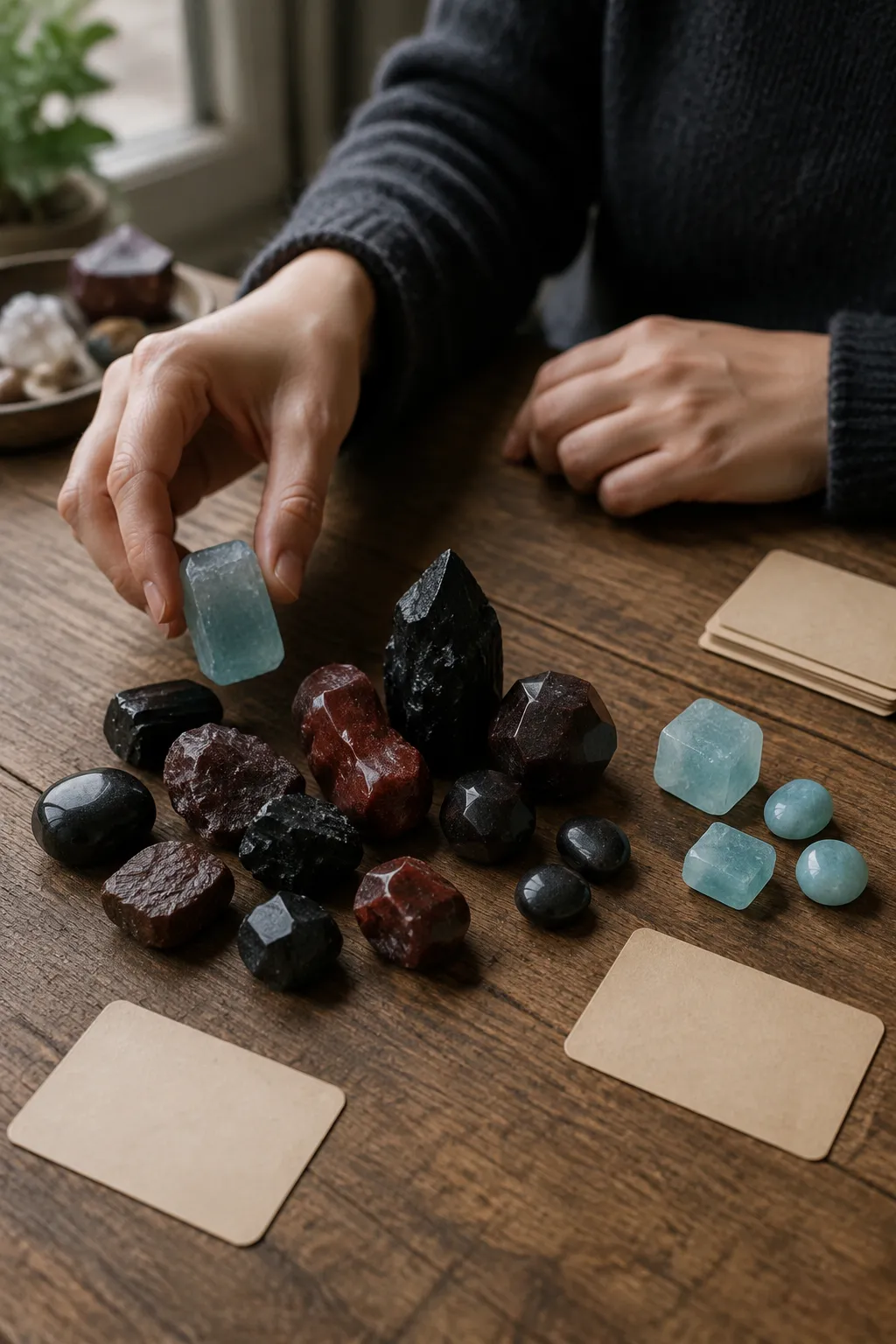
Pairing is another common reason. Aquamarine may be placed with a more typical root chakra stone rather than used alone. For example, someone might set aquamarine next to red jasper, garnet, hematite, smoky quartz, or black tourmaline. In that arrangement, the red or dark stone carries the conventional root chakra color cue, while aquamarine works as a contrasting accent.
There is also a throat chakra connection. Aquamarine is commonly described in crystal-market language as a throat chakra or communication stone. That does not make it a root chakra stone by default, but it helps explain a blended ritual idea: someone may want to connect expression with foundation, or speech with a sense of steadiness in a personal symbolic sequence.
This is why aquamarine chakra placement varies in informal material. Some people follow color strictly. Some follow common crystal-shop categories. Others arrange stones by intention, story, or contrast. The available material does not support treating any one of these as an authoritative rule for aquamarine and Muladhara.
When the placement makes sense
Aquamarine makes the most sense in root chakra practice when the symbolic reason is clear. A careful explanation might sound like one of these:
- “I am using aquamarine as a blue-green contrast beside a red root stone.”
- “I am using water and earth chakra symbolism in the same layout.”
- “I associate this stone with a personal cue I want present during the practice.”
Those are interpretive choices. They keep the meaning inside personal ritual use rather than turning the stone into a guaranteed-result tool.
Aquamarine makes less sense when it is presented as the main root chakra stone simply because a retail page says so without explaining the color mismatch. Broad crystal marketing often assigns many meanings to one stone at once, which can blur useful distinctions for beginners. Aquamarine’s visible identity, blue to greenish blue beryl, should not disappear under a generic root chakra label.
A practical check
- Is the layout using the common root chakra color system, or a personal symbolic system?
- Is aquamarine the main stone, or is it paired with a more typical red or dark stone?
- Is the wording describing personal meaning, or is it making health-outcome claims that go beyond the evidence?
These questions also help with the common confusion around blue crystals for root chakra work. A blue or blue-green stone can appear in a root chakra-themed setting, but that does not make blue the standard Muladhara color. It usually means the person or source is using a wider symbolic frame.
Non-red root chakra stones can be meaningful in personal practice, but the reason should be visible. Black stones, smoky stones, and metallic-looking stones already fit many root chakra retail descriptions because they still feel visually heavy or earth-associated. Aquamarine is different: lighter, cooler, and more water-like. That makes it a deliberate exception, not a quiet variation of the usual palette.
Retail language can blur the answer
Part of the confusion comes from how aquamarine is sold and described. Commercial crystal and jewelry pages often attach broad spiritual wording to stones. Aquamarine may be described with sea imagery, water language, communication themes, and throat chakra associations. Root chakra pages often use foundation, security, earth, red, black, and grounding language. When those vocabularies overlap on a product page, readers can receive a mixed signal.
That mixed signal is not the same as strong evidence. A more careful reading is that the market uses familiar symbolic shortcuts. “Aquamarine root chakra meaning” may appear because someone is blending aquamarine’s water-like appearance with root chakra ritual language, or because a page is trying to place the stone inside a wider chakra set. It does not mean aquamarine has a settled, universal root chakra identity.
The same caution applies to historical lore. Aquamarine has long been associated with the sea in gem writing, and older lore sometimes links it with sailors. That is useful cultural background, and the name itself supports the water association. But lore should stay lore. It can explain why aquamarine feels water-linked; it should not be turned into a promise about what the stone will do.
For a beginner, the clean distinction is this: gemology can tell you what aquamarine is and how it commonly appears; chakra education can show how some communities use color and placement symbolically; retail language can show what phrases shoppers encounter. These are different kinds of information. Mixing them too quickly is where thin explanations go wrong.
A grounded way to read the practice
If you want to understand why aquamarine appears in a root chakra ritual, look at the whole arrangement rather than the stone in isolation. A single aquamarine placed at the base position may be a personal choice, but aquamarine beside red jasper or hematite tells a clearer story: the layout keeps a conventional root cue while adding a cool blue-green accent.
The stone’s surface can also guide the interpretation. A pale transparent aquamarine reads differently from an opaque red stone or a dark, metallic-looking piece. It may be chosen because it visually softens the set, adds a water-colored point of contrast, or connects a throat chakra association with a root chakra theme.
That is the useful middle ground. You do not have to dismiss aquamarine in root chakra practice as automatically wrong, but you also do not need to accept every broad crystal claim attached to it. The placement is strongest when it is described modestly: aquamarine is a blue-green beryl that some people include in root chakra-themed practice as a symbolic accent, pairing stone, or personal cue.
The meaning can matter to the person using it, while staying separate from health, scientific, diagnostic, or guaranteed-result claims.
FAQ
Is aquamarine a traditional root chakra stone?
Not in the usual color-based sense. Modern root chakra symbolism is commonly tied to red, earth, foundation, and Muladhara. Aquamarine is blue to slightly greenish blue, so it is better understood as an interpretive or paired choice in root chakra practice.
Why would someone use aquamarine with root chakra stones?
Some people use aquamarine as a blue-green contrast beside red, black, smoky, or metallic-looking stones. Others use it as a personal symbol that connects water imagery, throat chakra associations, and root chakra themes in one layout.
Does aquamarine replace red or dark root chakra stones?
Usually no. If someone is following the common root chakra color system, aquamarine is not the obvious main stone. It makes more sense as an accent, bridge, or personal cue beside a more typical root chakra stone.
What should I check before trusting a claim about aquamarine root chakra meaning?
Check whether the source explains the color mismatch, separates symbolism from outcome promises, and describes aquamarine accurately as a blue to slightly greenish blue beryl. If the wording sounds broad or absolute, read it as market language rather than a settled rule.