
Pocket Practice
Pocket Carry Ideas for Lapis Lazuli, Aquamarine, and Amazonite in Chakra Practice
For a simple pocket carry lapis lazuli aquamarine amazonite chakra practice, choose one small polished or tumbled stone as the lead piece for the day, keep it in a soft pouch, and let the other two stay at home, on a desk, or in a small tray. If you want to carry all three, separate them from keys, coins, and rough pocket clutter.
The practical aim is ordinary handling: less rubbing, fewer chips, and a routine you can repeat. The chakra meaning is personal and tradition-based, not a verified physical result.
A beginner-friendly version looks like this: pick the stone by color, feel, or symbolic meaning; decide what idea it represents for the day; carry it where it will not be scraped; and return it to the same place when you get home.
upward
Read the full overview first
Use the broader guide first if you need the full scope before this page.
Choose One Lead Stone First
The easiest method is to give one stone the main role instead of expecting all three to do the same thing. Lapis lazuli, aquamarine, and amazonite are often grouped because beginners see them as blue, blue-green, or water-toned stones, but a pocket routine is clearer when each piece has a distinct use.
Lapis Lazuli
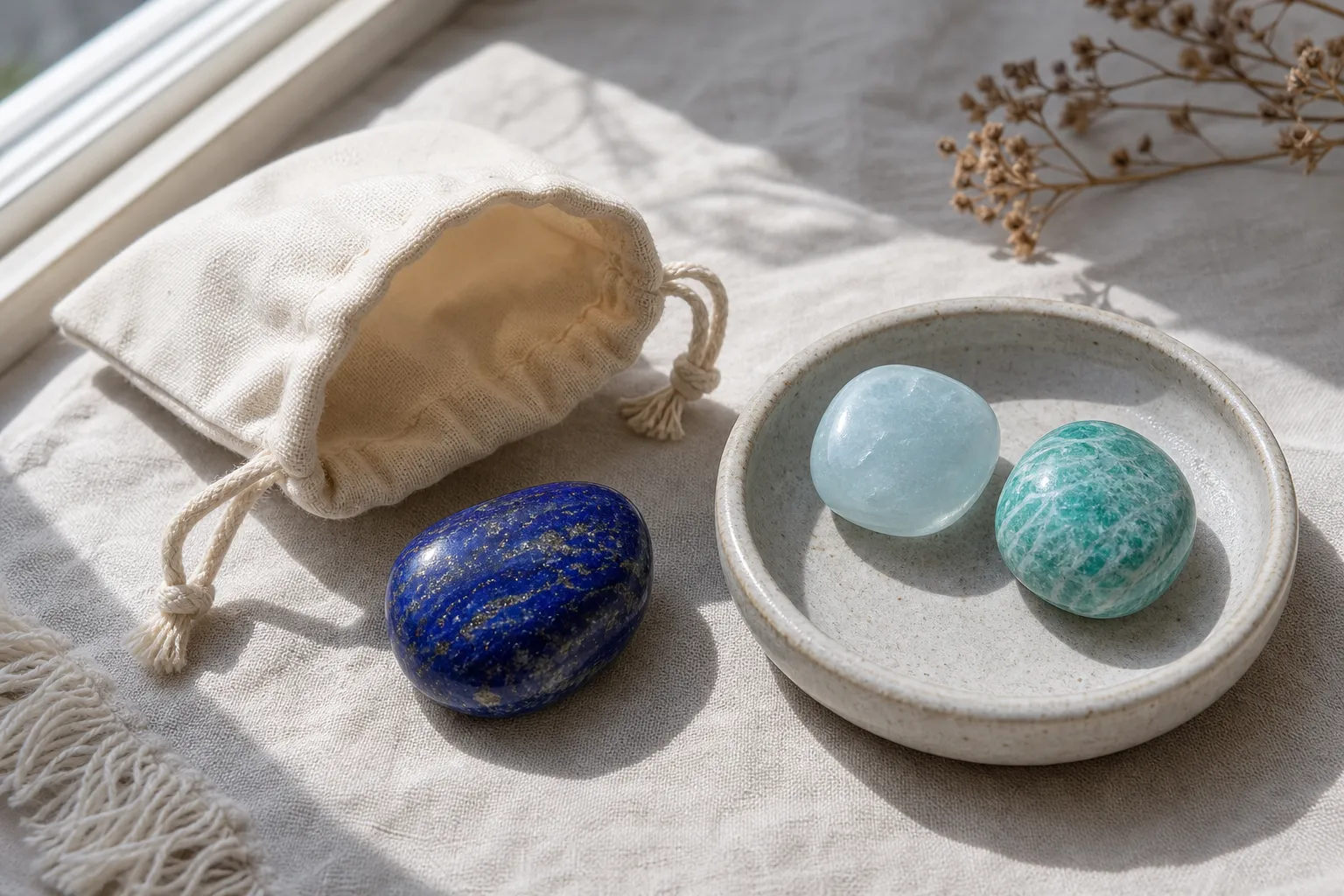
Use lapis lazuli when you want a visually weightier pocket stone. Many pieces sold under this name are chosen for a deep blue look, sometimes with lighter or golden-looking specks depending on the individual stone. In personal chakra routines, some practitioners use lapis lazuli as a reminder of clear speech, composure, or inner reference. That is symbolic language.
Aquamarine
Use aquamarine when you want a quieter, lighter-looking carry piece. Readers often look for pale blue or blue-green tones, especially when they want something less visually dense than lapis lazuli. In a personal practice setting, aquamarine may be used as a prompt for slow pacing, breath awareness, or gentler communication.
Amazonite
Use amazonite when you want a blue-green or greenish stone that feels more earthy in the hand. Its color can sit between green and blue, which makes it a natural bridge for readers comparing blue-green crystals. In chakra language, crystal practitioners may associate amazonite with personal expression, emotional steadiness, or softer intention-setting. For a beginner, the useful part is choosing a visible object that helps hold a chosen idea.
If you are unsure, start with the piece you can identify most easily by sight. A pocket stone that looks distinct is easier to notice, remember, and return to its pouch.
Carry One, Pair Two, or Rotate All Three
There are three practical pocket carry ideas for lapis lazuli, aquamarine, and amazonite: single-stone carry, paired carry, and rotation.
- Single-stone carry is the cleanest option. Choose one stone in the morning and let it stand for the day’s personal theme. This keeps a small-stones-in-pocket habit from turning into clutter, and it makes handling easier because you only need one pouch and one return place.
- Paired carry works when two stones have a clear visual or symbolic contrast. You might carry lapis lazuli with amazonite because the darker blue and blue-green pieces are easy to tell apart. Or you might pair aquamarine with amazonite for a softer color set. In belief-based chakra practice, the pair can represent two personal prompts, such as speaking with care and staying physically present.
- Three-stone carry can work, but it needs more structure. If all three pieces are loose in the same pocket, they may knock against each other and against everyday items. Use a divided pouch, three small cloth wraps, or one pocket stone while the other two stay in a bag pocket or small case.
- Rotation is often the best beginner choice. Keep all three stones together at home, choose one each day, and notice which one you actually remember to carry. A crystal pocket routine only works as a personal ritual if it fits your day.
Keep Pocket Storage Simple
For ordinary pocket storage, the main issue is contact. Small polished stones can rub against hard objects, fall out when you sit down, or get forgotten in laundry. Because this source packet does not include stone-specific durability, cleaning, water exposure, or mineral safety references for these three stones, the most careful guidance is general: handle polished pieces gently, avoid unnecessary abrasion, and do not assume every stone responds the same way to water, heat, cleaners, or rough storage.
A soft pouch is the most useful everyday tool. It gives the stone a consistent place, makes it easier to remove from a pocket, and separates it from keys or coins. A small fabric bag, a padded backpack pocket, or a lined case can serve the same purpose.
Avoid making the setup too bulky. A large stone may look attractive on a shelf but feel awkward in a pocket. A tiny stone may be comfortable but easy to misplace. For tumbled stones for daily practice, a piece that is easy to hold between the fingers and large enough to notice before laundry is usually more practical than a chip or oversized display piece.
Care Boundary
Do not turn pocket carry into a cleaning routine without better care information. This page should not tell you to soak, salt, scrub, or expose lapis lazuli, aquamarine, or amazonite as a general rule. If a stone is dusty, look for care guidance from a reputable mineral, lapidary, or collector-focused source before using water, oils, cleansers, or prolonged sunlight. For pocket carry, prevention is simpler: keep the piece dry, padded, and away from clutter when possible.
Frame the Chakra Meaning Carefully
The chakra part of this practice is best understood as symbolic, reflective, and personal. A stone in your pocket can be used as a reminder of an intention, a tactile cue during a pause, or a way to keep a chosen theme visible in ordinary life. That does not make the stone a health tool, a diagnostic object, or a source of guaranteed emotional or physical change.
This matters because pocket stones are easy to over-describe. Retail and social language around crystals often sounds certain, but this page has no usable external source packet supporting specific chakra mechanisms, mineral effects, or dependable results. A careful wording would be: “In my personal routine, I use amazonite as a reminder to soften my wording,” or “Some crystal practitioners associate lapis lazuli with clear expression.”
For a root chakra-themed site, blue and blue-green stones can seem like an unusual fit because many beginners expect root chakra practice to focus only on red or dark stones. One practical way to resolve that tension is to keep the root theme in the setting, not in a strict color rule. You might carry aquamarine while walking slowly, keep lapis lazuli in a pouch during a workday, or place amazonite near your keys as a reminder to pause before leaving home.
You also do not have to assign one fixed meaning to each stone forever. If the color, texture, size, or memory attached to a piece makes it useful as a personal practice crystal, that is enough for a low-claim routine. The meaning can be written in a notebook, spoken silently, or left unnamed.
Common Confusion Around Carrying All Three
More Stones
One common confusion is thinking that more stones make the practice stronger. For pocket carry, more stones often just means more objects to protect and track. A single well-chosen piece can be easier to remember and less likely to become pocket clutter.
Preference and Certainty
Another confusion is mixing preference with certainty. It is fine to say that you prefer the look of lapis lazuli, aquamarine, or amazonite. It is fine to say that a practitioner may use one as a symbolic reminder. It is not careful to turn those preferences into universal rules about what the stone does for every person.
Pocket Carry and Jewelry
A third confusion is treating pocket carry as the same as jewelry wear. Jewelry has settings, clasps, metal contact, skin contact, and different wear patterns. This page is only about small stones in pocket storage and a personal chakra routine. If the piece is set in jewelry, fragile, valuable, unusually shaped, or sentimental, it may need a different handling decision than an ordinary tumbled stone.
Similar Names
Finally, do not assume that every blue-green stone sold under a familiar name has the same quality, finish, or care needs. Without reliable identification or care information for a specific piece, keep your claims modest and your handling gentle. If the stone matters to you, ask the seller for clear material information and confirm care guidance through a stronger non-commercial reference when available.
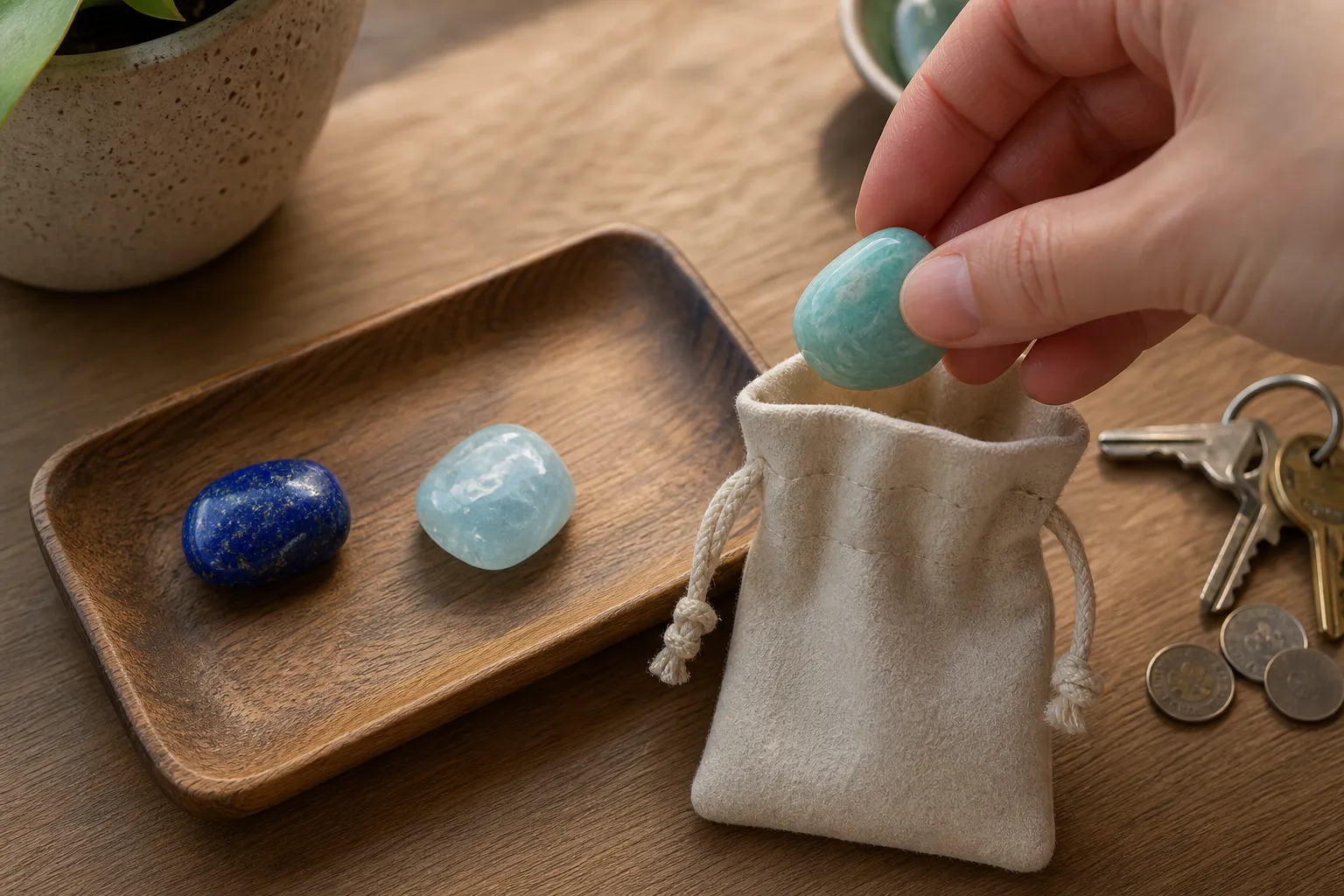
A Simple Three-Stone Pocket Routine
Try this compact routine:
- Place lapis lazuli, aquamarine, and amazonite on a small tray before the day starts.
- Choose one stone by sight, feel, or the symbolic prompt you want to carry.
- Put that stone in a soft pouch rather than loose with keys or coins.
- Name the personal theme in one plain sentence, such as “I will speak slowly today” or “I will return to my footing before I respond.”
- Carry the stone only where it will not be crushed, scraped, or forgotten.
- Return it to the tray at the end of the day and choose again next time.
This keeps the lapis lazuli aquamarine amazonite set visible, the day’s choice simple, and the chakra meaning in personal interpretation rather than outcome language.
If you want the most practical answer, start with one small polished stone in one pouch for one week. Rotate the three stones only after you know which size, color, and pocket location actually fit your day.