
Aquamarine and grounding stones
Why Aquamarine May Be Paired With Root Chakra Stones
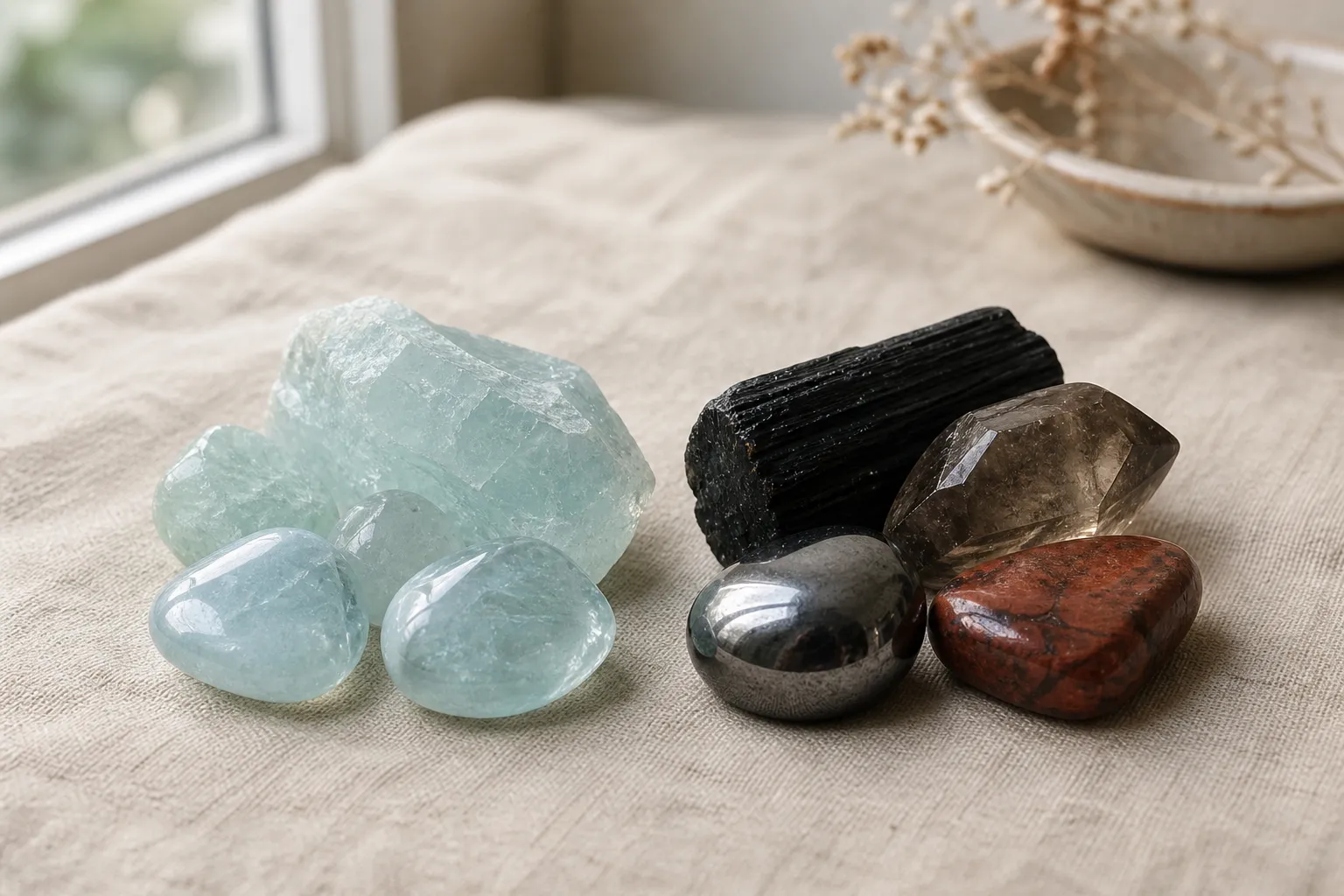
Aquamarine may be paired with root chakra stones because some crystal practitioners use the combination as a contrast: aquamarine brings blue-green, water-like, expression-oriented symbolism, while darker root chakra stones bring steadier, earthier symbolism. An aquamarine root chakra pairing usually does not mean aquamarine “belongs” to the root chakra. It more often means the stone is being used beside a root stone to represent clarity with steadiness.
The useful distinction is simple: aquamarine’s mineral identity and appearance can be described factually; its chakra meaning is interpretive. Pairing it with root chakra stones is a personal-practice choice, not a fixed rule.
upward
Read the full overview first
Use the broader guide first if you need the full scope before this page.
Aquamarine is usually a complement, not the root stone itself
In modern crystal language, aquamarine is most often associated with the throat chakra rather than the root chakra. The visual reason is easy to see: aquamarine is a blue to greenish-blue variety of beryl, often transparent to translucent, with a cool, watery look. Gemological sources describe aquamarine by its mineral family, color, and gem qualities; they do not assign it a chakra role.
Root chakra stones, by contrast, are often described in crystal-practice settings as dark, dense-looking, earthy, red, brown, or black stones. Lists vary, but they commonly include stones such as black tourmaline, smoky quartz, hematite, red jasper, garnet, or obsidian.
So why pair aquamarine with grounding stones at all?
Because many symbolic crystal pairings are based on relationship, not sameness. A practitioner may place aquamarine beside a darker stone to represent a meeting of two ideas:
Aquamarine
Clear expression, coolness, blue-green water imagery, throat-chakra association.
Root chakra stones
Steadiness, base, grounded presence, earth or body-oriented symbolism.
The pairing
Speaking, reflecting, or making choices with steadiness.
That is the practical reason behind many aquamarine and root chakra stones combinations. Aquamarine is not being reclassified as a root chakra stone; it is being used alongside one.
What chakra is aquamarine usually linked with?
If a beginner asks, “What chakra is aquamarine?” the most common modern crystal answer is the throat chakra. Contemporary chakra writing often connects the throat area with voice, expression, and communication. In that setting, aquamarine’s blue-green color makes it a natural fit for throat-chakra vocabulary.
That does not mean every system treats aquamarine the same way. Chakra language comes from cultural, religious, spiritual, and modern practitioner contexts, while crystal-to-chakra lists are often simplified in shops and beginner guides. Those two uses share vocabulary, but they are not the same kind of source.
For this page, the clearest beginner distinction is:
- Aquamarine mineral fact: a blue to greenish-blue variety of beryl.
- Aquamarine chakra meaning: commonly described in modern crystal practice as throat-chakra related.
- Aquamarine chakra placement: often placed near the throat in personal layouts, or worn as a necklace because it sits visually near that area.
- Aquamarine with grounding stones: a symbolic pairing, not a fixed chakra assignment.
This is why an aquamarine necklace may still be worn with a dark grounding-style bracelet or ring. The necklace can reflect throat-chakra symbolism, while the darker stone can represent a root-chakra theme.
Why a blue-green stone can appear in a root chakra pairing
The confusion usually comes from a strict color rule: blue stones go with the throat chakra, red or black stones go with the root chakra, so aquamarine should not appear in root chakra practice.
That rule can be a helpful beginner map, but it is too narrow for many symbolic crystal pairings. Pairings may be built around contrast, sequence, or personal meaning rather than one-color matching.
Aquamarine may appear in blue green stone pairings with root chakra stones for a few reasons.
First, the colors create an immediate visual contrast. Pale aquamarine beside black tourmaline, smoky quartz, or another dark stone can look like water beside earth, or sky beside ground. Even before chakra language is added, the combination communicates difference: light and dark, cool and dense, open and anchored.
Second, the meanings are often described as complementary. In modern crystal-shop language, aquamarine is frequently framed around calm, clarity, water, and communication. Root chakra stones are often framed around grounding or steadiness. A practitioner may use the pairing to symbolize clear expression that stays connected to practical reality.
Third, the pairing helps some beginners avoid treating chakra stones as isolated boxes. Someone may like aquamarine’s look and throat-chakra meaning while also wanting a root-themed stone nearby. That is not necessarily a contradiction; it is a layered personal arrangement.
A careful way to say it is: some people use aquamarine with grounding stones to represent clarity supported by steadiness.
Aquamarine and black tourmaline as a clear example
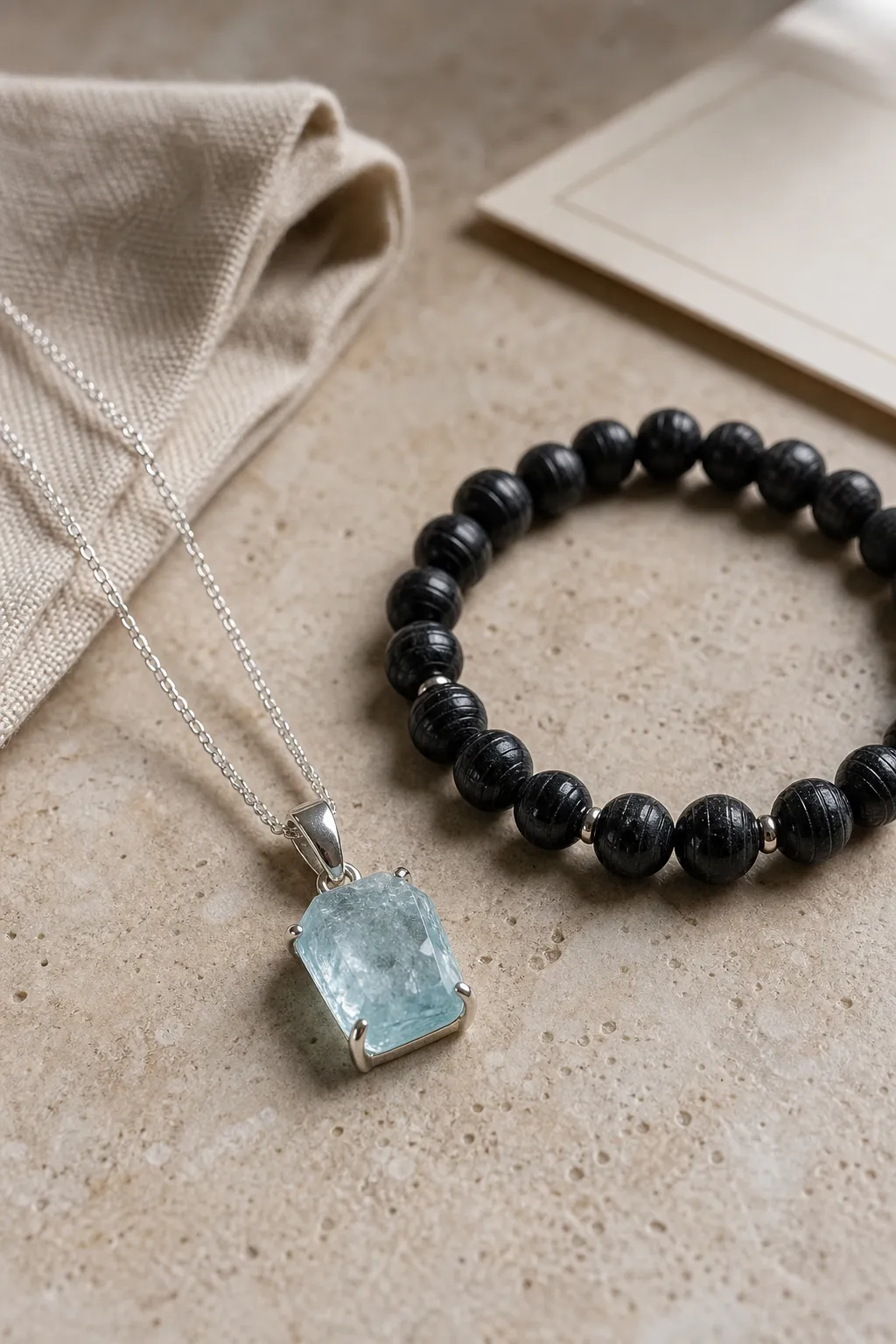
Among commercial crystal-pairing examples, aquamarine and black tourmaline is one of the clearest combinations behind this question. Black tourmaline is commonly described in crystal shops as a dark grounding stone, while aquamarine is described as a blue-green, water-associated, throat-chakra stone.
That does not make black tourmaline objectively protective, and it does not make aquamarine objectively grounding. It shows a common symbolic structure used in retail and practitioner language:
- Aquamarine supplies the blue-green, water-like, expression-oriented side.
- Black tourmaline supplies the dark, root-adjacent, grounding-stone side.
- Together, they are used as a symbolic counterbalance.
This is also why the pairing appears in jewelry. An aquamarine pendant may be chosen for throat-chakra symbolism, while a black tourmaline bracelet or bead may be chosen for root-chakra symbolism. The wearer may like the meaning, the color contrast, or both.
If you are choosing a stone combination, the better question is not “Does aquamarine become a root chakra stone?” but “Does this pairing make symbolic sense for my personal practice or display?” If you prefer strict chakra-color matching, you may want aquamarine in a throat-chakra context and a separate red, brown, or black stone for the root chakra.
What changes the answer?
The answer depends on the framework you are using.
Strict chakra-color chart
Aquamarine belongs more naturally with throat-chakra stones. In that framework, a root chakra set would lean toward red, black, brown, or dark earthy stones.
Symbolic crystal pairings
Aquamarine can sit beside root chakra grounding stones as a complement. The point is not color matching; the point is combining two themes.
Gemology
Chakra placement is not part of the factual classification. Aquamarine is identified by mineral family, color, structure, and gem characteristics, not by chakra role.
Jewelry choice
Physical design matters too. Polished aquamarine often has a crisp, glassy look, and darker stones can create a strong contrast.
A gemological description can tell you what aquamarine is and how it appears, but it does not confirm a chakra assignment. If stones are set or stored together, use ordinary jewelry care: avoid rough storage that lets pieces scrape one another, and follow cleaning guidance for the most delicate material in the piece.
Common confusion around aquamarine chakra meaning
One common misunderstanding is that every stone must have one fixed chakra. In modern crystal practice, aquamarine is most often linked with the throat chakra, but people may still pair it with root chakra stones for symbolic contrast. A pairing does not erase the original association.
Another confusion is reading a shop pairing list as factual support. Commercial pages often use confident language about what stones do. For this topic, that language is better read as market and practitioner vocabulary. It can show how people talk about aquamarine crystal pairing meaning, but it should not be treated as independent confirmation.
A third confusion is mixing mineral research with chakra claims. Aquamarine has been studied as a beryl gemstone, including work on color, trace elements, spectroscopy, and origin. That research can explain material properties, but it does not establish chakra outcomes. Likewise, technical research involving tourmaline in other contexts should not be used to support crystal-pairing claims.
The cleaner approach is to keep the layers separate:
- The stone is real and observable.
- The color and material identity can be described with gemological language.
- The chakra association belongs to belief-based and cultural-practice language.
- The pairing is a personal symbolic choice.
A practical way to frame the pairing
If you like the idea of aquamarine with root chakra grounding stones, keep the practice simple. You might place aquamarine beside a dark stone on a shelf, wear aquamarine jewelry with a darker bracelet, or keep both stones together as a visual reminder of two qualities you want to reflect on.
For a beginner, useful wording would be:
“I am pairing aquamarine with a root chakra stone to symbolize clear expression supported by steadiness.”
That sentence avoids the main confusion. It does not claim aquamarine is a root chakra stone. It does not promise an outcome. It also explains why a blue-green stone can belong in a root-themed arrangement.
If you want a stricter chakra setup, keep aquamarine in a throat-chakra group and choose darker or red stones for the root chakra. If you want a symbolic pairing, aquamarine can sit beside a grounding stone as a deliberate contrast.
Bottom line
Aquamarine may be paired with root chakra stones because modern crystal practice often uses stones in symbolic relationships, not only in fixed color categories. Aquamarine is commonly linked with throat-chakra meaning, blue-green water imagery, and clear-expression symbolism. Root chakra stones are commonly framed around steadiness and grounding.
The strongest answer is this: aquamarine root chakra pairings are best understood as personal symbolic combinations, not as a factual reclassification of aquamarine or a confirmed effect.