
Reflective crystal practice
Journaling Prompts for Lapis Lazuli, Aquamarine, and Amazonite Chakra Practice
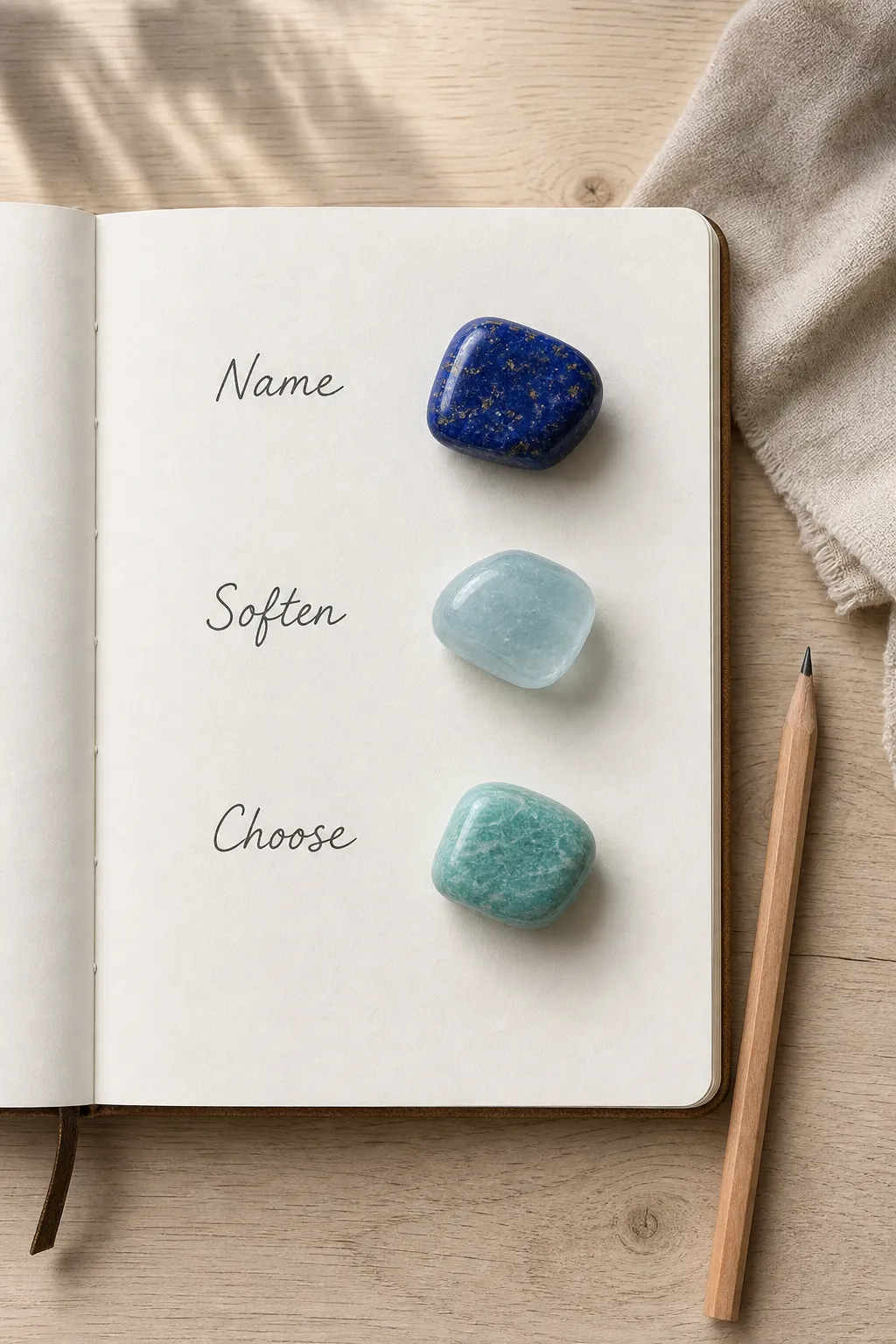
Lapis lazuli blue, aquamarine pale blue-green, and amazonite green-blue can serve as three separate anchors in a personal chakra journal: name, soften, choose. For a simple journaling prompts lapis lazuli aquamarine amazonite chakra practice session, place one stone beside your notebook, write from its symbolic theme for five to ten minutes, then close with one ordinary action you can actually take.
This is a belief-based crystal practice. The stones are focus objects; the writing is personal reflection, not a way to promise a specific emotional or physical result.
upward
Read the full overview first
Use the broader guide first if you need the full scope before this page.
A Simple Three-Stone Journaling Session
Start with one page, three short sections, and a closing line. You do not need a formal altar, a special notebook, or a long ritual. A small tray, desk, windowsill, or bedside surface is enough if it helps you stay with the writing.
Keep the stones dry and simple unless you already have reliable care information for the exact pieces you own. Dyed, treated, delicate, or valuable stones should not be exposed to water, oils, salt, smoke, or strong light just for the sake of a journal session.
Use the stones as symbolic cues
- Lapis lazuli: what wants to be named clearly?
- Aquamarine: what can be approached with more steadiness?
- Amazonite: what choice or boundary needs plain language?
In chakra communities, blue and blue-green stones are often discussed around expression, communication, clarity, and emotional steadiness. Root chakra language usually centers on grounding, belonging, and basic stability. This page brings those ideas together only as a personal reflection frame: how selected blue-green crystals might help you write about steadiness, voice, and practical next steps in a root chakra-themed practice.
A short session can look like this:
- Hold or look at one stone for a few breaths.
- Write the prompt at the top of the page.
- Answer without editing for five minutes.
- Underline one phrase that feels useful.
- End with one grounded action, such as “I will clear my desk,” “I will ask one direct question,” or “I will pause before answering.”
The point is not to force a mystical result. The point is to give your attention a shape.
Lapis Lazuli Journal Prompts for Clear Naming
Lapis lazuli is commonly recognized by its deep blue look, sometimes with gold-colored flecks or lighter markings. In personal crystal journaling, many practitioners connect it with truth, voice, inner honesty, and the courage to name what has been vague.
Use lapis lazuli when the page feels crowded with unfinished thoughts. It can be a useful symbolic anchor when you are trying to separate what happened, what you assumed, and what you actually want to say.
Try these lapis lazuli journal prompts:
- What am I ready to name more clearly, without making it dramatic?
- Where have I been using vague language because direct language feels uncomfortable?
- What is one sentence I wish I could say plainly?
- What part of this situation is fact, and what part is my interpretation?
- If I were writing only for myself, what word would I choose?
- What do I need to stop explaining to people who are not listening carefully?
- Where does my need for stability ask for more honest communication?
For a root chakra-themed page, the last question matters. Grounding is sometimes framed as a feeling, but in everyday life it often looks like clear language: knowing where you stand, what you need, what you can offer, and what you cannot keep carrying.
A good closing line for this section is: “The clearest sentence I can write today is…” Then finish the sentence in ordinary words.
Aquamarine Journal Prompts for Softer Questions
Aquamarine is usually described in pale blue to blue-green language. In crystal communities, it is often placed near themes of calm expression, gentle communication, and clear water imagery. Hold those meanings as practitioner language and personal symbolism, not as established fact.
Use aquamarine when your journal entry is not ready for a firm declaration. It may suit questions that need space: a conversation you are preparing for, a decision that feels too sharp, or a feeling you want to observe before naming fully.
Try these aquamarine journal prompts:
- What question can I ask myself without rushing the answer?
- What would change if I softened my tone but kept my meaning?
- Where am I confusing peace with avoidance?
- What do I need to say gently, and what still needs to be clear?
- Which part of this situation needs more time before I decide?
- What would a steadier version of this conversation sound like?
- How can I stay connected to the ground while allowing uncertainty?
Aquamarine can fit chakra reflection writing when the page feels tense. The prompt is not asking the stone to change the situation. It is asking you to slow the writing enough to hear your own phrasing.
One practical method is to write two versions of the same sentence. First, write the blunt version. Then rewrite it with more care, without removing the main point. “I am done with this” might become “I need to step back from this pattern because I cannot keep participating in it the same way.” That is still grounded. It is simply more deliberate.
Close with: “The question I can carry without forcing an answer is…”
Amazonite Journal Prompts for Choice and Boundaries
Amazonite is often recognized by green-blue or blue-green coloring, though individual stones vary. In symbolic crystal meanings, many practitioners associate it with communication, personal truth, and boundary language. Here, it works best as a prompt stone for choosing what comes next after reflection.
Use amazonite when your writing has already circled the same subject several times. It can help structure a page that moves from feeling into decision, especially if your root chakra practice is focused on steadiness in daily life rather than abstract energy language.
Try these amazonite journal prompts:
- What choice is becoming visible, even if I am not ready to act on it today?
- What boundary would make this situation easier to understand?
- Where am I saying yes because I have not practiced saying no?
- What is one small action that supports the life I am trying to build?
- Which responsibility is truly mine, and which one have I picked up from habit?
- What do I need to put in writing so I stop renegotiating it with myself?
- If groundedness looked like a practical decision today, what would it be?
Amazonite journal prompts are most useful when they end in plain action. Avoid turning the entry into dramatic vows. A grounded answer may be small: send the message, choose a time, tidy the area where you begin the day, write down the spending limit, close the browser tab, or decide not to decide until a specific date.
Close with: “The next small decision I can respect is…”
How to Combine the Three Stones on One Page
If you want one complete chakra practice journaling page, divide the page into three bands: name, soften, choose. Place lapis lazuli near the first band, aquamarine near the second, and amazonite near the third. The order helps keep the writing from scattering.
Use this structure:
Name
What is the clearest truth I can write without exaggeration?
Soften
What question deserves patience before I respond?
Choose
What small action would make my next step more grounded?
This reflective writing structure works because each stone has a different symbolic job. Lapis lazuli frames clarity, aquamarine frames tone and patience, and amazonite frames choice. These are interpretive roles. They are not measurements or promised outcomes.
For a shorter version, write only three sentences:
- “What I can name is…”
- “What I can ask gently is…”
- “What I can choose next is…”
That version is useful when you want crystal prompts for reflection but do not want a long session. It also keeps the practice small enough for ordinary use.
What Can Change the Best Prompt
The best prompt depends less on the stone and more on the writing situation. If you are overwhelmed by too many thoughts, begin with lapis lazuli and use naming prompts. If you are preparing for a conversation, aquamarine may offer the better symbolic cue. If you already know the issue and need a next step, amazonite is the more direct anchor.
The setting can also change the answer. A morning page may need one clear intention. An evening entry may need a review of what actually happened. A new moon, full moon, or seasonal ritual can be meaningful for some practitioners, but those timing choices are optional. The writing still has to make sense on the page.
The stone itself does not have to be large, rare, expensive, or visually perfect. A tumbled stone, small palm stone, bead, or displayed specimen can serve as a focus object. If you are choosing a piece for journaling, select one that you enjoy looking at and can handle comfortably.
Common Confusion Around Crystal Journal Prompts
One common confusion is thinking the prompt must match a fixed chakra chart exactly. This page uses blue-green stones in a root chakra frame because personal practice often blends symbolic themes: voice, steadiness, boundaries, belonging, and daily action. That does not make the stones universal root chakra stones in every tradition or shop description. It means they can be used thoughtfully inside your own reflective practice.
Another confusion is expecting the “right” stone to produce the right entry. A stone can give your attention a cue, but the writing still comes from you. If a prompt feels wrong, change it. If a stone feels distracting, set it aside and write without it. Personal crystal journaling should serve the page, not the other way around.
A third misunderstanding is treating symbolic language as factual proof. Chakra and crystal communities often use rich meaning language, but this article is not presenting lapis lazuli, aquamarine, or amazonite as a confirmed way to change mood, circumstances, or the body. Keep the practice interpretive: a stone, a question, a page, and a grounded next step.
A Beginner-Friendly Prompt Set to Reuse
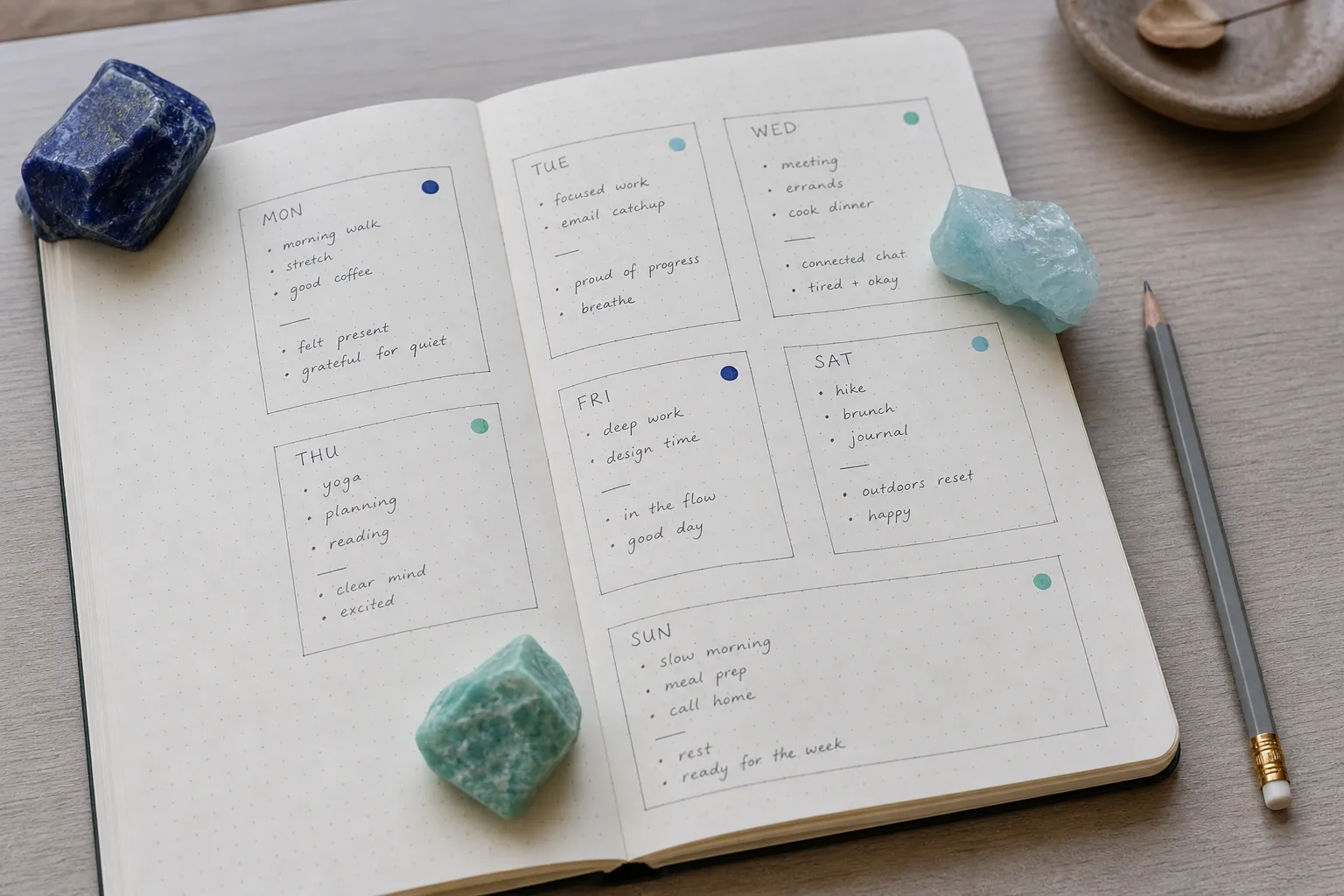
Use this seven-day set if you want a simple rotation without building a larger ritual:
- Day 1, lapis lazuli: What truth have I been circling instead of naming?
- Day 2, aquamarine: What can I ask with more patience?
- Day 3, amazonite: What small boundary would make today clearer?
- Day 4, lapis lazuli: What sentence feels honest and calm at the same time?
- Day 5, aquamarine: Where can I pause before responding?
- Day 6, amazonite: What decision can I make smaller and more workable?
- Day 7, all three: What did I name, what did I soften, and what will I choose next?
You can repeat the set weekly or use only the prompt that fits the day. If the writing brings up material that feels too heavy to hold alone, step away from the ritual frame and seek appropriate support from a qualified person or trusted service. The journal does not have to hold more than it can safely hold.
Closing Reflection
Lapis lazuli, aquamarine, and amazonite can make chakra practice journaling more focused when each stone has a clear symbolic role: name, soften, choose. Keep the stones visible, keep the prompts simple, and let the page end in one ordinary action.
The meaning stays personal. The practice stays reflective. The stone returns to the desk, tray, pouch, or shelf as a reminder to write with care and keep crystal meaning inside belief-based interpretation.