
Everyday Practice Choice
Should You Use One or All Three Stones in an Everyday Chakra Practice
For most beginners, start with one stone. If your goal is to use one or all three stones in everyday chakra practice without making the routine feel crowded, one crystal gives you a clearer point of attention and fewer choices to manage.
All three stones can still make sense if you enjoy variety, like a small visual arrangement, or want to give lapis lazuli, aquamarine, and amazonite different symbolic roles. The choice is personal and practical: it should come from simplicity, preference, visible stone qualities, and the meaning you attach to the routine. It should not be framed as medical advice, a diagnostic tool, or a substitute for professional care.
upward
Read the full overview first
Use the broader guide first if you need the full scope before this page.
Choose One Stone for Focus, Three Stones for Variety
A one-stone practice is usually easier to repeat. You pick up the same piece, place it in the same spot, or use it during the same quiet moment. Over time, that repetition can make the stone feel like a simple personal cue rather than another decision.
This helps if you are new to chakra language. Many crystal practitioners use stones symbolically, but a full set can become confusing when every piece comes with a different association. With one crystal, the question stays small: “What does this piece represent for me today?”
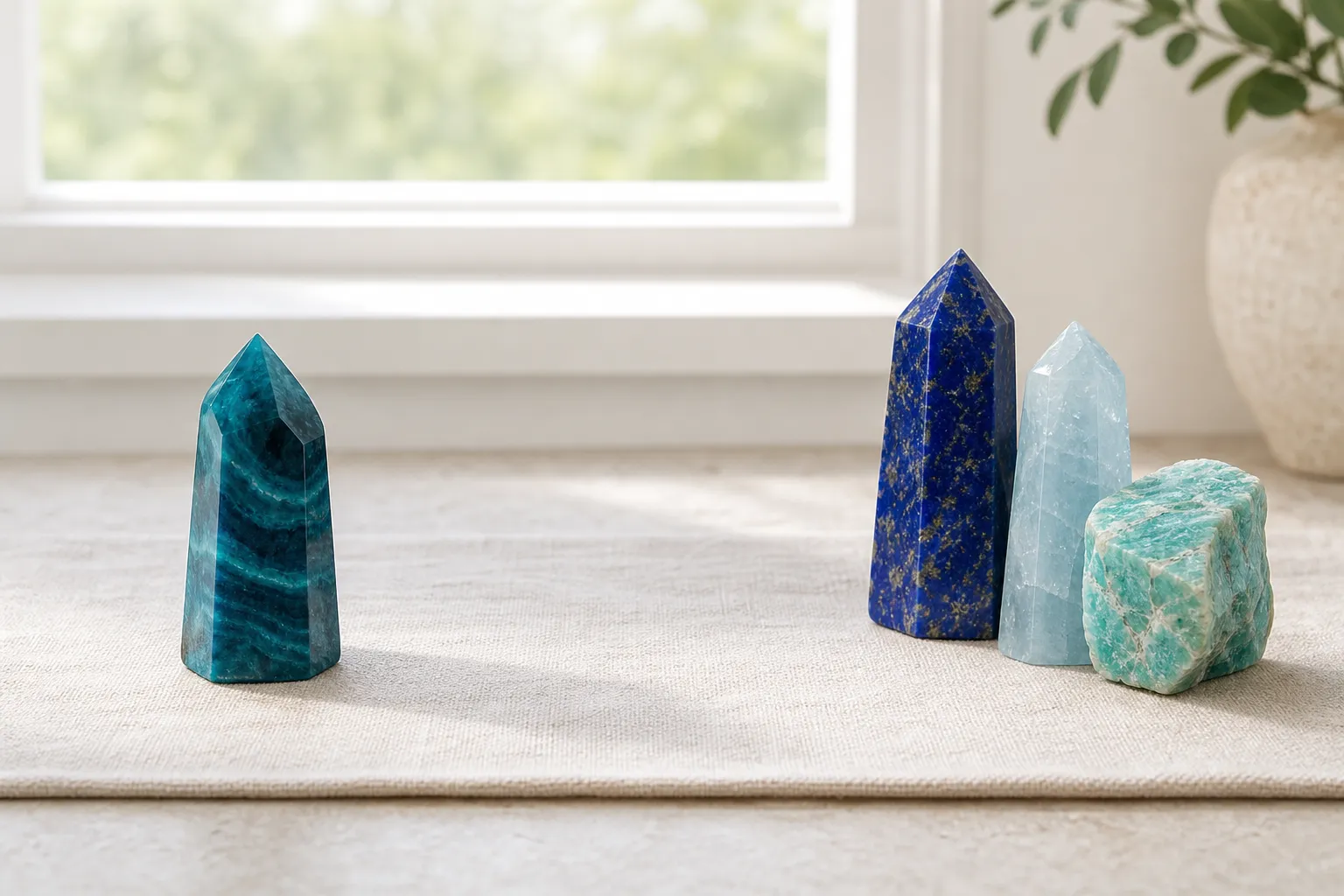
A three-stone practice is better when contrast is part of the appeal. A lapis, aquamarine, and amazonite set may suit someone who likes blue and blue-green stones, enjoys arranging objects, or wants separate symbolic roles. One stone might sit near a journal, one near a candle, and one in a small bowl. Or you might rotate among the three during the week instead of using them all every day.
Neither option is more advanced by itself. One stone is not too basic, and three stones are not automatically more meaningful. The better choice is the one you can understand and repeat without turning the practice into a performance.
When One Crystal Is the Better Everyday Choice
Use one crystal daily if your practice is short, quiet, or easy to interrupt. A single stone works well on a desk, bedside table, small tray, or in a pocket. It keeps the routine narrow enough that you can notice your own response to the piece instead of trying to track a long list of meanings.
One crystal is also useful while you are learning what you actually like. Retail and practitioner descriptions can make every stone sound essential, but everyday use is often more ordinary. You may prefer a smoother palm stone, a deeper color, a lighter piece, or a shape that sits neatly in a dish. Those handling details matter.
If you are choosing among lapis lazuli, aquamarine, and amazonite, start with the one you naturally reach for. Base the choice on color, size, finish, storage, or how well the piece fits the place where you practice. In a beginner chakra practice, that kind of simple selection is often more useful than building a full set before you know your habits.
A one-stone routine may look like this:
- Place one stone where you already pause, such as a nightstand or writing area.
- Use it as a visual reminder for a short personal intention.
- Keep the wording belief-based, such as “I associate this stone with steadiness.”
- Stay with the same piece for several days before deciding whether you want more variety.
This approach is not about making the stone stronger. It is about reducing noise around the practice.
When All Three Stones Make Sense
Using all three stones can work when you want a small, contained set rather than a single point of focus. The set should still have a clear purpose. If the three pieces are included only because a listing makes them sound necessary, the practice can become cluttered quickly.
A lapis lazuli, aquamarine, and amazonite set may make sense if you enjoy combining blue and blue-green crystals visually. The colors can create a calm-looking arrangement on a tray, shelf, cloth, or small altar-style space. That visual grouping is an observable reason to use them together, separate from any claim about what the stones do.
Some crystal practitioners may also assign different symbolic meanings to each stone. One piece may stand for voice, one for clarity, one for calm, or another personal theme. Those meanings should be treated as practitioner language or personal interpretation, not established effects.
A three-stone practice works best when each piece has a job you can explain in plain words:
- One stone is the main focus for the day.
- One stone stays in the display area as a visual anchor.
- One stone is used only during journaling or reflection.
- The set is rotated, not handled all at once.
That last option is often the most practical. You can own a small lapis, aquamarine, and amazonite set without using every piece in every session. A set can be a collection you draw from, not a rule that all three must appear every day.
What Changes the Answer
The choice between one stone and a crystal set depends on the setting, the length of the routine, and how much symbolic detail you want to carry.
Short routine
If your everyday chakra practice lasts only a minute or two, one stone is usually enough. A brief practice benefits from fewer objects. You can sit, look at the piece, hold it if you like, and move on. Adding more stones may make the moment feel busier than intended.
Longer reflection
If your practice includes journaling, arranging objects, or longer reflection, three stones may fit better. A set gives you more visual structure. You might write a line for each piece, place them in a row, or rotate them by day. The set becomes a small framework rather than a pile of objects.
Appearance first
If you are drawn to the stones mainly by appearance, the answer may be visual rather than symbolic. A single lapis-colored piece may be enough if the color holds your attention. A blue-green crystal combination may feel more satisfying if your space looks better with a group. That is a valid practical reason, as long as the practice is not presented as guaranteeing an outcome.
Outside instructions
If you are trying to follow someone else’s exact instructions, pause before buying or using more. Retail and practitioner language often presents sets as complete systems. For a beginner, that can create the impression that a personal chakra practice must include several stones to be “correct.” It does not. A clear, repeatable routine with one stone is more coherent than a complicated one you do not understand.
Common Confusion About More Stones
The most common misunderstanding is that more stones must mean a stronger practice. For this question, it is more useful to think in terms of attention, symbolism, and handling.
More stones can mean more variety. They can also mean more distraction. A three-piece set asks you to decide where each stone goes, what each one represents, and whether you are using them together or in rotation. For some readers, that feels satisfying. For others, it weakens the focus of the moment.
Another confusion is that blue and blue-green stones need a special explanation before they can appear in root chakra-themed practice. On this site, these stones are discussed in relation to personal and retail chakra language, not as a rulebook. If a practitioner or reader connects lapis lazuli, aquamarine, or amazonite with a grounding-themed routine, that is a symbolic choice. It does not need to be defended as scientific fact.
A third confusion is that buying a set solves the practice. A set only gives you objects. The practice still depends on where they sit, how often you return to them, whether the routine stays simple, and whether the wording remains honest about belief and personal meaning.
A Practical Way to Decide This Week
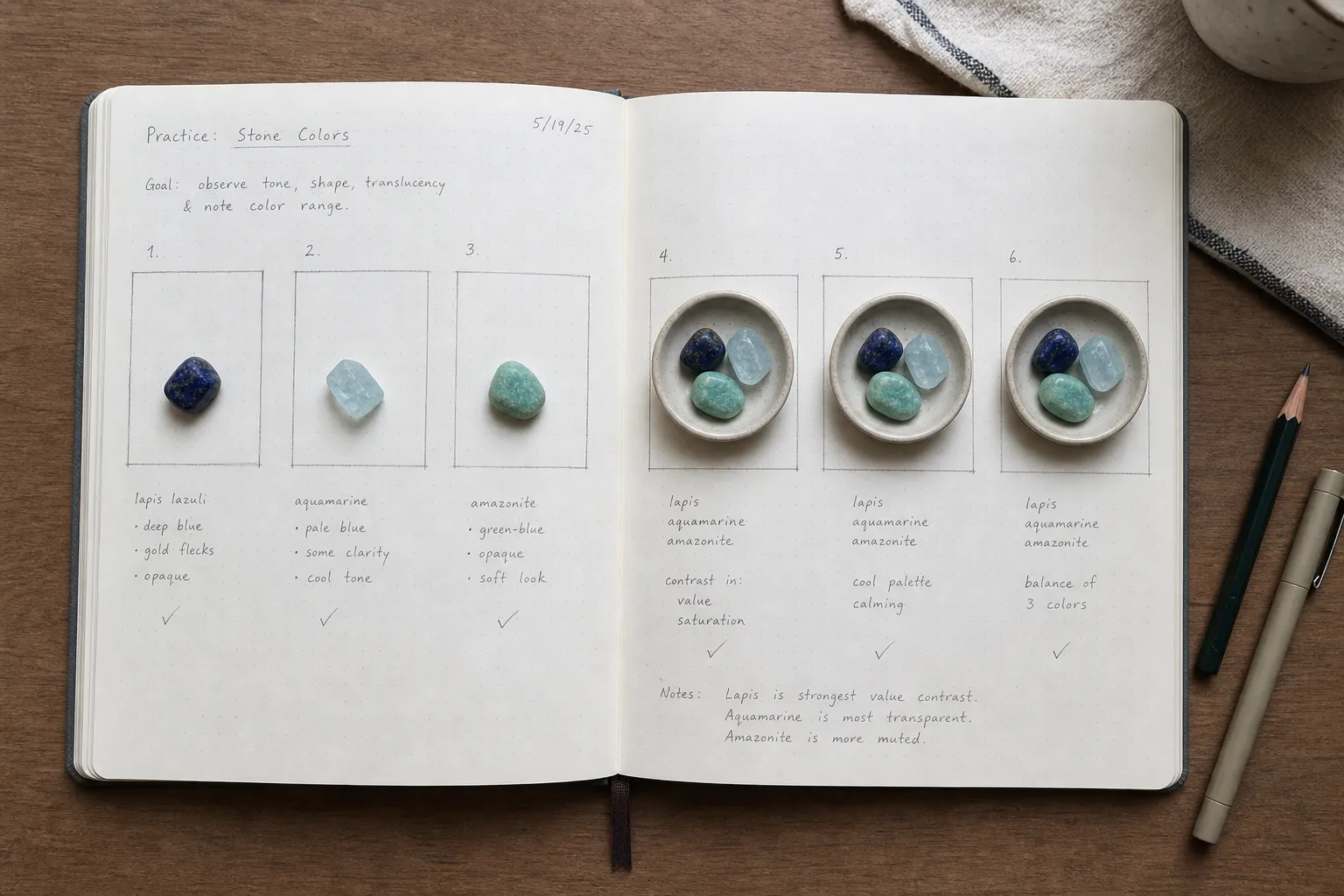
If you are unsure, do not start with a permanent rule. Try a short comparison.
For three days, use one crystal only. Keep it in the same place and use the same brief wording each time. Notice whether the practice feels easy to remember, visually pleasant, and personally clear.
Then, for three days, use all three stones or rotate through the set. Keep the arrangement small. Do not add extra steps just to make the set feel important. Notice whether the additional stones give you useful variety or simply make the routine harder to start.
At the end of the week, choose the version that felt more natural. If both worked, use one stone on ordinary days and the full set when you have more time. If neither worked, the issue may not be the number of stones; it may be the location, timing, or wording of the practice.
A good everyday routine should be easy to describe: “I use one stone as a quiet visual cue,” or “I use a small crystal set because I like rotating the pieces.” If the explanation becomes too elaborate, simplify.
FAQ
Is one crystal enough for an everyday chakra practice?
Yes. One crystal is enough if it gives you a clear, repeatable point of focus. A beginner routine does not need a full set to feel meaningful.
Should I use all three stones at the same time?
Only if the arrangement helps you. If using all three makes the practice feel crowded, rotate them instead or keep two as display pieces.
Can I switch between one stone and all three?
Yes. Many people use one stone on ordinary days and a small set when they have more time for journaling, arranging, or reflection.
Does a three-stone set make the practice stronger?
Not automatically. A set may add visual variety or symbolic structure, but more stones can also create more decisions. Choose the arrangement that keeps the practice clear.
The Bottom Line
Use one stone if you want focus, consistency, and a low-effort beginner chakra practice. Use all three stones if you enjoy a small set, want visual variety, or prefer assigning different symbolic roles to lapis lazuli, aquamarine, and amazonite.
The strongest answer is not “one is better” or “three is better.” Choose the smallest arrangement that still feels meaningful to you, and keep the practice framed as practical symbolic crystal use rather than a claim about health or guaranteed outcomes.