
Weekly Display Rotation for Lapis Lazuli, Aquamarine, and Amazonite
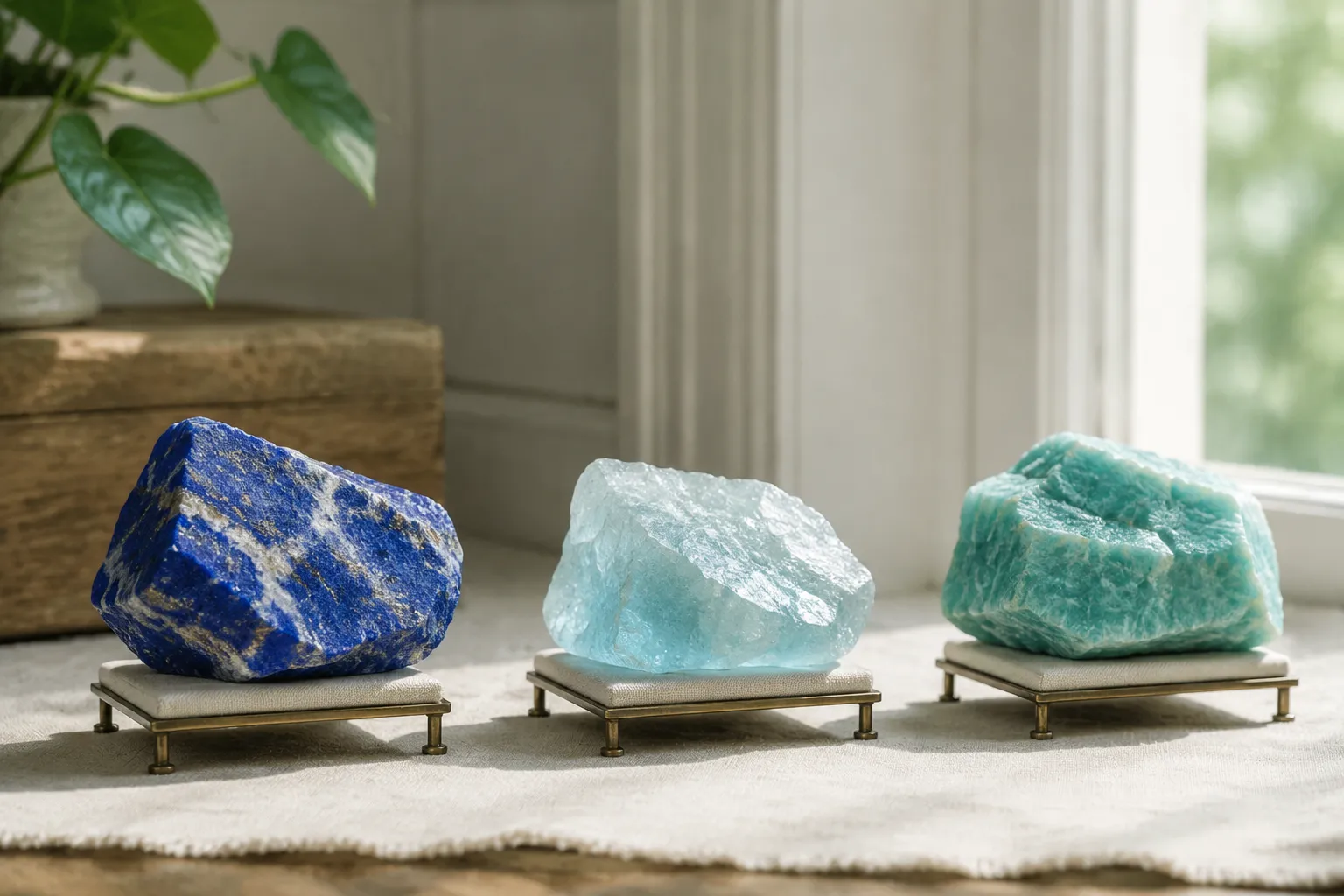
Lapis lazuli, aquamarine, and amazonite can be displayed one at a time, with each stone taking the visible place for a week. For a simple blue green crystal display rotation, try lapis lazuli first, aquamarine second, and amazonite third. Then repeat, change the order, repeat one stone, or pause the practice altogether.
This sequence is an editable personal rhythm. It is not an established chakra rule, a care requirement, or an evidence-based protocol. In chakra communities, practitioners may connect these stones with grounded or root chakra-themed intentions, but those meanings belong to personal or tradition-based practice. They are separate from what mineral and gemological references can establish about a specimen's appearance, composition, treatment, or care.
upward
Start with the broader guide
Use the broader guide first if you need the full scope before this page.
A Simple One-Stone-at-a-Time Display
Choose a small shelf, tray, or other stable surface where the current stone can be seen without repeated handling. Keeping one specimen in view can make it easier to notice color, pattern, finish, setting, and condition over the course of the week.
| Week | Displayed stone | Observation focus | Personal-practice prompt |
|---|---|---|---|
| 1 | Lapis lazuli | Deep blue color, lighter markings, and any visible gold-colored flecks | What does a grounded or steady intention mean to you this week? |
| 2 | Aquamarine | Pale blue to blue-green color, transparency, and surface condition | What quality would you like to notice while keeping the practice practical? |
| 3 | Amazonite | Green-blue color variation, pattern, and overall finish | Which visible features draw your attention without assigning them a fixed outcome? |
The observation prompts are deliberately concrete. Lapis lazuli is commonly recognized by a rich blue appearance that may include lighter mineral markings and gold-colored flecks. Aquamarine is often described as pale blue to blue-green. Amazonite can show a varied green-blue range rather than one uniform shade. These descriptions help with looking at a particular piece; they do not determine its symbolic role.
After the third week, you can repeat the sequence, alter the order, or display whichever stone best fits your current personal ritual context. Showing no stone for a week is also a reasonable choice. The rotation is optional.
Why the Order Can Stay Flexible
The available references do not establish lapis lazuli, aquamarine, and amazonite as a required weekly progression. They support selected information about material, appearance, terminology, and care, not a particular sequence or display period.
Color and symbolism are often blended in crystal language. A practitioner may place a blue-green stone in a root chakra frame because its appearance, personal associations, or ritual setting feels meaningful to them. The color itself does not establish a symbolic role or a physical outcome.
You could choose an order according to:
- Visual contrast: Move from the darkest stone to the palest, then to the more variable green-blue specimen.
- Personal attention: Begin with the piece you most want to observe.
- Display setting: Choose the stone whose color suits the room or surface that week.
- Care requirements: Include a specimen only when you can follow the instructions appropriate to that individual piece.
- Personal symbolism: Let your own chakra-practice framework shape the order, while describing it as interpretation rather than a documented standard.
The value of an editable sequence is modest and practical. A week gives you a clear time boundary, while one visible stone gives your attention a specific subject.
What to Notice in Each Specimen
Let observation lead the practice. Meaning can be part of a personal ritual, but it should not replace looking closely at the object itself.
Lapis Lazuli
Notice the balance of blue color, lighter areas, and gold-colored flecks. Pieces can differ in pattern and intensity. Lapis lazuli may also contain more than one mineral component, and some pieces may have material treatments, so a short retail description may not explain every feature of an individual specimen.
Use the care information supplied with the piece when it is available. The GIA reference on lapis lazuli is useful for checking appearance, composition, treatment terminology, and handling considerations. A cleaning method suitable for one piece should not automatically be applied to another, especially when the specimen's finish or treatment is unclear.
In a personal chakra practice, some practitioners associate lapis lazuli with depth, reflection, or steadiness. Those associations describe a ritual interpretation, not a measurable property of the mineral.
Aquamarine
Aquamarine is often recognized by its pale blue to blue-green appearance. During its display week, observe whether the piece is transparent, translucent, polished, rough, faceted, or set in another material. Its form affects both what you can see and how it should be handled.
Check the full GIA care guidance before deciding how to clean, expose, or store a valuable or treated piece. Cleaning, light exposure, and storage are specimen-specific questions. A weekly display schedule does not change those considerations.
Within chakra communities, aquamarine may be given a calm, clear, or flowing symbolic role. You can include that language in a personal ritual, but keep it within intention and interpretation. A gemological description and a chakra association answer different questions.
Amazonite
Amazonite may appear green-blue, blue-green, or as a more varied combination of tones and patterns. Mindat provides a specialist cross-check for mineral terminology and visible variation. A piece does not need to match a single product photograph or commonly repeated color label to be recognizable as amazonite.
Inspect the specimen's finish, edges, setting, and any care information that came with it. A polished tumble, rough fragment, bead strand, and mounted object may need different handling. The available references do not establish one universal cleaning method for every amazonite item, so avoid presenting a single approach as automatically suitable.
A practitioner may include amazonite in a blue-green crystal practice because its color or pattern fits a chosen symbolic theme. That is personal ritual language, not a confirmed chakra mechanism or a mineral classification.
Display Care: Rotation Is Not Cleansing
Changing which stone is visible is a display choice. It does not mean that the stone requires a weekly energetic reset or that a particular rotation has a physical effect on the specimen.
Before changing the display, use a short handling check:
- 1. Confirm which specimen you are moving and whether you have information about its treatment or setting.
- 2. Lift the piece by its main body rather than pulling on a mount, wire, chain, or delicate attachment.
- 3. Check the display surface for grit, moisture, or anything that could mark the specimen.
- 4. Follow piece-specific guidance before using water, cleaning products, direct light, or prolonged exposure.
- 5. Store the removed stone in a separate soft container or compartment if it will not remain on display.
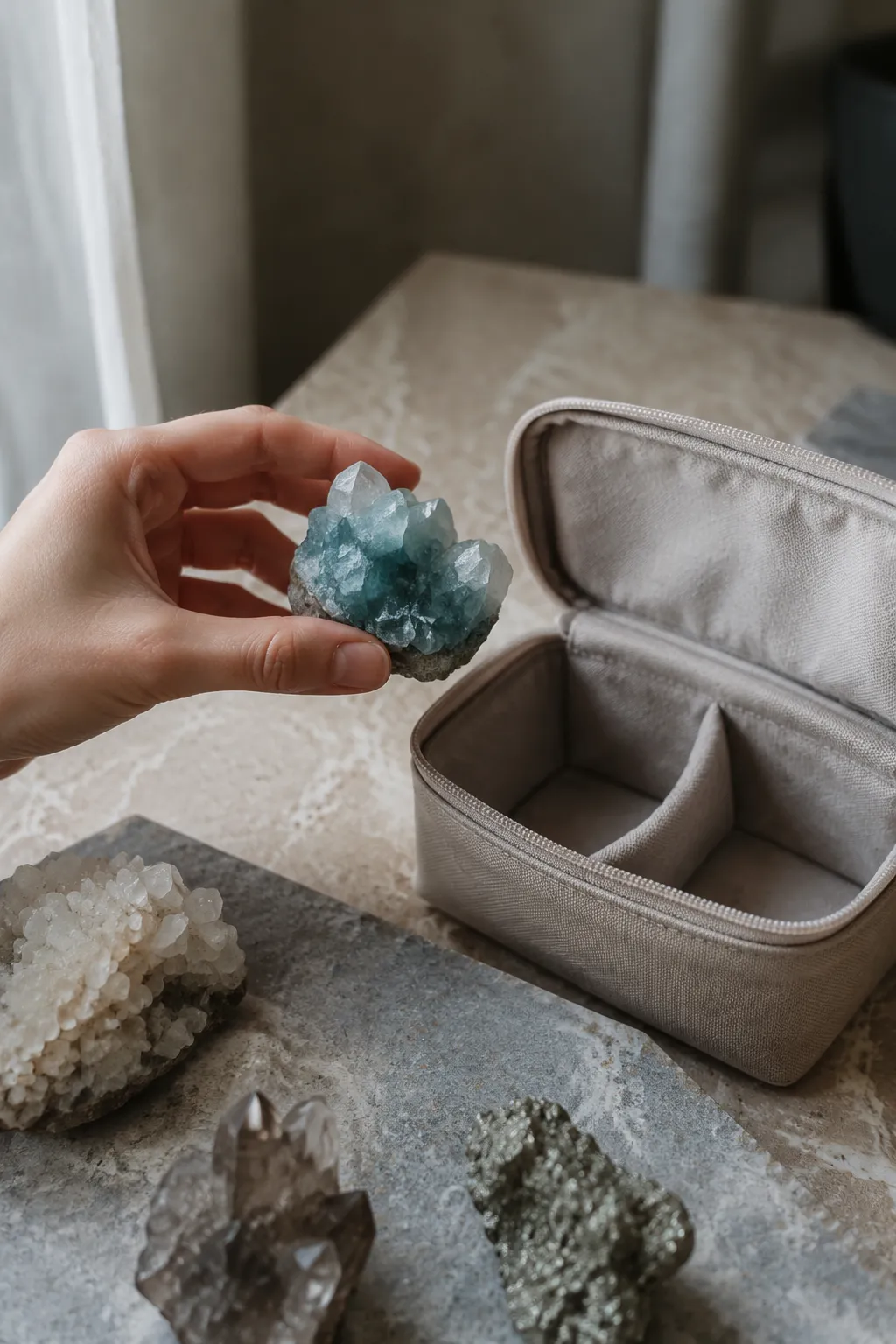
Aquamarine cleaning and storage should be checked against the full GIA guidance. Lapis lazuli care and handling also deserve attention because pieces can differ in appearance, composition, and treatment. For amazonite, use the actual specimen's condition and accompanying information rather than assumptions based only on its name or color.
When a piece's treatment, setting, condition, or handling history is unclear, pause the rotation and seek specimen-specific information from a qualified gem or mineral specialist, or from the source that supplied the item. That is a practical handling step; it does not determine the stone's personal meaning.
Common Misunderstandings
Does one stone per week follow a traditional chakra system?
The available material does not document a universal one-stone-per-week method. You can use the sequence as a personal framework, but it should remain your own rhythm or an example for organizing attention.
Must the stones appear in the order lapis lazuli, aquamarine, then amazonite?
No fixed order is supported here. The suggested sequence simply creates a visual shift from deep blue, to pale blue-green, to more varied green-blue. You can reverse it, repeat one stone, or choose by appearance and personal symbolism.
Does blue-green color decide whether a stone belongs in a root chakra practice?
No. Color is an observable feature. Chakra placement is an interpretive choice within particular traditions or personal practices. A blue-green crystal may feel meaningful in a root chakra frame without that color serving as proof of the association.
Should a stone be placed in sunlight or water between weeks?
Do not infer an exposure or cleaning method from the rotation. Check the instructions for the individual specimen. Material, finish, setting, and treatment can all affect handling choices.
A practical weekly display can stay small: one stone, one stable place, and one observation to carry through the week. Lapis lazuli, aquamarine, and amazonite do not need a fixed order for this kind of personal attention. Keep visible stone facts distinct from chakra-community meaning, and return each specimen to appropriate care and storage when its week is over.