
What If a Root Chakra Stone Feels Distracting During Meditation
A lapis lazuli palm stone, a cool aquamarine pebble, or an amazonite piece near the body can easily become the thing your mind keeps checking. If a root chakra stone feels distracting during meditation, move it, loosen your grip, place it beside you, switch to a smaller smoother stone, or leave it out for that session.
That does not mean you failed, chose the wrong crystal, or uncovered a hidden chakra problem. In ordinary meditation instruction, attention wanders and returns. In chakra-based crystal practice, the stone is a symbolic and optional part of the setup; it does not have to stay in one exact position for the practice to count.
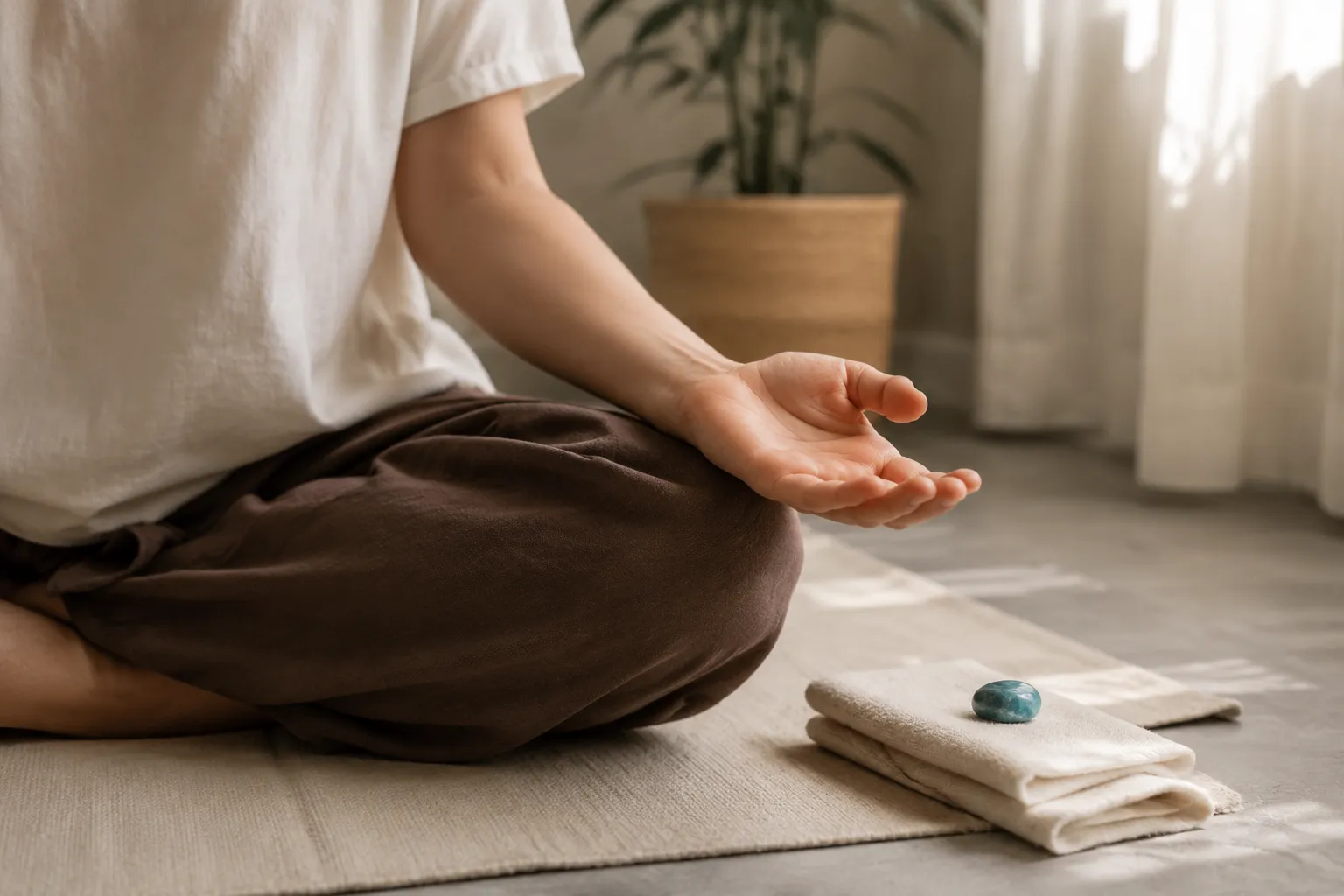
upward
Start with the broader guide
Use the broader guide first if you need the full scope before this page.
First Notice What Kind of Distraction It Is
A meditation stone can interrupt attention through the body, the eyes, or the story forming around it.
Physical distraction
Check contact first. A tumbled stone may feel cold at the start. A raw piece may have an edge. A larger palm stone can press into the lap, ankle, lower back, or hand after a few minutes. Even a smooth stone can become annoying where clothing folds or where your posture is already strained.
Visual distraction
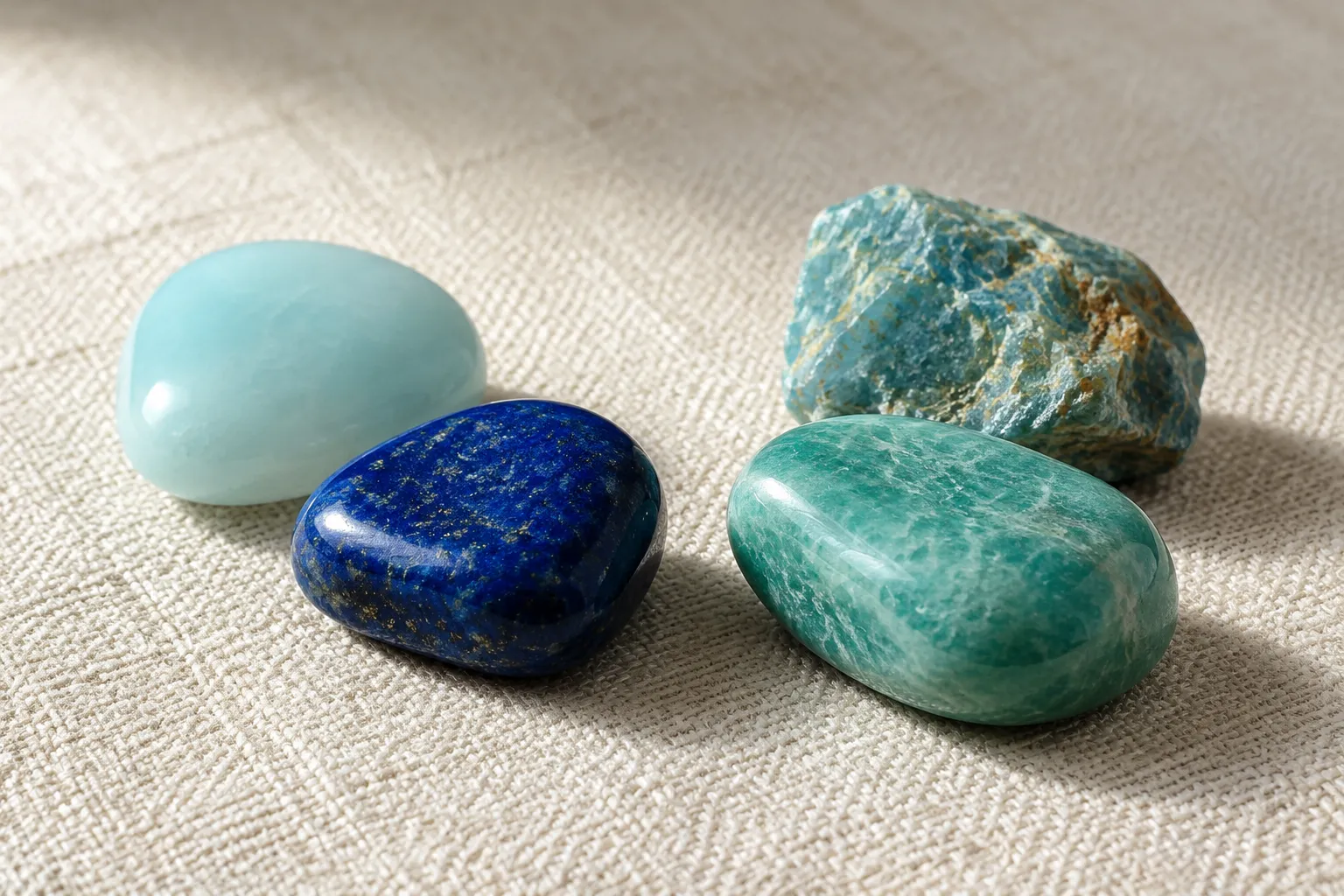
The stone may simply be too interesting for the role you gave it. Lapis lazuli blue with gold-colored pyrite flecks, banded jasper, glossy black stones, and bright blue-green amazonite can all pull the eye. That is not a warning sign; color, shine, pattern, and contrast can draw attention.
Mental distraction
The problem may be interpretation. Beginners sometimes start checking: Is the placement correct? Should I feel warmth, weight, tingling, or a mood shift? That kind of monitoring can become louder than the meditation itself. The useful move is to make the setup plainer until the stone stops becoming a test.
Adjust Placement Before You Give Up on the Session
Crystal placement during meditation is usually described loosely in chakra communities: holding a stone, resting it near the lap, placing it near the feet, setting it beside the mat, or keeping it nearby. These are personal ritual choices, not fixed rules.
If the stone is on your body and feels uncomfortable, move it off the body. Put it on a cloth, cushion, floor, or low table within view or just outside your view. If it is in your hand and your fingers keep tightening around it, open the hand or place the stone beside your thigh. If it is near the base of the body and your attention keeps returning to pressure or awkwardness, move it near the feet or a little farther away.
A steadier root chakra stone placement is usually one that does not compete with posture. Beside the mat may be quieter than directly under the body. Near the feet may feel less intrusive than the lap. A stone on a small cloth can stop rolling, clicking, or a cold surface against bare skin.
Holding a stone during meditation can still make sense if touch is the intended focus. Let it rest in the palm rather than pinching it between fingers. Notice weight, temperature, smoothness, or one contact point for a few breaths, then return to the main focus. In that role, the stone is a tactile cue, not an object you have to analyze.
When a Smaller or Smoother Stone Helps
A distracting crystal is not always the wrong crystal. Sometimes it is the wrong shape, size, finish, or setting for seated meditation.
- A smaller smoother meditation stone can help when the current piece is heavy, pointy, noisy, or visually busy. Tumbled stones are often easier to hold quietly than raw chunks because their edges are rounded.
- A flatter palm stone may sit more calmly on fabric than a bead or sphere. A matte or softly polished surface may ask for less visual attention than a high-gloss one.
- Color can matter in a practical way too. Many crystal practitioners associate root chakra themes with red, brown, black, or earthy stones, while this site also discusses selected blue-green crystals such as lapis lazuli, aquamarine, and amazonite in root chakra-themed personal practice.
A blue-green stone may carry a meaning you like, but if its color keeps pulling your eyes open, place it nearby rather than directly in front of you.
The same applies to symbolic intensity. If a stone has a strong personal story, a dramatic retail description, or a meaning you are trying hard to get right, it may create more thinking than settling. For that session, choose the plainest comfortable piece you own, or meditate without a stone and return to the crystal later as a display or journaling object.
Do Not Treat Distraction as a Chakra Reading
One common misunderstanding is treating crystal meditation distractions as proof that something is wrong. A meditation stone feels uncomfortable, attention wanders, and the mind quickly builds a story: the stone must be too strong, the root chakra must be blocked, or the practice must be incorrect.
The stronger support here is much narrower: meditation instructions commonly describe wandering attention, noticing sensations, and returning to a chosen focus. A physical object can be noticed through touch, sight, temperature, pressure, and texture. That does not show that the object is producing a measurable meditation result.
Chakra traditions and crystal communities may give symbolic meaning to placement near the base of the body, feet, lap, or spine. That meaning can be personally important. Keep it separate from body claims.
If your attention keeps returning to “What does this sensation mean?” name the experience more simply: pressure, coolness, warmth, weight, thought, worry, checking.
Then decide whether to keep the stone in the practice. If the answer is no, remove it without turning the choice into a verdict.
A Simple Troubleshooting Sequence
When the stone distracts from meditation focus, make one adjustment at a time. Too many changes can become another layer of checking.
- Start with contact. Is the stone cold, sharp, heavy, slippery, or pressing into a sensitive spot? Move it onto fabric, place it beside you, or switch hands.
- Next, check placement. Is it under a joint, near a fold of clothing, or balanced in a way that makes you worry it will fall? Put it somewhere stable and plain.
- Then check the visual field. If you keep opening your eyes to inspect the stone, move it outside your direct line of sight. A crystal can remain part of a personal ritual without becoming the center of your gaze.
- After that, check the story around the stone. Are you trying to decide whether it is working, whether you chose the correct root chakra stone, or whether a sensation means something hidden? Save that question for after meditation. During the session, use simpler labels: touching, thinking, wondering, returning.
- Finally, give yourself permission to remove the crystal. Removing a crystal during meditation can be the most practical choice when the object has become the main event. Place it on a shelf, cloth, altar, or table, then continue with breath, feet, or body contact as the focus.
When to Set the Stone Aside
Some distractions are mild and workable. A cool stone warms in the hand. A noticeable texture becomes less interesting after a minute. A brief thought about placement passes.
Other distractions keep renewing themselves. If the stone repeatedly pulls attention away, makes you adjust posture again and again, or turns the session into a performance check, set it aside. The point of including a stone in meditation is usually to support a chosen personal ritual, not to make the practice more complicated.
If a sensation is painful, alarming, unusually intense, or continues outside the meditation setting, do not interpret it as a crystal message or chakra reading. Keep the crystal question separate from body concerns. For this page’s purpose, the answer stays practical: move the object, reduce the sensory load, or stop using it in that session.
This also matters for beginner crystal meditation problems. Restlessness, doubt, ordinary mind wandering, and posture sensitivity can happen with or without stones. A crystal does not need to solve those experiences, and it does not need to be blamed for them either.
What to Try Next Time
For the next session, make the stone easier to ignore.
- Choose one stone, not a group.
- Pick a small, smooth piece rather than a large, bright, or uneven one.
- Decide its position before you begin: in the palm, near the feet, beside the mat, or on a cloth nearby.
- If you want touch as the focus, use the stone for the first few breaths only, then let attention return to breath or body contact.
- If you want the stone as a symbolic presence, keep it nearby but not touching you.
A red or dark stone may feel more familiar within common root chakra language, while lapis lazuli, aquamarine, or amazonite may appeal for personal reasons, color preference, or a blue-green stone practice. Either way, the useful question is not whether the crystal has one correct role. The useful question is whether its appearance, texture, weight, and placement support the session you are actually doing.
If it distracts again, that is enough information. Use it for display, journaling, carrying, or another personal ritual context instead of seated meditation. Stone meaning can stay interpretive and optional; your practice does not have to prove anything through the crystal.
FAQ
Is it okay to move a root chakra stone during meditation?
Yes. Moving a meditation stone is a normal practical adjustment. If the stone is pressing, rolling, drawing your gaze, or making you check the setup, place it beside you and return to your chosen focus.
Does a distracting stone mean I picked the wrong crystal?
Not necessarily. The stone may be too large, sharp, cold, glossy, bright, or personally loaded for that session. A smaller smoother stone, a different placement, or no stone at all may work better.
Should I keep holding the stone if it keeps distracting me?
Only if touch is the focus you chose. If holding the stone turns into gripping, checking, or analyzing, set it down nearby. The stone can remain part of the personal ritual without being in your hand.
Can I meditate without a crystal and still use root chakra symbolism later?
Yes. You can keep the stone for display, journaling, carrying, or another ritual moment. In chakra traditions, symbolic meaning is interpretive; the crystal does not have to be present in every meditation session.