
Stone comparison
Lapis Lazuli vs Amazonite for Root Chakra-Themed Practice
If you are comparing lapis lazuli vs amazonite root chakra use, the honest answer is: neither stone is a classic root chakra choice by color, but either can work as a blue or blue-green accent in a personal root-chakra-themed practice.
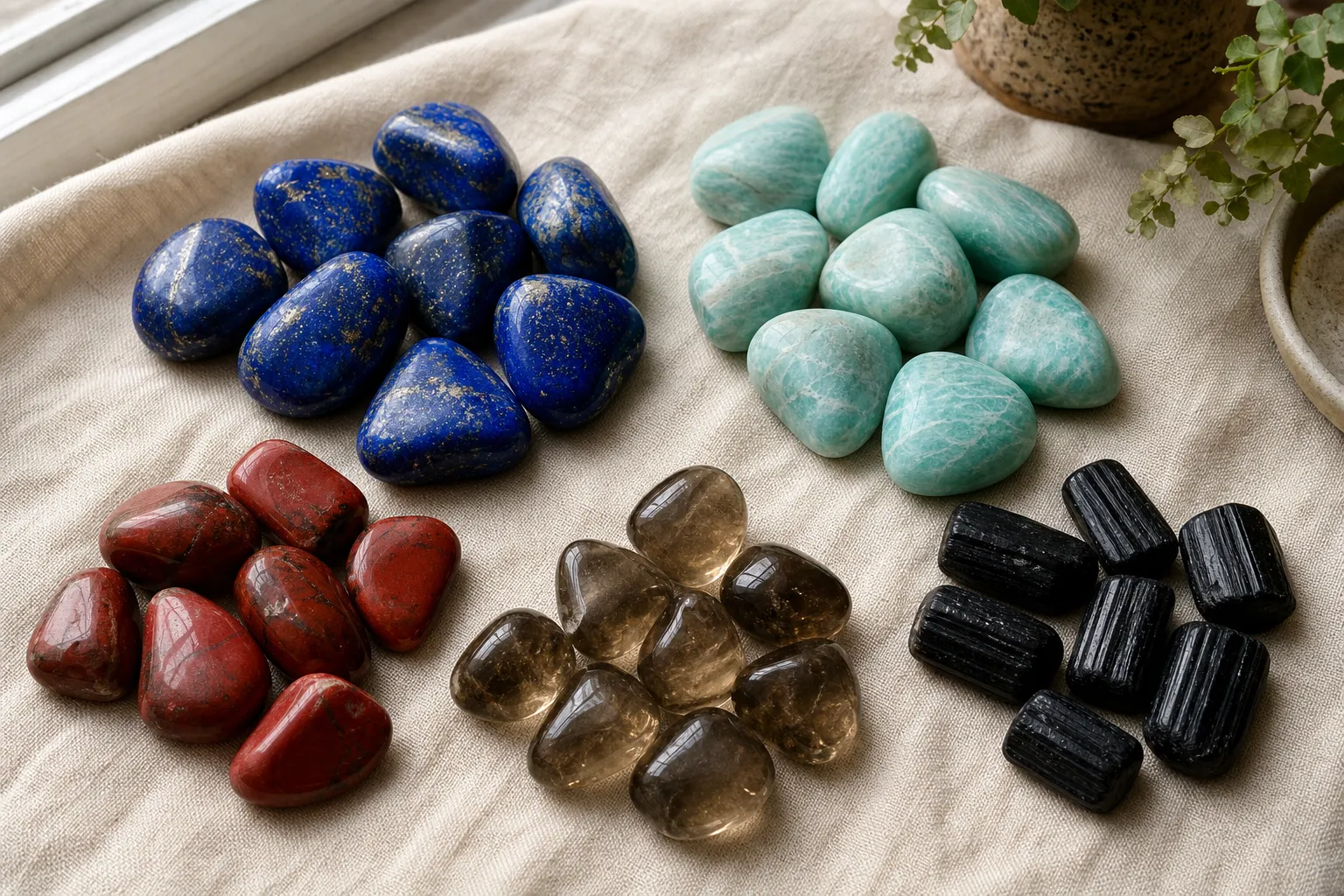
Lapis lazuli is the darker, more formal-looking option, usually recognized by its deep blue body color and, in some pieces, small gold-colored pyrite flecks. Amazonite is lighter and greener, with a softer blue-green look. In contemporary crystal language, lapis lazuli is often associated with truth and self-awareness, while amazonite is often associated with communication and self-trust. Those meanings belong to symbolic practice and retail tradition, not established physical outcomes.
upward
Start with the broader guide
Use the broader guide first if you need the full scope before this page.
The short comparison: choose the accent you actually mean
Root chakra imagery is usually built around red, black, brown, and other earthy tones. That is why stones such as red jasper, smoky quartz, hematite, black tourmaline, and garnet tend to feel more natural in root-chakra-themed layouts.
Lapis lazuli and amazonite sit outside that usual palette. They are not “wrong” to include, but they change the mood of the arrangement. A clearer way to frame either stone is:
“This is a contrasting accent beside a more traditional root-colored stone.”
Lapis lazuli may fit better when the setup needs
- A darker visual anchor, especially deep blue pieces.
- A more formal or old-world look, because lapis is used in beads, cabochons, inlay, and ornamental work.
- A stronger contrast beside red or brown stones.
- Symbolic language around truth and self-awareness.
Amazonite may fit better when the setup needs
- A lighter blue-green accent.
- A softer visual contrast beside red or brown stones.
- A less formal appearance.
- Symbolic language around communication and self-trust.
If you want the layout to look traditionally root-focused, start with an earthy stone and add lapis lazuli or amazonite as a secondary piece. If you want a more reflective, journaling-based, or personal arrangement, either blue-green accent can make sense.
How lapis lazuli reads in a root-chakra-themed layout
Lapis lazuli has a strong visual identity: rich blue, often opaque, and sometimes marked by white calcite or gold-colored pyrite. Gem and geology references describe it as a rock made of several minerals, with lazurite contributing much of the blue color. Those sources support its material identity and appearance; they do not make claims about chakra results.
In this setting, lapis usually reads as a contrast stone rather than a root-color match. Its blue is cool, deep, and visually weighty. Beside red jasper, a dark cloth, a black stone, or a wooden bowl, it can become the “pause and reflect” point in the arrangement.
Many crystal practitioners connect lapis lazuli with truth, self-awareness, study, writing, or inner honesty. That is why it is often discussed closer to upper-chakra symbolism than root chakra symbolism. For this page’s purpose, the best framing is simple:
- Root theme: home base, steadiness, earthy colors, simple placement.
- Lapis accent: reflection, honesty with oneself, a dark blue visual note.
- Best use: a secondary stone beside red, brown, black, or smoky-looking pieces.
A beginner-friendly example: place lapis lazuli beside red jasper before journaling. The red jasper carries the more traditional root-chakra color language; the lapis can represent a question such as, “What do I need to name clearly?” The stone is acting as a visual and symbolic prompt.
Lapis also deserves practical care. Because it is a composite rock rather than a tough, single-purpose object, avoid harsh cleaning, long soaking, and rough storage with harder stones. A soft cloth and separate storage are usually the more sensible choice, especially for polished, carved, or jewelry pieces.
How amazonite reads in the same setting
Amazonite is most recognizable by its blue-green to greenish-blue color. Mineral references discuss it as a variety of potassium feldspar, with attention to its distinctive color. For a beginner comparing it with lapis lazuli, the key point is visual: amazonite usually looks lighter, greener, and softer.
That makes amazonite a gentler accent in a root-chakra-themed practice. It does not create the same dramatic dark-blue contrast as lapis. Instead, it can bridge earthy colors and cooler tones. If your setup includes brown wood, a red cloth, a black stone, or a smoky-looking stone, amazonite may soften the arrangement rather than dominate it.
Contemporary crystal descriptions often connect amazonite with communication, self-trust, steadiness in choice-making, and similar personal themes. Read those as symbolic associations. In a root-chakra-themed setting, amazonite may make sense when the practice is less about strict color tradition and more about a personal reminder: grounded surroundings plus trust in your own next step.
A low-claim use would be placing amazonite on a desk with a darker grounding-colored stone while writing a short intention for the day. The stone becomes a visual cue. It does not need to be described as correcting, clearing, or activating anything.
A useful blue green crystals comparison is not “which one is stronger?” It is more like this:
Lapis lazuli
- Deeper, more saturated, often more dramatic.
- Meanings often lean toward truth and self-awareness.
Amazonite
- Lighter, greener, often calmer in appearance.
- Meanings often lean toward communication and self-trust.
Both are better described as interpretive accents than classic root chakra stones.
Pairing either stone with grounding-colored stones
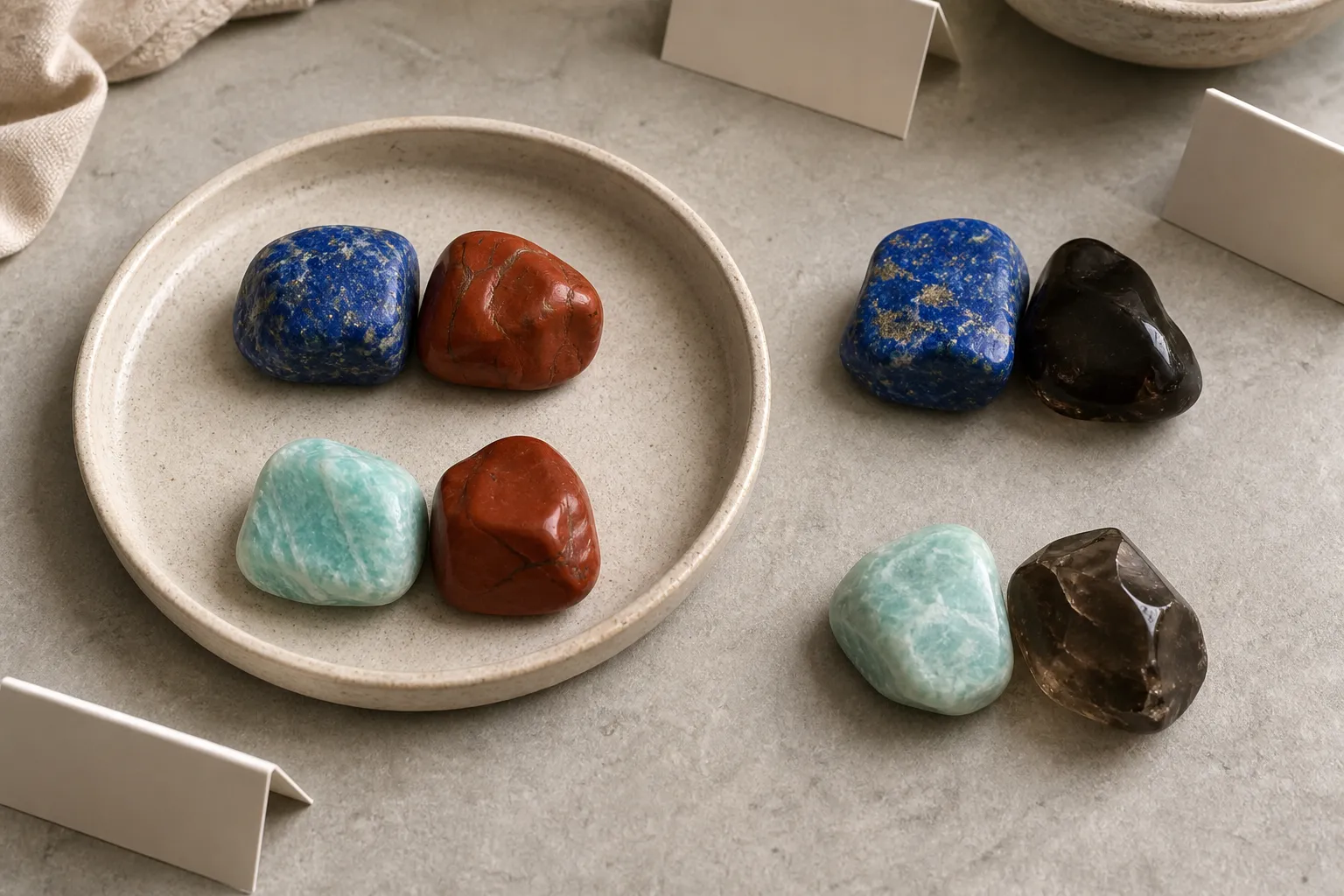
The cleanest way to use lapis lazuli or amazonite in a root chakra themed practice is pairing. This keeps the color language clear: the earthy stone carries the traditional root-chakra look, while the blue or blue-green stone adds personal meaning.
Lapis lazuli and red jasper
Strong contrast between dark blue and earthy red; useful for a reflective journaling layout.
Amazonite and red jasper
Softer contrast; good if you want the arrangement to feel less visually heavy.
Lapis lazuli with a black or brown stone
Darker, more formal; suitable for a shelf, desk, or quiet altar space.
Amazonite with a brown or smoky-looking stone
Muted and natural-looking; helpful if bright red feels too intense for your room.
Lapis lazuli and rose quartz
Not root-centered by color, but some readers may use it for a more reflective, relationship-oriented layout. Add an earth-toned stone if you still want the root theme to remain visible.
One earthy stone plus one blue or blue-green accent is usually clearer than a crowded group of stones with competing meanings.
Common confusion: upper-chakra meanings versus root-chakra themes
The confusion comes from the way lapis lazuli and amazonite are often described in crystal shops. Lapis is commonly tied to truth, voice, study, and self-awareness. Amazonite is often tied to communication, self-trust, and emotional language. Those associations can make both stones feel more connected to upper-chakra or heart-and-throat symbolism than to the root chakra.
So why do they appear in root chakra searches at all?
Because a root-chakra-themed practice is not always a strict color chart. Some people build around traditional color symbolism. Others build around contrast: earth plus sky, body plus voice, stillness plus reflection, home base plus honest self-checking. In that second style, lapis lazuli or amazonite can be included as an accent.
What would be misleading is calling either one a standard root chakra stone without explanation. Better wording would be:
“I am using lapis lazuli as a blue accent beside a traditional root-colored stone.”
“I am using amazonite as a blue-green reminder in a root-chakra-themed journaling setup.”
Those sentences keep the meaning personal, visible, and specific.
Care notes before you choose
Because this comparison is partly about everyday use, care matters.
For lapis lazuli, avoid aggressive cleaning, prolonged soaking, abrasive surfaces, and rough storage with harder stones. It is widely used in beads, cabochons, carvings, and inlay, but it still benefits from gentle handling.
For amazonite, use the same conservative approach unless you have specific care guidance for the piece. Treat polished beads, palm stones, and jewelry as handled gemstones, not rugged outdoor objects. Keep them away from harsh products, hard knocks, and careless storage.
For both stones, do not let ritual instructions override material care. If a practice suggests water, salt, strong sunlight, smoke, or repeated handling, first ask: “Is this good for the actual stone surface and setting?” A dry placement on a cloth, tray, shelf, or desk is often the simplest option.
Final choice: lapis lazuli or amazonite?
Choose lapis lazuli if you want a deeper blue accent with a more dramatic look and a symbolic link to truth and self-awareness. It works best beside red, black, brown, or other grounding-colored stones.
Choose amazonite if you want a lighter blue-green accent with a gentler mood and symbolic links to communication and self-trust. It works best when you want the root-chakra-themed practice to feel softer and less heavy.
Choose neither as the main stone if your priority is a classic root chakra color match. Start with traditional grounding-colored stones, then add lapis lazuli or amazonite only if the blue or blue-green accent has a clear personal meaning for you.