
Crystal meaning comparison
Grounding Crystals vs Root Chakra Crystals: What Is the Difference
Grounding crystals and root chakra crystals overlap, but they are not the same label. “Grounding crystals” is a broad symbolic-use category. “Root chakra crystals” is a chakra-specific symbolic category tied to the root chakra, also called the base chakra or Muladhara in many chakra traditions.
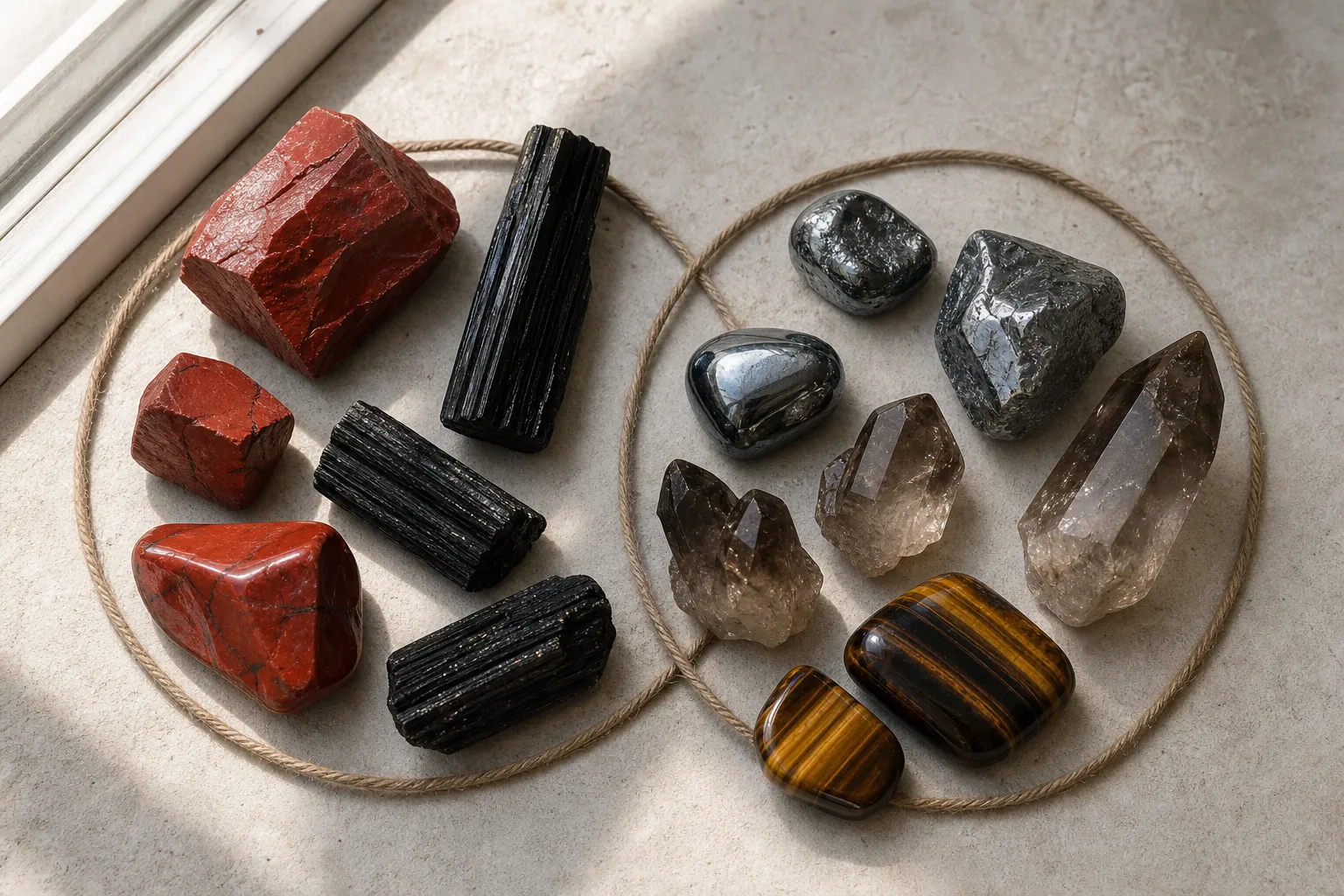
That is the short answer to grounding crystals vs root chakra crystals: the same stone may appear in both groups, but the label is doing different work. A black, red, brown, smoky, or earthy-looking stone might be described as grounding when the wording emphasizes steadiness, earthiness, or protective symbolism. The same stone may be called a root chakra stone when the description connects it to base-chakra themes.
upward
Start with the broader guide
Use the broader guide first if you need the full scope before this page.
The simple distinction: intention label vs chakra label
A grounding crystal is usually named by the intention attached to it in crystal communities. “Grounding” often points to symbolic ideas such as earth, steadiness, simplicity, security, or feeling more anchored in ordinary life. It is not a gemological category. Mineral references describe things like color, luster, crystal habit, hardness, and composition; they do not classify a stone as “grounding.”
A root chakra crystal is named through a chakra framework. In many modern chakra systems, the root chakra is described as the first chakra and is associated with foundation, survival, safety, and security themes. Because the root chakra is commonly linked with red color symbolism, many root chakra stone lists lean on red stones. Black and brown stones also appear often because shops and practitioners connect them with earth, weight, and protective symbolism.
So a product description may use three kinds of wording:
Use-based wording
“a crystal for grounding”
Chakra-based wording
“a root chakra stone”
Blended retail wording
“a grounding root chakra crystal”
The blended phrase is common, but it does not make the stone part of an official category. It simply combines two symbolic frames.
Where the two categories overlap
The overlap is large because root chakra meanings and grounding meanings use similar language. Both may involve words such as stability, security, earth, foundation, steadiness, and protection. A shop may place the same stone in a “crystals for grounding” display and also list it under “root chakra stones.”
Common grounding crystal examples and root chakra crystal examples often include:
red jasper
black tourmaline
hematite
smoky quartz
obsidian
garnet
tiger’s eye
bloodstone
onyx
mahogany obsidian
bronzite
red carnelian
These are best understood as common retail or practitioner groupings, not universal classifications.
A few examples make the overlap easier to see:
Red jasper
Red jasper often appears in root chakra lists because red is commonly tied to root chakra color symbolism. It may also be called grounding because of its earthy red appearance and the steady, practical language attached to it in crystal communities.
Black tourmaline
Black tourmaline is often described with grounding or protective symbolism. When a seller links it to the base chakra, it becomes part of a root chakra list as well.
Hematite
Hematite is recognizable by its dark metallic look. Crystal shops commonly place it in grounding groups, and it may also appear in root chakra contexts because of its dense-looking, earthy presentation.
Smoky quartz
Smoky quartz is often included in grounding lists because of its smoky brown-gray appearance. Some root chakra lists include it when the writer emphasizes earthy or base-chakra symbolism.
Tiger’s eye
Tiger’s eye is commonly golden-brown with banded visual movement. It may appear in grounding lists because of its earthy color family, but not every root chakra list treats it as central.
The useful point is not that every list must include the same stones. It is that crystal-shop language groups stones by theme, color, story, and symbolic association.
Why color helps, but does not decide everything
Color is one of the main reasons people confuse grounding crystals with root chakra crystals. In chakra traditions, the root chakra is commonly associated with red. In crystal retail language, red stones are often linked with root chakra meanings, while black and brown stones are often linked with grounding, protective, or earth symbolism.
That makes color a clue, not a rule.
A red stone may be presented as a root chakra stone because of red color symbolism. A black stone may be sold as a grounding crystal because black is often used in crystal-shop language for anchoring or protective themes. A brown or smoky stone may be described as earthy because its appearance suggests soil, wood, smoke, or stone.
These are symbolic associations. They are not tests of what the stone does.
A practical way to read a label is to ask: is the writer describing the stone’s visible appearance, or assigning a symbolic meaning?
“Dark metallic-looking”
An appearance note.
“Grounding”
A symbolic-use label.
“Root chakra”
A chakra-based label.
Color associations can vary by tradition, culture, brightness, saturation, and personal interpretation. A red stone is not automatically a root chakra stone for every practitioner, and a black stone is not automatically a grounding stone in every system.
How crystal-shop wording creates confusion
Many readers ask this question because product descriptions compress several ideas into one sentence. A listing may mention grounding, root chakra work, stability, cleansing, alignment, security, or protection as if they all belong to one fixed system. Usually, the wording is a mix of retail shorthand, modern crystal practice, chakra symbolism, and personal ritual language.
That is why “grounding crystal vs chakra stone” can feel unclear. The same stone may be labeled differently depending on the seller’s focus:
- If the page is organized by intention, the stone may be placed under grounding crystals.
- If the page is organized by chakra, the stone may be placed under root chakra stones.
- If the page is organized by color, red, black, brown, and smoky stones may be grouped together.
- If the page is organized by jewelry or display, the symbolic label may be secondary to appearance.
For example, a black bracelet may be sold as a grounding piece without mentioning chakras. Another seller may use a similar-looking stone in a root chakra bracelet and describe it through base-chakra symbolism. The object may look much the same, but the wording changes the frame.
One label is not automatically wrong. It is just answering a different question. “Grounding” tells you the symbolic intention. “Root chakra” tells you the symbolic system.
A quick way to sort a stone before buying or using it
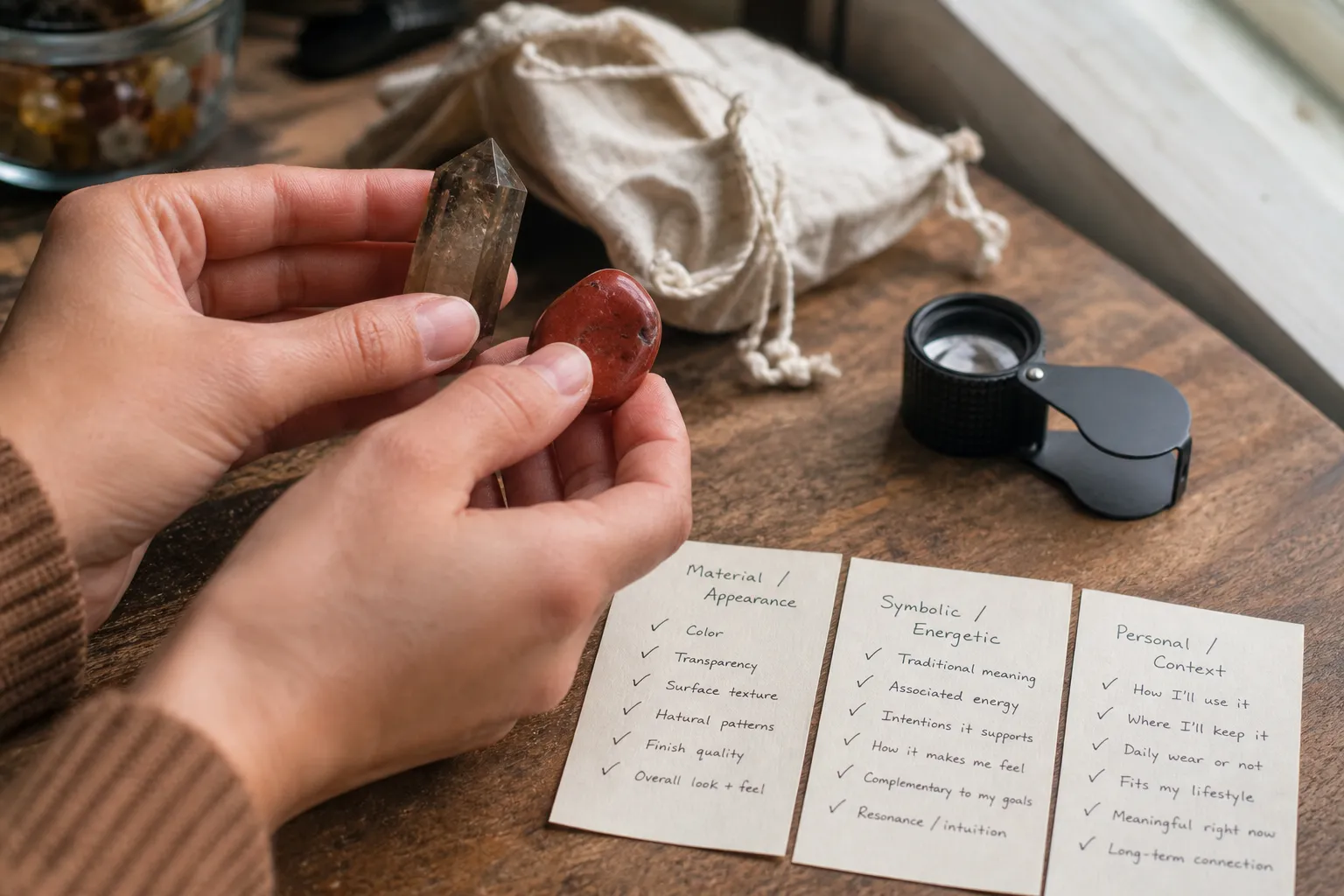
If you are comparing root chakra stones with crystals for grounding, sort the description into three layers.
1. Observable stone qualities
Start with what can be seen or handled: color, pattern, polish, shape, size, setting, bead quality, chips, coating, and finish. Is the stone red, black, brown, smoky, metallic-looking, banded, glossy, matte, translucent, or opaque? These details are more concrete than symbolic wording.
2. Symbolic category
Next, look at the language around the stone. If the description says grounding, earth energy, steadiness, anchoring, or protective symbolism, it is using a grounding-crystal frame. If it says root chakra, base chakra, Muladhara, first chakra, safety, foundation, or security, it is using a root-chakra frame.
3. Personal-use context
Finally, notice how the stone is being suggested for use. Some people carry a stone, wear it, place it on a desk, keep it with a journal, or include it in meditation as a symbolic focus. Those are personal ritual choices. They should not be treated as guaranteed outcomes or as substitutes for practical support in daily life.
This method lets you keep crystal meanings without blurring the categories. You are simply separating appearance, market wording, and personal belief.
When the answer changes slightly
The difference between grounding crystals and root chakra crystals depends on who is using the terms.
In a crystal shop
Grounding crystals may be a broad shelf label. It can include stones from many color families as long as the seller connects them with grounding language. Root chakra crystals may be a narrower shelf label tied to chakra themes, especially red, black, and earthy stones.
In a chakra-focused practice
Root chakra stones may be chosen first because they match the base chakra theme. Grounding may be treated as one symbolic intention connected with that chakra.
In a gem or mineral context
Neither label is the main classification. A mineral description focuses on what the material is, how it looks, and how it can be identified or cared for.
In a personal collection
The distinction may stay flexible. One person may use smoky quartz as a grounding stone without thinking about chakras at all. Another person may place the same stone in a root chakra layout because that is the symbolic framework they prefer.
So the better question is not “Which label is the real one?” It is: which frame is being used here — grounding intention, root chakra symbolism, or physical stone description?
Common misunderstandings
The biggest misunderstanding is treating grounding crystals and root chakra crystals as exact synonyms. They are close, but not identical. Grounding is broader. Root chakra is more specific.
Another misunderstanding is treating color as proof. Red, black, and brown stones often appear in root chakra and grounding categories, but color symbolism is a convention. It can guide a list; it does not create a universal rule.
A third confusion comes from strong retail vocabulary. Terms such as activation, cleansing, alignment, and blocked chakra language appear often in commercial and practitioner writing. Read them as belief-based or symbolic wording, not as confirmed physical effects.
Care language can also get blurry. If you use optional cleansing or display rituals, practical care still matters. Water, salt, smoke residue, long light exposure, dyes, coatings, stringing materials, and metal settings can affect some stones or jewelry pieces. The safest care advice starts with the material and setting, not the ritual label.
FAQ
Are all root chakra crystals grounding crystals?
Not always, but many are described that way. Root chakra crystals are chosen through a chakra frame. Grounding crystals are chosen through an intention frame. Because the root chakra is often associated with foundation and security themes, the two labels commonly overlap.
Are all grounding crystals root chakra stones?
No. A stone may be called grounding without any chakra reference. For example, a shop might describe a smoky, dark, or earthy-looking stone as grounding because of its appearance and symbolic language, even if the listing never mentions the root chakra.
Is red the only root chakra color?
Red is the most common root chakra color association in modern chakra language, but black, brown, smoky, and earthy stones also appear in many root chakra lists. Those choices usually come from symbolic links with earth, weight, foundation, or protective themes.
What should I look at first: meaning or material?
Start with the material and appearance: color, finish, setting, bead quality, coatings, and care needs. Then read the symbolic description. That keeps the practical side of the stone separate from the meaning attached to it.
The cleanest takeaway
Grounding crystals are grouped by a broad symbolic intention: steadiness, earthiness, protection, or feeling anchored. Root chakra crystals are grouped by a chakra-specific symbolic frame tied to the root or base chakra. Many red, black, brown, smoky, or earthy stones appear in both categories, which is why the terms are often blended in crystal-shop language.
Use this quick rule: when the description talks about grounding as an intention, it is using a grounding-crystal frame; when it talks about Muladhara, base chakra, first chakra, or root chakra color symbolism, it is using a root-chakra frame. The stone may be the same, but the meaning system has changed.