
Do Red and Black Root Chakra Stones Mean the Same Thing
Red and black root chakra stones overlap, but they do not usually mean exactly the same thing in modern crystal-practice language. If you are asking, “do red and black root chakra stones mean the same thing,” the clearest answer is: they are often placed in the same root chakra family, but they usually carry different symbolic color tones.
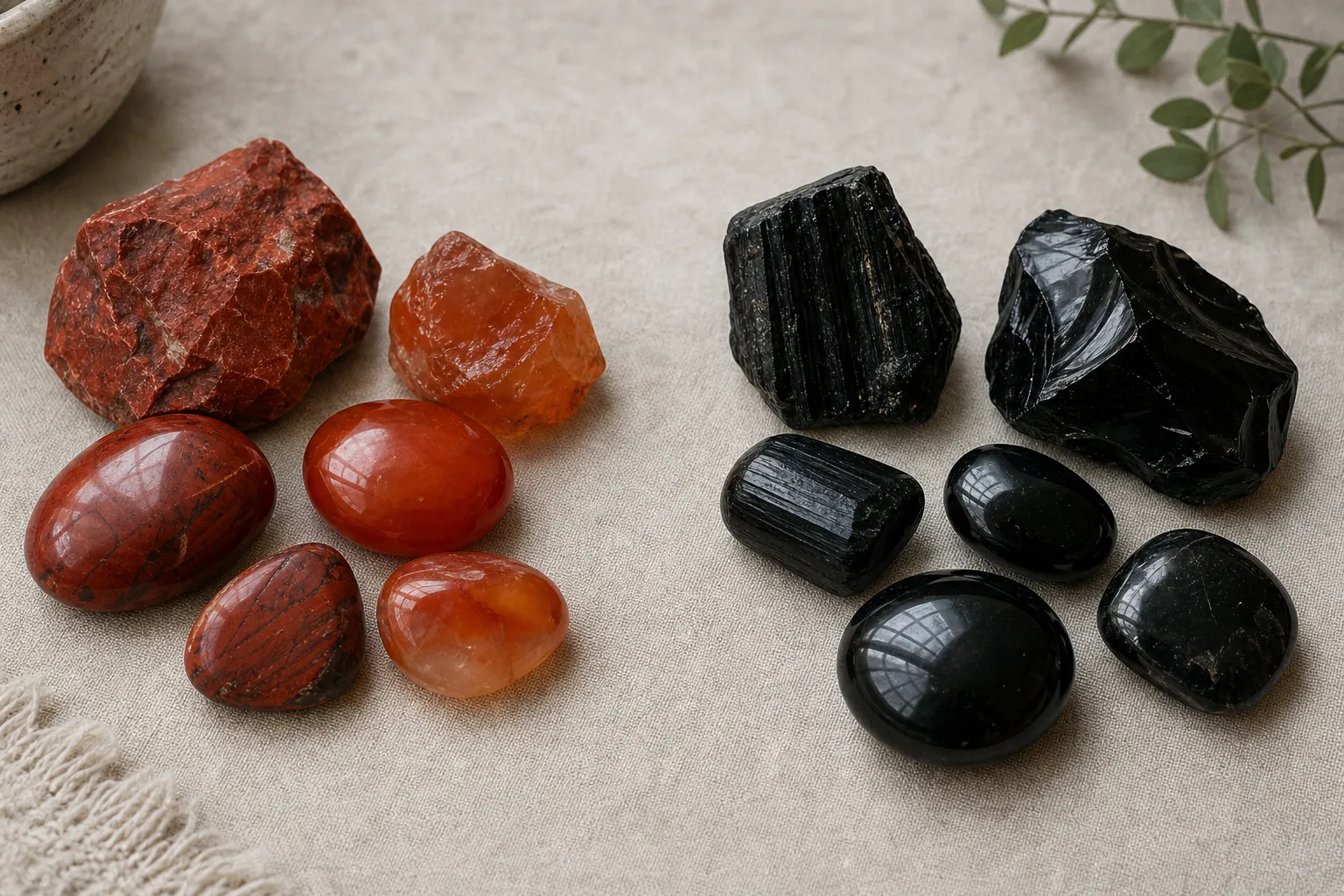
In contemporary crystal-shop wording, red root chakra stones are often described with warmer, more active ideas: strength, courage, momentum, passion, or survival symbolism. Black root chakra stones are more often described with steadier ideas: grounding stone symbolism, anchoring, boundaries, stillness, or protection symbolism.
Those are symbolic and belief-based associations. They are useful for understanding labels and personal-practice language, not for making scientific or health-outcome claims.
upward
Read the full overview first
Use the broader guide first if you need the full scope before this page.
Why both colors show up in root chakra lists
The confusion usually starts with color. Many modern chakra charts describe the root chakra as red. Then a beginner sees black tourmaline, black obsidian, smoky stones, or other dark stones listed as root chakra stones and wonders if the labels contradict each other.
In current crystal and chakra retail language, color is only one part of the grouping. A stone may be placed in a root chakra category because of:
- its visible red, brown, black, or earthy color;
- its dark or weighty appearance;
- common shop descriptions around grounding stone symbolism;
- the way practitioners use it in personal root chakra-themed rituals.
So the shared category is “root chakra,” but the color emphasis is not identical.
A simple way to read it
- Red stones are usually treated as the red-color expression of root chakra symbolism.
- Black stones are usually treated as the darker, grounding, or boundary-focused expression of the same broad theme.
- Dark stones with red markings may sit between the two, depending on the guide or seller.
Red stones usually carry the more active tone
Red root chakra stones are often described in a bolder, warmer voice. In shop labels and beginner crystal guides, red jasper root chakra meaning may be framed around steadiness with action, courage, endurance, or physical presence. Carnelian, when included in root or lower-chakra discussions, is often described with brighter words such as drive, confidence, passion, or movement.
That does not mean the stone produces those outcomes. It means many crystal practitioners use red as a symbolic cue for warmth, life, activity, and forward motion.
For a beginner, the practical distinction is this: if a red stone is labeled for the root chakra, the wording is often pointing toward an active kind of grounding symbolism. It may be chosen as a reminder of standing up, starting something, staying present, or feeling connected to ordinary life.
- Red jasper as a steady red root chakra stone with earthy, durable symbolism.
- Carnelian in lower-chakra contexts with a vivid, motivating tone.
- Red garnet or ruby-like stones in some retail settings, where the red color itself becomes the main symbolic cue.
Not every red stone has the same meaning. The pattern is simply that red stones in root chakra lists are usually read through a warmer and more action-oriented color lens.
Black stones usually carry the weightier tone
Black stones for root chakra practice are usually described differently. Black tourmaline root chakra meaning is often framed in shop language around grounding, boundaries, anchoring, and protection symbolism. Black obsidian root chakra meaning is commonly described with darker, more inward, reflective, or clearing language.
Again, these are symbolic associations. The black color, opacity, and strong visual weight make these stones easy for modern crystal communities to place in steadier language. A black stone on a desk, in a pocket, or on a small altar may be used as a visual reminder of limits, quiet, or returning attention to the present setting.
Compared with red stones, black root chakra stones tend to be described as less “active.” The language is often cooler, heavier, and more contained:
- Black tourmaline is commonly associated with boundary and grounding symbolism.
- Black obsidian is often associated with inward-looking or anchoring language.
- Other dark stones may be grouped in root chakra lists because their color and appearance fit an earthy, stabilizing theme.
This is why red and black crystal meanings can overlap without becoming identical. Both may be linked to the root chakra. Red usually suggests warmth and movement. Black usually suggests stillness and containment.
A quick way to compare the labels
If you are reading a product description, crystal guide, or stone label, do not treat “root chakra stone” as one exact meaning. Treat it as a broad category, then look at the color and the surrounding words.
| If the stone is described as… | The label may be pointing toward… |
|---|---|
| Red, brick-red, orange-red, warm-toned | Active root chakra symbolism: strength, courage, action, survival themes |
| Black, glossy black, matte black, very dark | Grounding symbolism: anchoring, boundaries, stillness, protection symbolism |
| Dark with red spots or markings | A bridge between earthy grounding language and red life-force symbolism |
| Brown, smoky, or earth-toned | A related foundation or earth-symbolism category, depending on the guide |
This table is not a rulebook. It is a way to decode common crystal-shop wording. Different sellers and practitioners may blend terms together. One shop may call red jasper grounding and strengthening; another may call black tourmaline grounding and protective; another may put both under the same “root chakra stones” heading without explaining the difference.
The cleaner interpretation is this: root chakra colors meaning is layered in modern crystal practice. Red is the headline color in many chakra charts. Black is commonly added because it fits the darker, earthier, boundary-focused side of the same symbolic family.
Where the meanings overlap
Red and black root chakra stones overlap most when the description uses broad foundation language. Words such as grounding, stability, survival, security, and being rooted may appear beside both red and black stones.
That overlap is the reason the two colors are often grouped together. A red jasper piece and a black tourmaline piece may both be sold as root chakra stones because both are being connected to foundation symbolism. The difference is the tone.
Red root chakra stones
“I want a symbol of strength, action, warmth, or momentum.”
Black root chakra stones
“I want a symbol of steadiness, boundaries, weight, or quiet.”
Either color
“I am choosing a stone as a personal reminder within a root chakra-themed practice.”
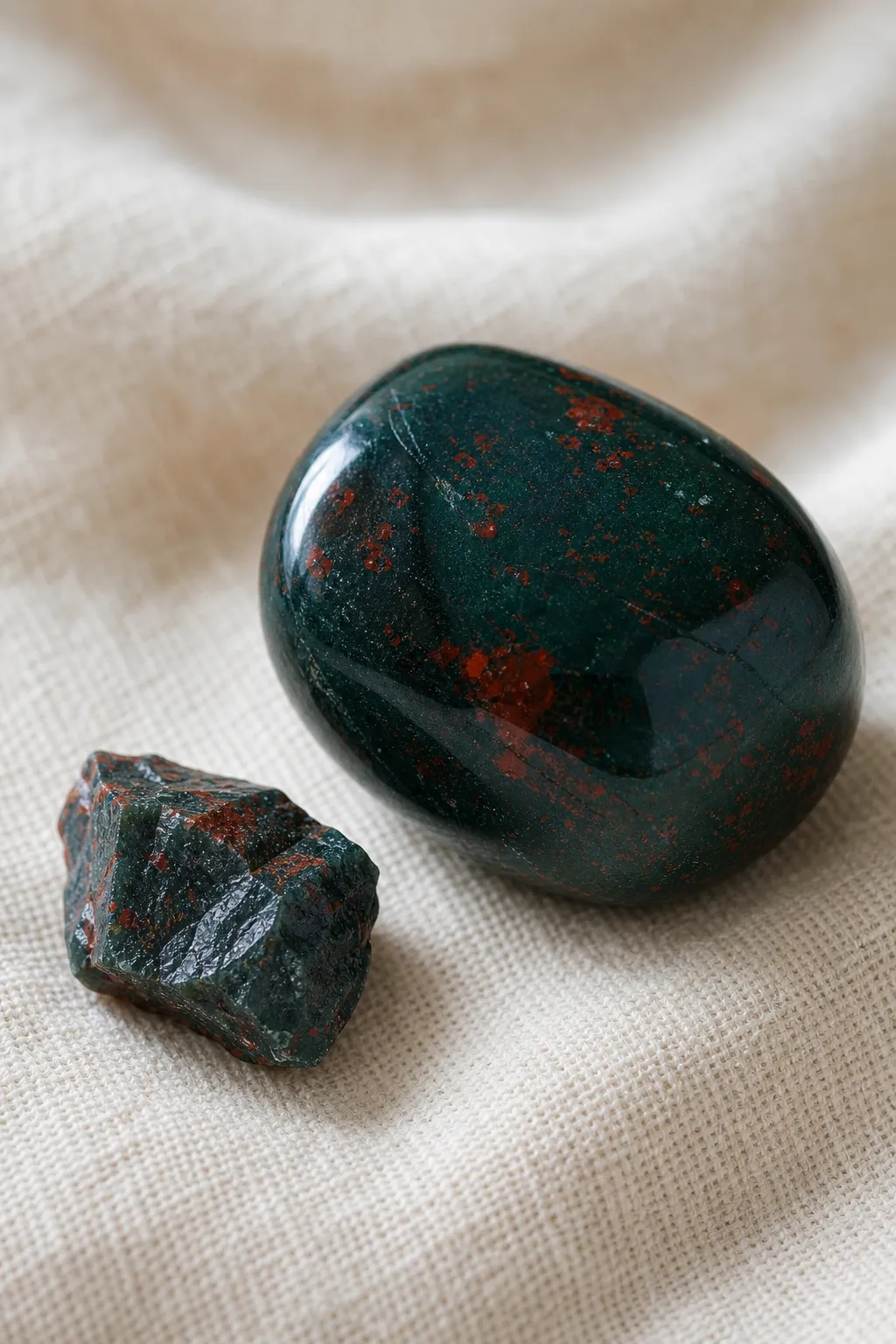
This also helps explain bloodstone root chakra symbolism. Bloodstone is often treated as a bridge example because it can appear dark with red markings. It is not simply a red stone in the way red jasper is often presented, and it is not simply a black stone either. In some crystal guides, its meaning is read through the contrast between a darker base and red markings.
Common misunderstanding: “If the root chakra is red, why use black?”
The phrase “the root chakra is red” is usually a simplified chart description. It does not mean every stone placed in root chakra practice must be red. Modern crystal listings often work by theme as much as color.
Black stones enter the root chakra conversation because they are commonly associated with earthiness, depth, density, anchoring, and boundary symbolism. Their dark appearance gives them a visual language that many people connect with weight and steadiness.
Another source of confusion is retail certainty. Product pages may present symbolic descriptions in a very confident style. A beginner can easily read that as a factual promise. A more careful reading is to treat those descriptions as belief-based language used in modern crystal communities.
How to choose without overthinking it
If you are choosing a stone for a personal ritual, display, pocket stone, or meditation corner, start with the color language that matches your intention.
Choose a red root chakra stone if you are drawn to:
- warmth and visible color;
- active, motivating symbolism;
- words like courage, strength, or momentum;
- a stone that stands out in a small arrangement.
Choose a black root chakra stone if you are drawn to:
- a darker, quieter appearance;
- grounding stone symbolism;
- boundary or anchoring language;
- a stone that feels visually steady rather than bright.
Choose a mixed or dark stone with red markings if:
you like the idea of both: an earthy base with a red accent. Bloodstone is often used this way in root chakra-themed retail language, though descriptions vary.
There is no need to force one meaning onto every stone. If a shop lists both red jasper and black obsidian as root chakra stones, it is usually not saying they are identical. It is placing them in the same symbolic neighborhood.
The careful answer
The available public material for this specific red-versus-black root chakra question is mostly commercial, promotional, or written in broad crystal-practice language. That makes it useful for understanding how beginners encounter the terms, but not for making strong claims about what stones do.
So the narrow, practical conclusion is:
Red and black root chakra stones are commonly grouped together, but they usually do not mean exactly the same thing. Red is more often framed as warm, active, and strength-oriented. Black is more often framed as steady, anchoring, and boundary-oriented.
If you use stones in a personal spiritual practice, the meaning can also be personal. The label can guide you, but it does not have to override what you notice directly: color, texture, shape, weight, polish, and the words that feel most natural for your own use.
Short answers to related questions
Are black stones really root chakra stones if the root chakra color is red?
In many modern crystal guides, yes. Black stones are commonly included in root chakra stone lists because of symbolic theme rather than exact color matching. They are often placed there because of grounding, boundary, and anchoring language.
Do red and black crystal meanings ever overlap?
Yes. They often overlap around foundation, grounding, survival, and stability symbolism. The difference is tone: red usually reads warmer and more active, while black usually reads heavier and more still.
Do chakra stones really work?
That depends on what someone means by “work.” As symbolic objects, stones can be used as reminders, focus pieces, or personal ritual items. The meanings discussed here belong to belief-based crystal and chakra practice, not scientific or health guidance.