
Amazonite root chakra practice
Why Amazonite May Appear in Root Chakra Practices
Amazonite sits in an awkward place for beginners: it is usually read as a blue-green stone, while root chakra practice is often introduced through red, black, brown, and other earthy colors. When amazonite appears in an amazonite root chakra practice, it usually means the stone is being used symbolically, as a contrast piece, a pairing stone, or part of a flexible ritual layout. It does not mean amazonite has become the standard color-match stone for Muladhara.
That distinction matters. A crystal shop list, a personal altar, and a simple chakra color chart may all use different rules. Amazonite can appear in one without replacing the more familiar root chakra stones in another.
upward
Start with the broader guide
Use the broader guide first if you need the full scope before this page.
Why the Color Feels Surprising
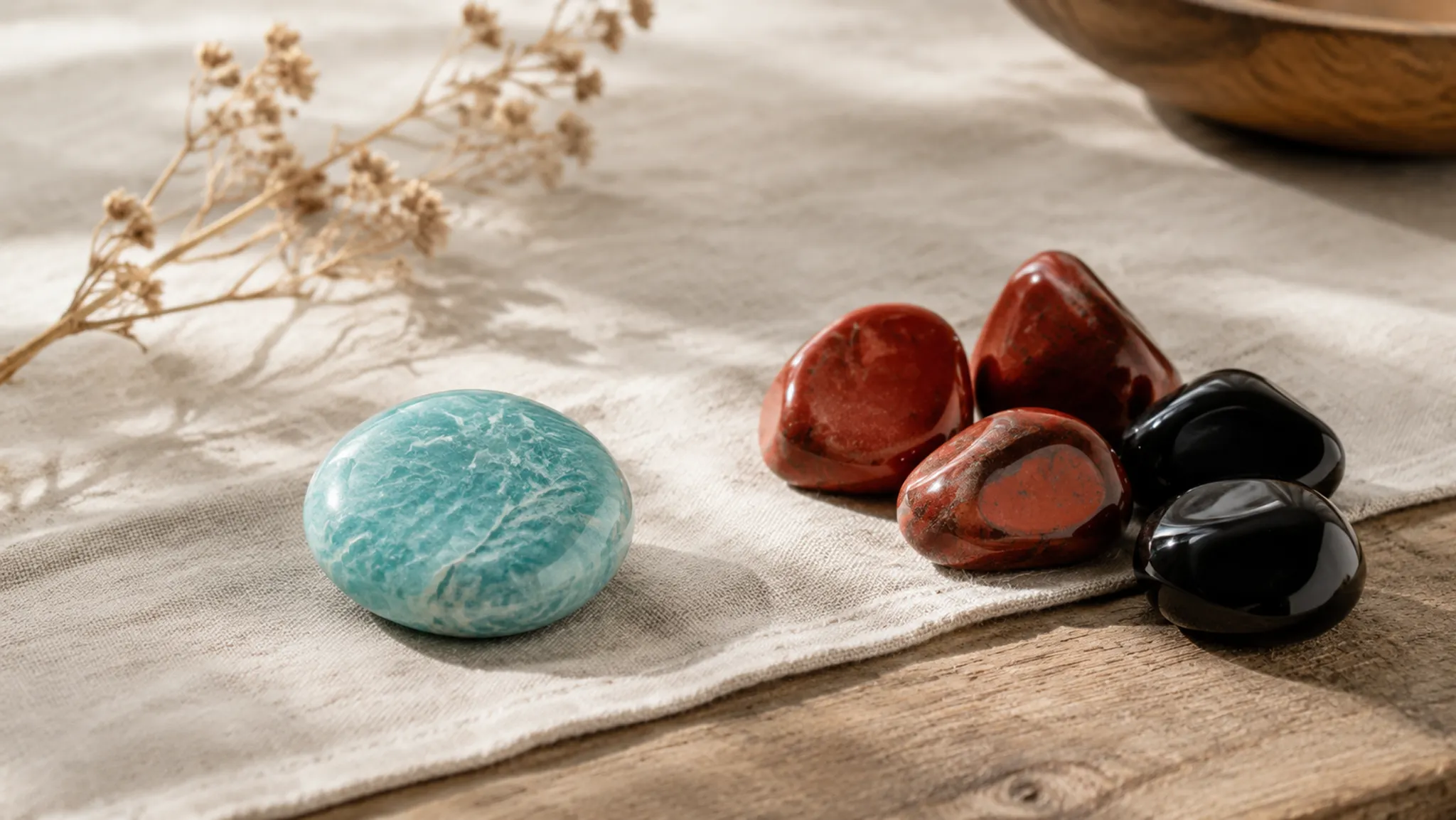
Amazonite is commonly recognized by its green-blue, turquoise, or pale blue-green appearance. In beads, palm stones, tumbled pieces, and small display stones, that color can look soft and watery rather than dark, red, or earthy.
Root chakra charts often use a different visual shorthand. Muladhara is commonly presented with red, black, earth, support, stability, and grounding-themed language. That is why stones such as red jasper, garnet, hematite, smoky quartz, and black tourmaline feel more expected in many beginner lists.
The confusion grows because blue and blue-green crystals are also described elsewhere with heart or throat chakra associations. A reader may see amazonite connected with one chakra in a shop guide, then find it under root chakra wording in another. That does not always mean one list is careful and the other is wrong. More often, the lists are using different symbolic systems.
Color matching is one convention. It is not the only way every practitioner, seller, or personal ritual setup organizes stones.
Why Amazonite May Be Included Anyway
Amazonite may appear in root chakra practice for a few grounded reasons, none of which make it a required root chakra stone.
Contrast
A practitioner may place a blue-green stone beside darker or red stones because the arrangement is not only about matching red to root. In that setting, amazonite is an added visual note, not a replacement for the usual root chakra color cue.
Pairing
Amazonite with red stones or amazonite with black stones can show up in layouts, small kits, or personal displays because the mix gives the arrangement a clearer structure. The red or black stone carries the familiar root chakra signal; amazonite adds a cooler accent.
Retail language
Crystal shops root chakra lists are not built from one shared standard. Some are organized by color, some by popular meanings, some by search terms, and some by product grouping. Amazonite in root chakra lists may show what shoppers are likely to encounter, but it should not be treated as proof of one fixed role.
Personal association
Someone may include amazonite because it fits the look, mood, or theme of a private ritual. That is interpretive use. It is not a measured effect or an official classification.
What “Amazonite Root Chakra Meaning” Usually Points To
The phrase amazonite root chakra meaning can mean three different things.
Appearance
Amazonite is blue-green, so it does not match the most common root chakra color shorthand. If you are choosing strictly by color, it is not the obvious first pick.
Retail wording
A shop, kit, or beginner list may place amazonite under root chakra language because the category is broad. That tells you how the stone is being presented, not what every chakra tradition requires.
Personal ritual meaning
In a private practice, someone may use amazonite for grounding rituals because the layout is built around a chosen theme rather than a strict color chart. For example, black stones might anchor the root chakra idea, while amazonite sits nearby as a blue-green companion.
This is why searches for green crystals for root chakra or blue green crystals for root chakra can be imprecise. Many readers are not asking for classic color matching. They are asking whether a non-red stone can still belong in a root chakra-themed practice. The cautious answer is yes, symbolically, especially as a pairing or accent stone.
When Amazonite Is a Weak Fit
Amazonite is a weak fit if the goal is strict root chakra color matching. In a practice built around the familiar red-root visual system, a blue-green stone will usually feel like a side element. A red, black, brown, or smoky stone answers that color question more directly.
It is also worth pausing when a product page presents amazonite as if it guarantees a root chakra result. That wording is better read as marketing language than as a reliable basis for choosing a stone. A more careful description will keep the stone inside belief-based, cultural, retail, or personal-practice framing.
Mixed chakra kits need the same kind of reading. If amazonite appears in a set, check whether the seller is using it for root chakra, heart chakra, throat chakra, or a general supporting role. The same blue-green stone can be labeled differently across lists.
There is a mineral-description limit too. For this question, it is enough to describe amazonite by visible appearance: a blue-green stone often seen in beads, tumbled pieces, and decorative forms. More precise mineral details need stable mineral references before they should be used as public fact, and they are not necessary to answer the chakra-placement question here.
How to Read a Root Chakra List That Includes Amazonite
When you see amazonite in a root chakra list, read the page in layers.
- Start with the color rule. If the list is mostly red, black, brown, and earthy stones, amazonite may be there as an exception, a symbolic accent, or a broad category choice.
- Look for pairing language. If amazonite appears with red jasper, garnet, hematite, smoky quartz, or black tourmaline, the list may be suggesting a mixed arrangement rather than naming amazonite as the central root chakra stone.
- Check the outcome wording. Strong promises about guaranteed changes or instant energetic shifts should be treated as promotional language. More careful phrasing sounds like “many crystal practitioners associate,” “in chakra traditions,” “some people include,” or “in personal ritual use.” That wording keeps amazonite and Muladhara inside an interpretive frame.
- Ask what you are choosing for. If you want the most familiar root chakra look, amazonite is not the cleanest match. If you want a blue-green stone in a root chakra frame, it can make sense as a companion, contrast piece, or part of a mixed layout.
A Simple Way to Use the Distinction
Think of amazonite as a possible companion in a root chakra-themed setting, not the default root chakra color stone.
For a small personal arrangement, a red or black stone can sit at the center of the root chakra idea while amazonite rests nearby as a blue-green contrast. For a pocket set, someone might pair amazonite with a darker stone because the color mix and personal symbolism feel useful to them. For a shelf or bedside display, amazonite can soften the look of a darker group without changing the belief-based nature of the practice.
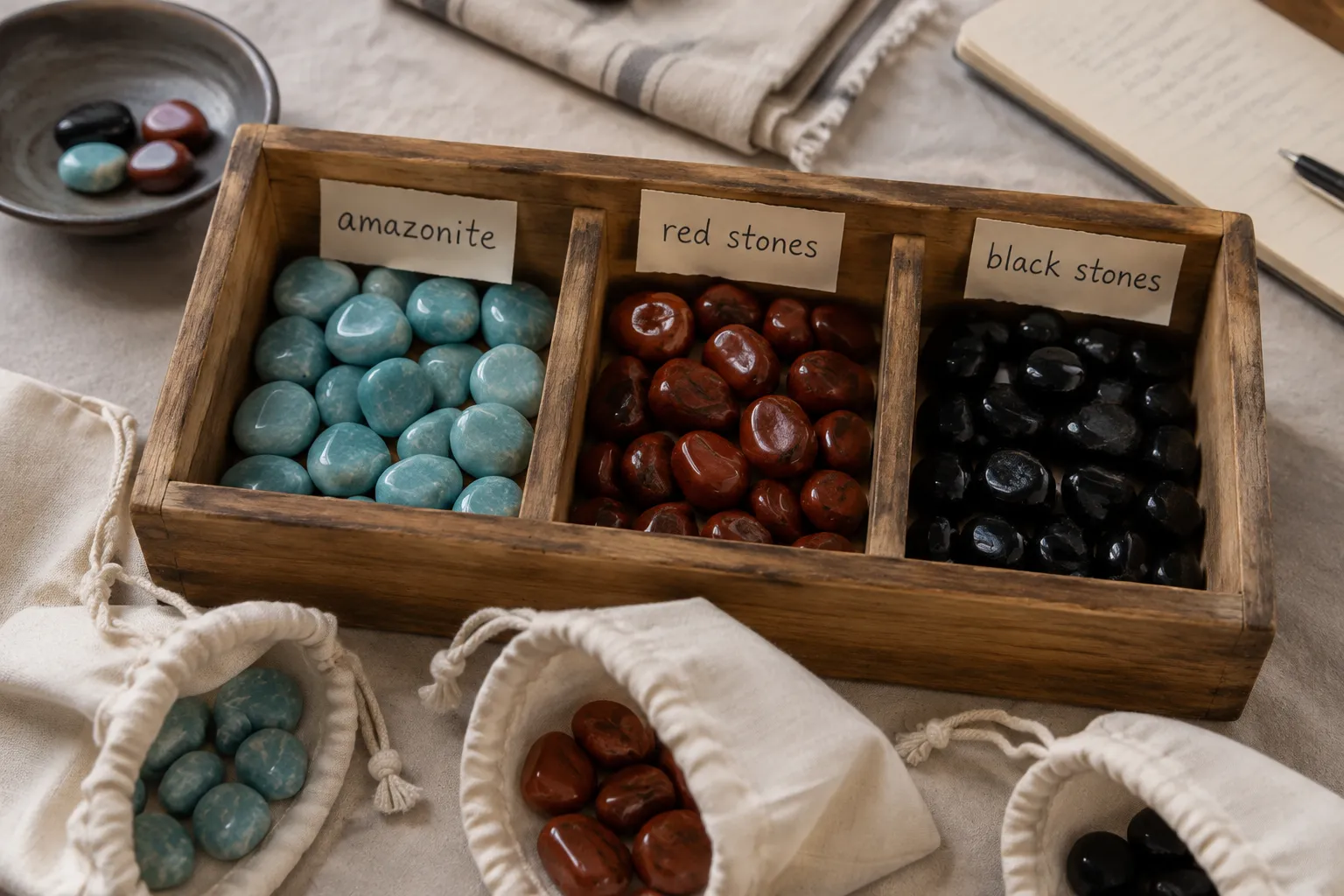
Care and storage can stay ordinary. Keep the piece where it will not be scratched, dropped, or confused with stones you use for a different purpose. If you group stones by chakra theme, a labeled tray or pouch can prevent amazonite chakra confusion later, especially when different sources connect the same stone with different chakra language.
The short answer: amazonite appears in root chakra practice because chakra use is often more flexible than color charts suggest. Its blue-green appearance explains the question; pairing, personal symbolism, and broad retail categories explain the placement.
FAQ
Is amazonite a classic root chakra stone?
Not usually by simple color matching. In many beginner systems, classic root chakra stones are red, black, brown, smoky, or earthy-looking. Amazonite is more often included as a symbolic companion or flexible practice choice.
Why do some lists include amazonite for Muladhara?
Some lists use broad retail categories, personal ritual language, or mixed-stone layouts. Amazonite and Muladhara may be placed together for symbolic reasons, especially when amazonite is paired with more typical root chakra stones.
Should amazonite replace red or black stones in root chakra practice?
Only if that fits your own symbolic practice. If you want the clearest beginner color match, choose a red, black, or earthy stone first, then use amazonite as an accent if the blue-green color belongs in your arrangement.
Does amazonite have a verified root chakra effect?
This page treats amazonite root chakra practice as belief-based and interpretive. Available public references support general context for mind-body and crystal-related practices, not a verified stone effect or a fixed amazonite role in root chakra work.