
Selection answer
Lapis Lazuli, Aquamarine, or Amazonite: Which One to Add to a Root Chakra Stone Set
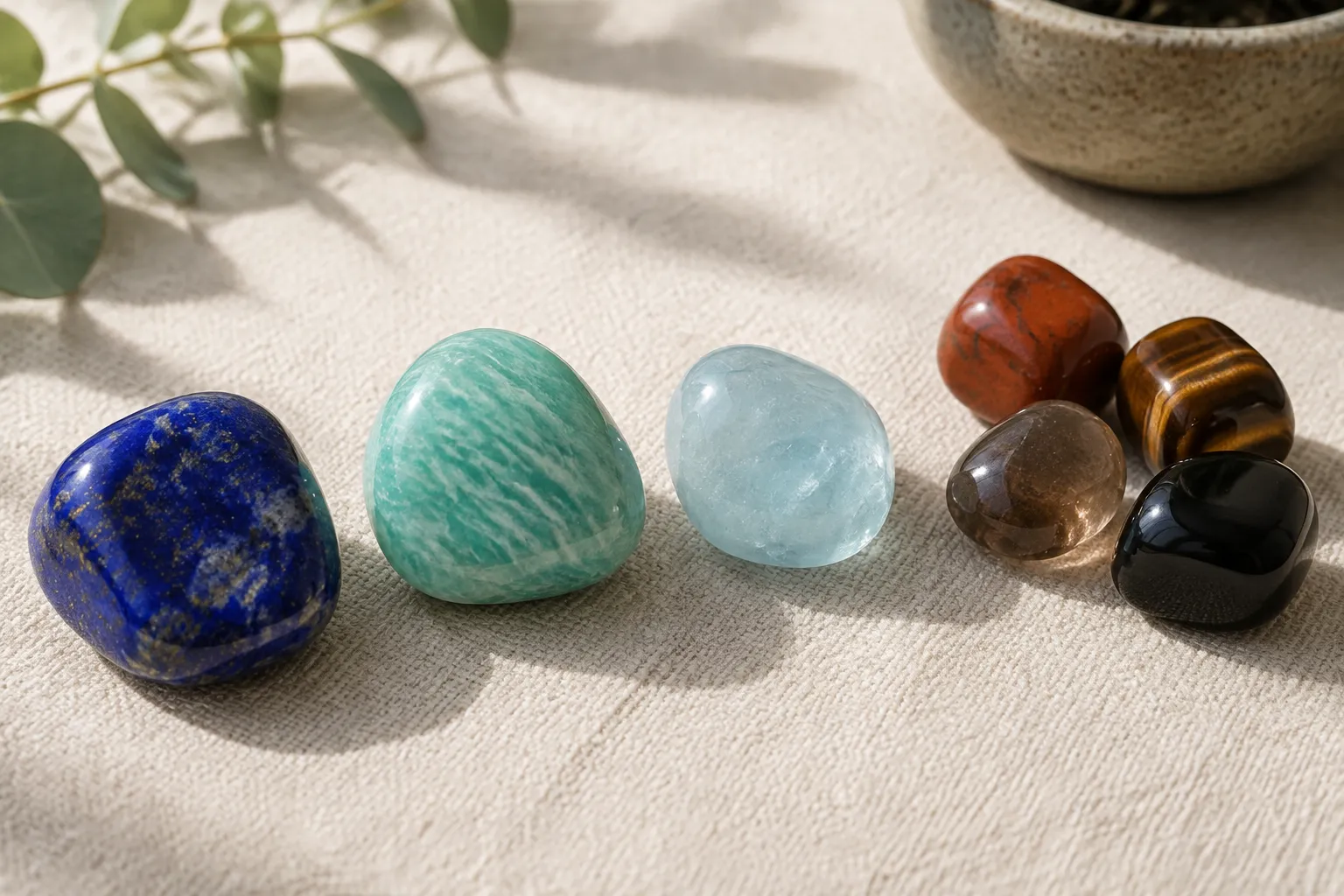
If you want one blue-green accent for a beginner root chakra stone set, choose amazonite first. Its muted green-blue look usually bridges earthy root chakra stones without taking over the whole arrangement.
Choose lapis lazuli when you want a darker, more dramatic contrast beside red, brown, smoky, or black stones. Choose aquamarine when you want the lightest, quietest accent and do not mind that it may feel less visually “rooted.”
That is the short answer to which blue-green crystal to add to root chakra stones: amazonite is the easiest bridge, lapis lazuli is the bold contrast, and aquamarine is the softest touch.
This is a selection answer, not a promise about outcomes. In chakra communities, these stones may carry symbolic meanings, but that language belongs to personal practice and interpretation.
upward
Start with the broader guide
Use the broader guide first if you need the full scope before this page.
The easiest pick: amazonite as the bridge stone
Amazonite is the most natural first choice when you want a blue-green accent crystal that still looks grounded in a root chakra set. Many beginner collections lean red, brown, smoky, or black. A cool-toned stone can either soften that group or make it look scattered.
Amazonite, especially when it appears muted green-blue rather than bright teal, tends to sit between those worlds. It adds a cooler note without making the set look as if it has become a throat or heart chakra display instead.
Choose amazonite if:
- you want the accent to look calm but still substantial;
- you prefer green-blue over deep blue;
- you want the piece near the center of a small display;
- you are choosing for color harmony more than contrast;
- you want simple belief-based wording, such as: “This is my cooler-toned support stone beside the root chakra group.”
That wording stays modest. It explains how someone may frame the stone in a personal ritual or display without turning the choice into a health-outcome claim.
When lapis lazuli makes more sense
Lapis lazuli is the better addition when your set already has a strong, high-contrast look. A deep blue piece, especially one with pale or metallic-looking flecks, has enough visual weight to sit beside darker root chakra stones without disappearing.
A lapis lazuli root chakra set works best when you are comfortable with contrast. The blue may not match the usual red-and-earth color language many beginners expect, but it can add a night-sky, mineral, or contemplative note to the arrangement.
In chakra communities, people may connect dark blue stones with reflection, expression, or steadiness. Keep that as symbolic language, not a factual result.
Choose lapis lazuli if:
- your existing stones are mostly dark or intense;
- you want the blue addition to be noticed;
- you like a set that feels more mineral-collector than pastel;
- you are comfortable with a contrast piece rather than a blended bridge.
If your set is very small, lapis can dominate the group. Use a smaller piece, or place it slightly apart from the main root chakra stones so it reads as an accent.
When aquamarine is the better accent
Aquamarine is the right choice when you want the lightest, quietest addition. A pale blue or blue-green piece can make a dense root chakra group feel more open. It is less about matching the traditional palette and more about changing the mood of the display.
An aquamarine root chakra set may not look “root chakra” in the usual beginner sense, especially beside red jasper, smoky quartz, obsidian, or other dark stones. But if your personal ritual style includes one soft stone beside grounding colors, aquamarine can still make sense.
Choose aquamarine if:
- you want a gentle accent rather than a center stone;
- your existing set feels visually heavy;
- you prefer pale blue-green over saturated color;
- you are choosing for display tone, not traditional color matching;
- you are comfortable saying, “This is a personal symbolic addition.”
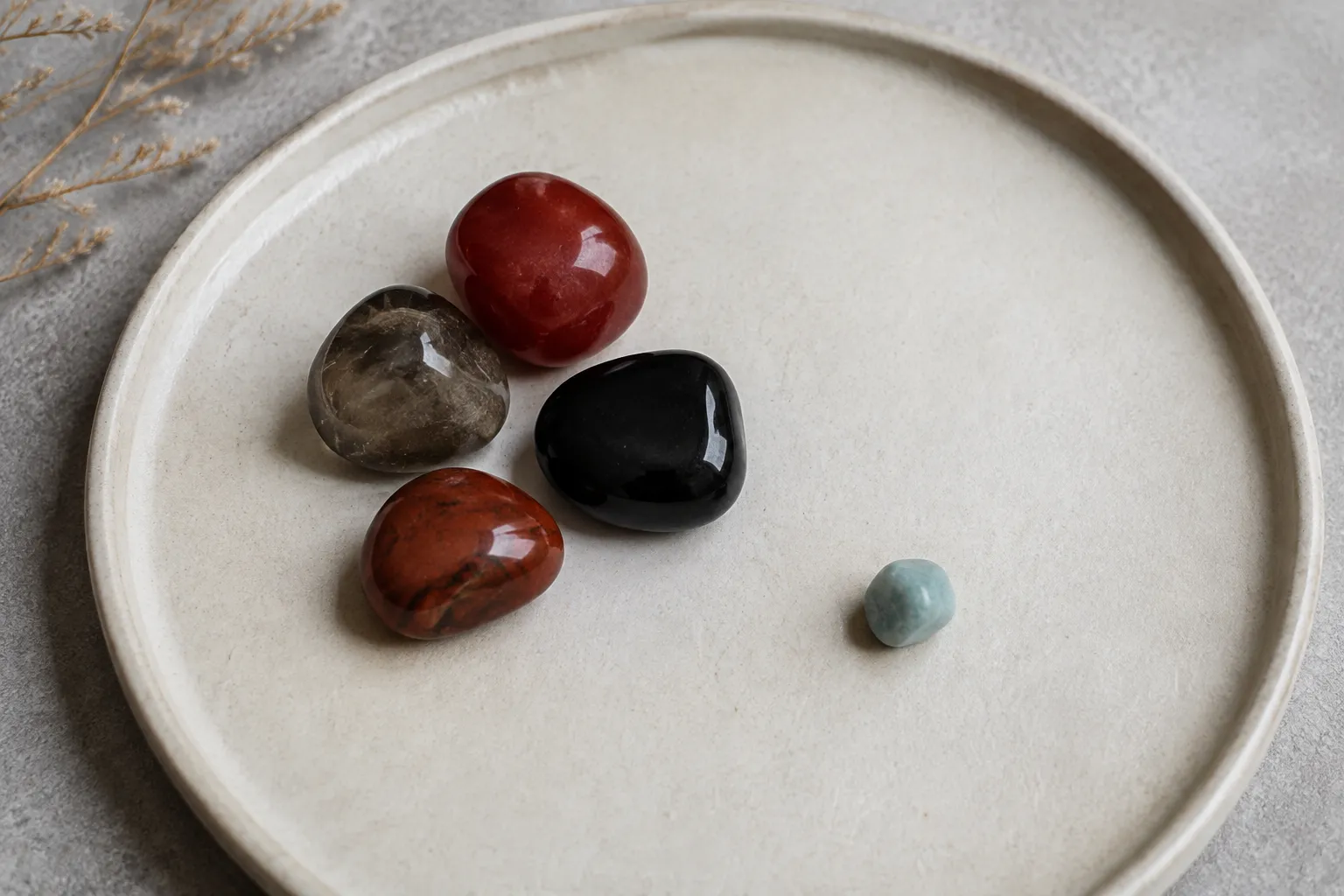
Aquamarine can be too subtle beside large, glossy, or dark stones. If it disappears, place it on a small dish, cloth, or corner position so it remains visible without needing to compete.
Quick comparison for this exact choice
The question is not which stone is better overall. It is narrower: which one belongs most easily as a blue-green crystal for root chakra stones, especially when the set still needs to look intentional.
A balanced blue-green bridge
Pick amazonite
It connects cooler color with earthy stones without creating a hard break.
A bold dark contrast
Pick lapis lazuli
It adds visual depth and stands beside darker stones well.
A light, quiet accent
Pick aquamarine
It softens the set and works best as a small personal addition.
A very traditional-looking root chakra group
Use none as the main stone
Use blue-green only as an accent, not the core of the set.
A simple beginner choice
Pick amazonite
It is the easiest to place without overexplaining the color shift.
If you are choosing between aquamarine or amazonite for root chakra use, start with the stones you already own. Amazonite is usually easier when the set needs a visible bridge. Aquamarine is better when the set needs a softer edge.
If you are comparing lapis lazuli, aquamarine, and amazonite as a trio, avoid adding all three unless you intentionally want a mixed-color display. Too many cool-toned accents can dilute the root chakra theme.
What can change the answer
The best root chakra stone set addition depends less on the name and more on the actual piece in front of you. Retail names can be broad, and photos can make color, polish, and pattern look different from the object in ordinary light.
Before choosing, check these four things.
1. Color temperature
Place the blue-green candidate beside your existing stones.
If it looks icy or very pale, aquamarine may feel separate from the set. If it looks very dark, lapis lazuli may pull attention away from the main stones. If it sits between green, blue, and earthy tones, amazonite may be the easiest match.
This is a visual sorting method, not a rule about chakra systems.
2. Size and placement
A large accent can become the main stone, even if you meant it to support the group. If your root chakra stones are small, choose a smaller blue-green piece or place it off-center.
For a beginner root chakra stones set, one accent is usually enough. More than one cool-toned stone can shift the whole mood of the collection.
3. Finish and texture
A polished piece may look more decorative. A rough or matte-looking piece may feel more grounded in a simple bowl, shelf, pouch, or cloth arrangement.
Because this page is working without displayable mineral references, keep care advice conservative. Handle each stone gently, avoid harsh cleaning methods, and do not assume that water, salt, sunlight, or abrasive materials are suitable for every specimen.
If you are unsure, use a dry soft cloth and store the piece where it will not rub constantly against harder or sharper objects. For stone-specific care, check a reliable mineral or gem reference before using stronger cleaning methods.
4. Your symbolic reason
In belief-based chakra language, a blue-green accent may add a cooler, quieter, or more reflective note beside stones associated with the root chakra. That is a personal ritual frame.
Simple wording is enough:
- “I am adding amazonite to soften the set.”
- “I am using lapis lazuli as a darker contrast.”
- “I am placing aquamarine here as a quiet accent.”
You do not need dramatic language to make the choice feel intentional.
Common misunderstanding: blue-green does not have to replace root chakra colors
A beginner worry is that a blue-green crystal will make the set “not a root chakra set” anymore. It depends on how you use it.
If the whole set becomes pale blue, teal, and green, then the visual theme has moved away from the usual root chakra palette. But a single accent stone can still sit beside root chakra stones as a personal addition.
The useful distinction is main stone versus accent stone.
A main stone sets the identity of the group. An accent stone adds contrast, texture, or a symbolic side note. Lapis lazuli, aquamarine, and amazonite are easiest to work with here when they stay in the accent role.
Retail wording can add to the confusion. A shop label may suggest that a stone belongs in a certain chakra set, but that label is not the same as mineral documentation or evidence of an effect. Treat it as a clue about how people talk about the stone, not as a rule you must follow.
Source limit for this answer
This article keeps the answer narrow because no public, displayable references were available for this draft. It does not make detailed claims about composition, hardness, origin, market quality, water sensitivity, or the history of chakra associations for these stones.
For this specific beginner decision, the safer approach is practical: compare the actual stones, decide whether the accent should bridge, contrast, or soften, and keep the meaning interpretive.
Final pick
Choose amazonite if you want the easiest blue-green accent for a root chakra stone set. Choose lapis lazuli if the set needs a dark, noticeable contrast. Choose aquamarine if the set needs a pale, quiet touch.
Keep the blue-green stone as an accent unless you intentionally want the arrangement to shift. Let the piece earn its place by color, size, care needs, and personal meaning; keep chakra language inside belief-based practice.