
Stone pairing guide
Using Lapis Lazuli, Aquamarine, and Amazonite with Root Chakra Stones
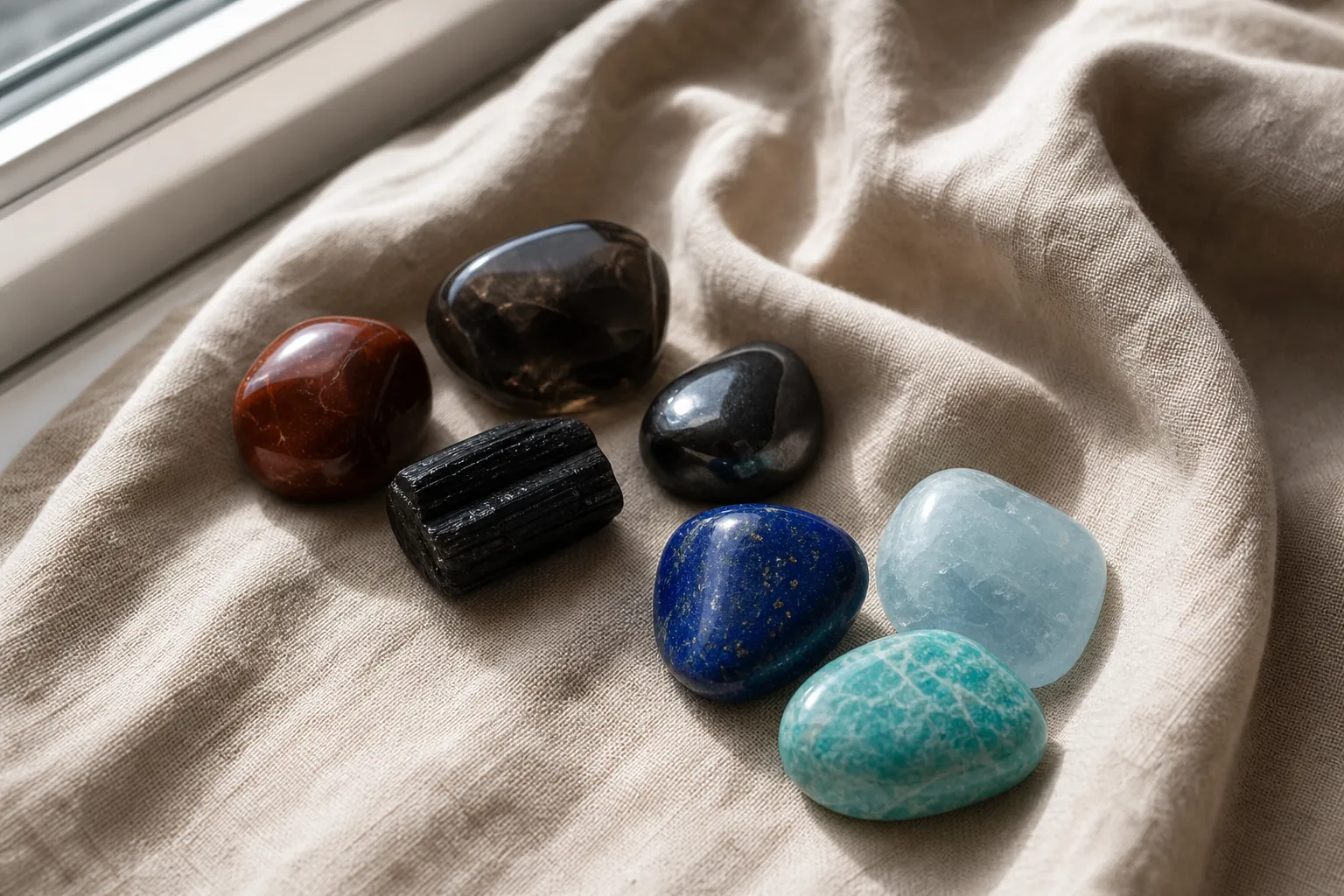
Lapis lazuli blue with gold flecks, aquamarine’s pale blue-green, and amazonite’s green-blue surface can seem far from the red, brown, and black stones many people place in a root chakra setting. That color mismatch is usually why readers ask about using lapis lazuli, aquamarine, and amazonite with root chakra stones: they want to know whether the pairing makes sense, or whether it mixes two different symbolic systems.
The cleaner answer is that these blue-green stones do not need to replace classic root chakra stones. In chakra communities, they are often used as symbolic complements: a cool accent beside a darker anchor, a contrast stone in a small layout, or a rotating piece for a personal ritual setting. The stone itself is a gem or mineral material. The chakra meaning is an interpretation.
upward
Read the full overview first
Use the broader guide first if you need the full scope before this page.
What Blue-Green Crystals Add Beside Root Chakra Stones
Root chakra stones are commonly described through earthy color language: red jasper, garnet, smoky quartz, hematite, black tourmaline, and similar dark or red-toned stones often appear in that frame. Lapis lazuli, aquamarine, and amazonite usually sit elsewhere in color-based chakra discussions because they are blue, blue-green, or green-blue.
That difference does not have to be a contradiction. A darker stone can carry the root-chakra theme in the layout, while a blue-green crystal adds a second symbolic note. The question becomes less “does this color belong?” and more “what role is this stone playing?”
Many crystal practitioners associate lapis lazuli with reflection or expression, aquamarine with calm communication or gentle flow, and amazonite with steadiness or personal voice. Those are practitioner and cultural meanings, not gem or mineral facts. Gemological and mineral references help identify the material; they do not establish ritual outcomes.
Start With the Stone You Can See
Before assigning meaning, look at the surface, color, and finish. That keeps the choice grounded in something concrete.
Lapis lazuli
Lapis lazuli is a gem material known for deep blue color, often with white calcite areas and golden pyrite flecks. Beside black, brown, or red root chakra stones, it creates a strong visual contrast: dark blue and gold against earthier tones.
Aquamarine
Aquamarine is a gem material in the beryl family, known for blue to greenish-blue color. In a root chakra stone combination, its lighter tone can make the layout feel less dense. A pale aquamarine beside a dark anchor reads quieter and airier than lapis lazuli.
Amazonite
Amazonite is identified in mineral references as a variety of microcline feldspar. Its green to blue-green color can feel closer to earth tones than aquamarine does, especially when the piece is muted rather than bright. In a mixed set, amazonite often works as a bridge between darker root stones and cooler blue-green accents.
For a beginner, those visible differences matter more than a long list of meanings. Ask whether you want strong contrast, a light accent, or a green-blue bridge.
How to Use One Blue-Green Crystal With One Root Stone
The simplest setup is one blue-green crystal with one root stone. It keeps the layout readable and prevents the practice from becoming a pile of competing meanings.
A basic pairing can work like this
- Choose one root chakra stone as the anchor in your personal practice.
- Add one lapis lazuli, aquamarine, or amazonite piece as the companion.
- Place them side by side so the visual relationship reminds you of the intention you assigned.
- Store them after use in a way that avoids rough knocking, damp conditions, or contact with sharp edges.
More stones do not automatically make the layout clearer. If every color, name, and placement needs its own explanation, the original intention can get lost.
A red root stone with amazonite creates a warm and green-blue contrast. A black root stone with aquamarine creates a dark-and-pale pairing. A brown or earthy stone with lapis lazuli lets the blue-and-gold surface become the visual focus. None of these combinations changes what the stones are; it changes the symbolic reading you bring to the arrangement.
Lapis Lazuli, Aquamarine, or Amazonite: Which One to Add?
A useful lapis lazuli, aquamarine, and amazonite comparison starts with role, not ranking. There is no single best blue-green crystal for every root chakra stone set.
Lapis lazuli fits when you want the support stone to be visually strong. Its deep blue color and possible pyrite flecks make it stand out beside black, red, or brown stones. In a lapis lazuli root chakra support stone layout, it can act as the “upper” or reflective contrast beside a darker anchor.
Aquamarine fits when you want the combination to feel lighter. An aquamarine root chakra combination often reads as a quiet pairing: pale blue-green beside a heavier-looking root stone. Readers who dislike crowded layouts may prefer aquamarine because it usually does not dominate the eye in the same way as deep lapis.
Amazonite sits between the two for many visual layouts. Because amazonite is a microcline variety and often appears green-blue, it can feel more earthy than aquamarine and less intense than lapis. Amazonite with red root chakra stones creates a clear color contrast; amazonite with black root chakra stones can look more subdued.
If your layout needs
Strong blue contrast
Consider lapis lazuli for deep blue color, often with visible flecks.
If your layout needs
A pale, light accent
Consider aquamarine for a blue to greenish-blue gem appearance.
If your layout needs
A green-blue bridge
Consider amazonite for microcline variety with green-blue visual character.
If your layout needs
Fewer mixed meanings
Use one blue-green stone only so the layout is easier to read and remember.
If your layout needs
More visual variety
Rotate stones over time to avoid crowding one layout.
This is a selection frame, not a results chart.
How Many Stones to Use in a Personal Ritual Layout
Combining crystals for personal rituals often becomes confusing when the layout grows too fast. A beginner may start with one root stone, then add lapis lazuli, aquamarine, amazonite, clear quartz, a candle, a grid shape, and several written intentions. At that point, the original choice is harder to see.
For a root chakra-themed practice, start with one of three structures.
Anchor and accent
The clearest is an anchor-and-accent layout: one root stone plus one blue-green crystal. The darker stone carries the root theme, while the blue-green piece adds the chosen companion idea.
Three-stone line
A three-stone line can also work: one root stone in the center, one blue-green crystal on one side, and a second support stone on the other. Keep the labels simple, such as “root theme,” “communication symbol,” and “quiet reminder.”
Rotation
Instead of arranging lapis lazuli, aquamarine, and amazonite all at once, use one for a few sessions, then switch. Rotating crystals in personal rituals helps you compare how the stones look and feel in your setting without turning the practice into a test.
A crowded layout is not wrong, but it asks more from the reader. If you cannot explain why each stone is present in one sentence, remove one.
Do Blue-Green Crystals Change the Meaning of Root Chakra Stones?
Blue-green crystals do not change the mineral identity or traditional naming of root chakra stones. A black stone does not become a blue-green stone because amazonite sits next to it. A red stone does not lose its root-chakra association because aquamarine is added.
What changes is the personal interpretation of the arrangement.
In chakra practice, people often use color, placement, and stone names as symbolic language. A red or black root stone may represent grounding themes within that tradition, while lapis lazuli, aquamarine, or amazonite may be read as a companion idea. The pairing creates a layered ritual sentence: earthy anchor plus blue-green complement.
That is different from saying the combination changes health outcomes or carries formal authority. The available gem and mineral references support material description, not chakra results. Health-adjacent sources can help keep the language cautious, but they do not turn a personal crystal layout into formal care guidance.
How to Arrange Lapis Lazuli, Aquamarine, and Amazonite Around Root Chakra Stones
Arranging stones in chakra rituals can be simple. A branch-level layout does not need complex geometry; it needs a clear reason for each placement.
For a seated personal practice, place the root stone closest to the base of the layout or nearest your written intention. Put the blue-green stone slightly above it or to the side. This keeps the visual hierarchy clear: root theme first, companion meaning second.
For a shelf or bedside display, group by contrast. Lapis lazuli can sit beside a matte black or earthy red piece if you want the blue to stand out. Aquamarine may look better with fewer surrounding stones because pale pieces can disappear in a crowded display. Amazonite can sit between dark and light stones because its green-blue tone often works as a bridge.
For a pouch or travel set, use fewer pieces. One root stone and one blue-green crystal are easier to store, remember, and handle. If the stones have polished surfaces, keep them away from rough edges or metal items. That is ordinary care and storage, not an energetic rule.
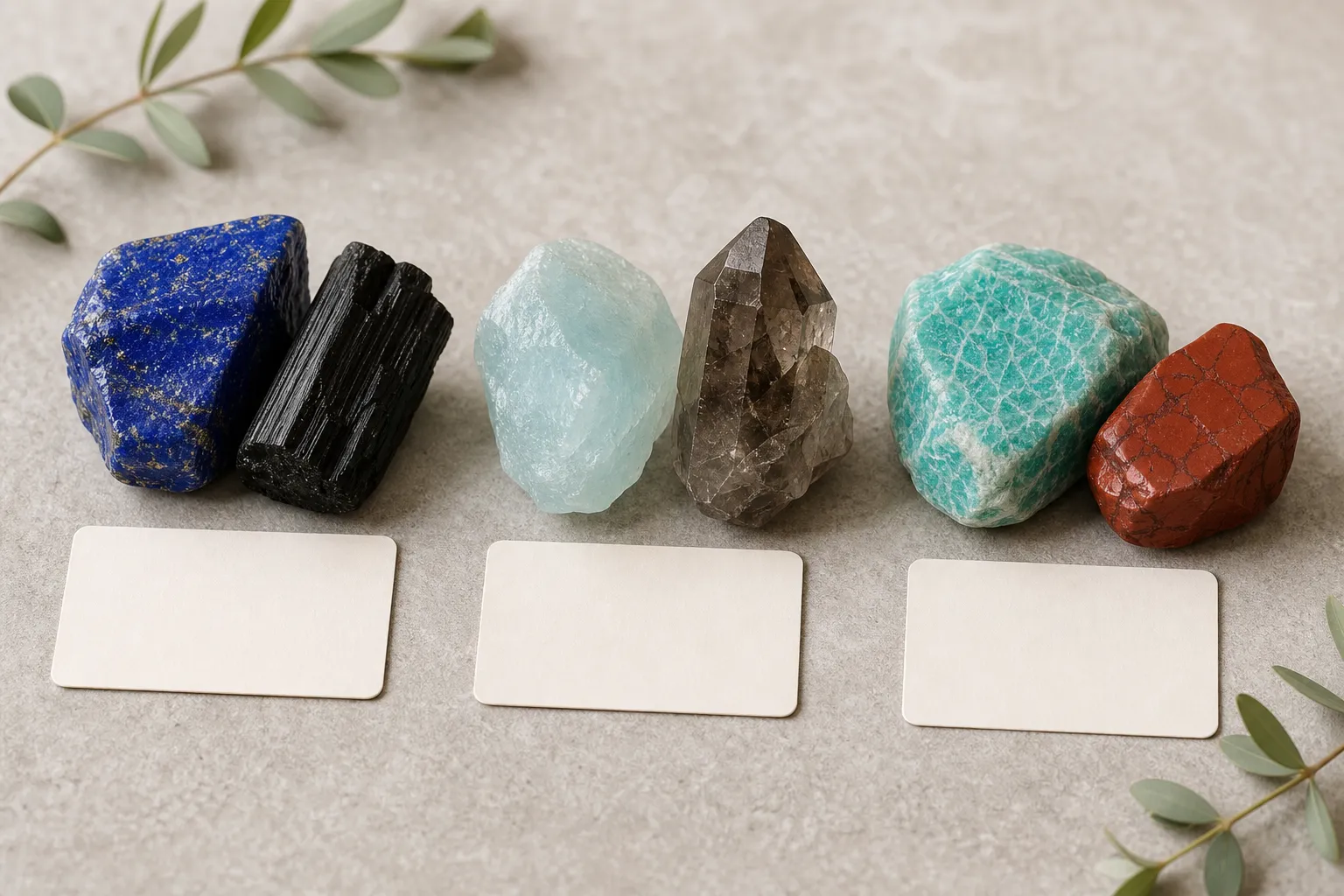
If you want to include all three blue-green stones, avoid giving them the same job. Let lapis lazuli be the visual depth stone, aquamarine the pale accent, and amazonite the green-blue bridge. If that feels busy, rotate them instead.
Can You Keep Lapis Lazuli, Amazonite, Aquamarine, and Root Stones Together?
You can keep them together as a personal set if the storage makes sense. The better question is whether the group is physically protected and symbolically clear.
For storage, use soft pouches, tray dividers, or separate compartments when pieces have different finishes, edges, or polish levels. Do not assume all crystals handle wear the same way. Gem materials and minerals vary, and the source set here does not support detailed care rules for every specimen, finish, or treatment. When in doubt, avoid rough handling, prolonged damp storage, and tossing mixed stones into a hard container.
For meaning, label the set by purpose rather than by a promise. “Root layout with blue-green support stones” is clearer than a high-pressure statement about what the set will do. A small note card can help: root anchor, lapis support, aquamarine option, amazonite option.
This also helps with rotation. You might use lapis lazuli for a visually strong layout one week, aquamarine when you want a lighter-looking arrangement, and amazonite when green-blue feels more connected to the earthy stones nearby. The rotation is a reflective practice choice.
Common Misconceptions About Combining Blue-Green Crystals With Root Chakra Stones
Material identity does not prove chakra meaning
A gem source can describe lapis lazuli or aquamarine as gem materials, and a mineral source can identify amazonite as microcline, but those facts do not establish spiritual results.
Blue-green crystals do not automatically conflict
They only conflict if your personal system requires strict color matching. Many readers use them as symbolic complements, especially when they want a darker anchor and a cooler accent.
Broad wellness language has limits
Words that place a practice in a complementary or personal-care context do not confirm the effects of crystals. For this page, that limit matters because the topic sits near health-adjacent language, even when the reader’s real task is selection, arrangement, and interpretation.
More stones do not always clarify the ritual
More often, a smaller layout is easier to understand. One root stone plus one blue-green crystal gives the clearest answer to the beginner question: what am I pairing, and why?
A Practical Way to Decide
If you are building a root chakra stone set with lapis lazuli, aquamarine, or amazonite, choose by role:
- Pick lapis lazuli when you want a deep blue support stone with strong visual contrast.
- Pick aquamarine when you want a pale blue-green accent that keeps the layout light.
- Pick amazonite when you want a green-blue bridge beside red, brown, or black stones.
- Use one blue-green crystal with one root stone when clarity matters more than variety.
- Rotate all three when you are still learning which visual pairing feels most natural in your practice.
The stones can carry personal meaning without turning that meaning into a claim about health, certainty, or universal results. Keep the root stone as the anchor, let the blue-green crystal act as a chosen complement, and store the set with the same care you would give any small gem or mineral collection.