
What Does a Root Chakra Stone Meaning Actually Describe
A root chakra stone meaning describes the interpretation people place around a stone in chakra and crystal-practice settings. It is not the same thing as the stone’s mineral identity, color, hardness, surface treatment, or care needs.
In practical terms, what root chakra stone meanings describe is usually a blend of four things: symbolic themes, practitioner wording, retail categorization, and personal-use prompts. When a shop label says a stone is “for the root chakra,” it is usually pointing to ideas such as steadiness, grounding, security, foundation, or personal boundaries. Those ideas belong to chakra stone interpretation, not to gemological testing or health guidance.
upward
Read the full overview first
Use the broader guide first if you need the full scope before this page.
The meaning is an added layer, not the stone itself
A stone has qualities you can look at, compare, or verify: color, pattern, luster, fracture, crystal habit, mineral group, trade name, and sometimes dye, coating, or other treatment. Those are material facts.
A root chakra meaning is different. It is a symbolic association placed on top of the stone by a tradition, practitioner, shop, book, or individual user.
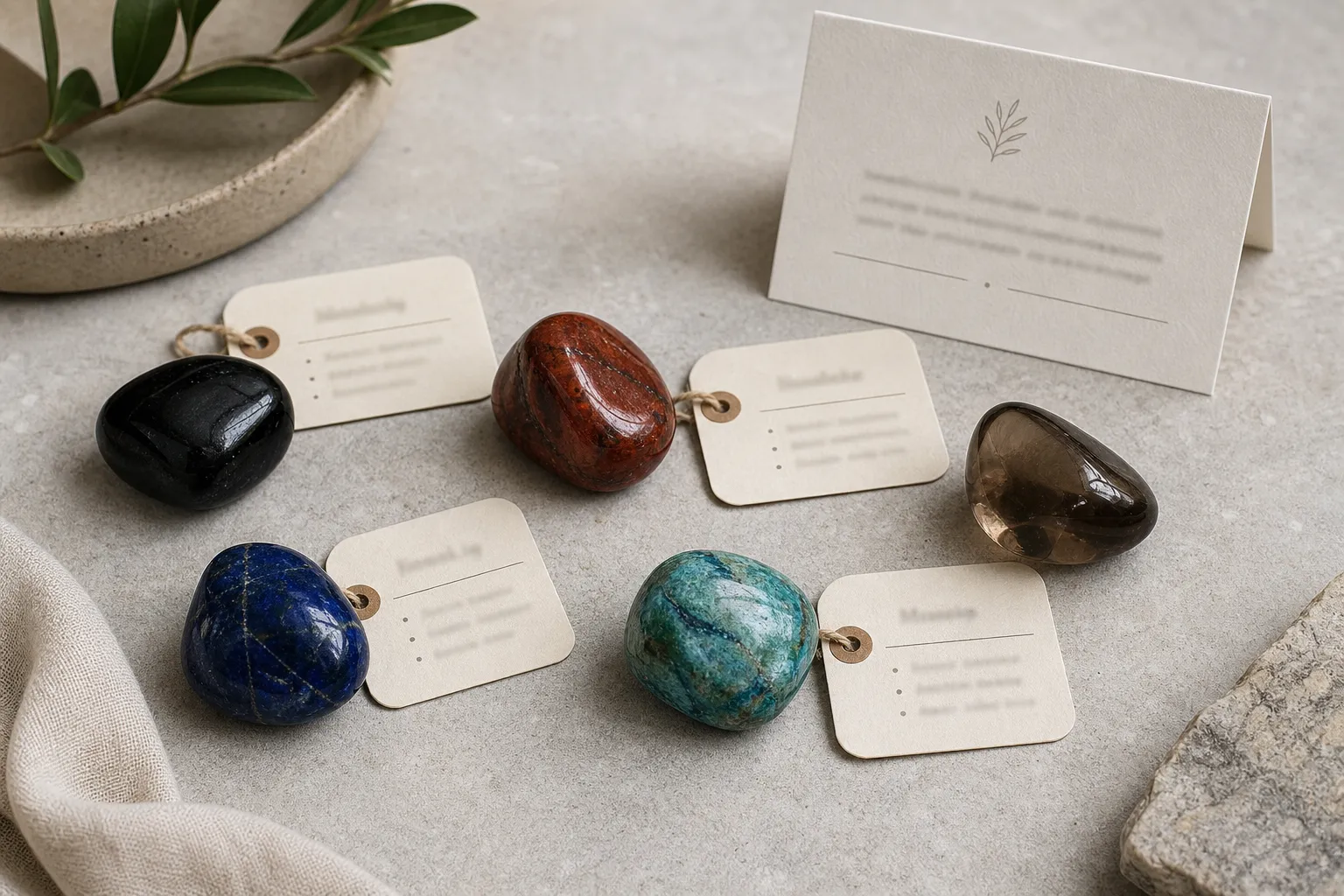
That distinction matters because beginners often meet both layers at once. A tumbled black stone may be sold with language about grounding. A red stone may be placed in a “root chakra stones” tray. A smoky brown crystal may be described as earthy or steady. The color and surface are visible; the meaning is an interpretation.
Three questions that keep the layers clear
- What is the stone? This is about identification: mineral, variety, trade name, natural or treated surface, and visible features.
- Why is it placed in the root chakra category? This is about symbolic chakra stone themes such as foundation, survival, security, steadiness, or connection with the ground.
- How might someone use that meaning personally? This is about reflection, ritual, jewelry, display, meditation objects, or reminders.
Only the first question is mainly about the stone as a material. The second and third are about interpretation.
What root chakra symbolism usually points to
In chakra-language contexts, the root chakra is commonly referred to as Muladhara. Contemporary chakra teaching often places it at the base of the body and connects it with foundational themes. In shops, beginner guides, and practitioner language, root chakra stone symbolism is commonly described with words such as grounding, stability, security, survival, steadiness, and boundaries.
Those words are not identical.
Grounding
Often used as a metaphor for feeling connected to ordinary life, routines, the body, or the present moment.
Steadiness
May suggest patience, consistency, or a preference for simple anchors.
Security
Can be used symbolically for home, money, safety, belonging, or basic needs.
Boundaries
Usually points to personal limits or the sense of having a firm base from which to make choices.
That is why root chakra practitioner language often sounds more like a symbolic vocabulary than a mineral description. A practitioner may describe a stone as supportive within their own framework. A retailer may shorten that into a product tag. A reader may use the stone as a reminder to slow down, simplify, or focus on practical matters.
The careful reading is simple: these meanings describe associations and intentions, not predictable outcomes.
How shops and guides turn meanings into categories
Root chakra stone categories are often built from repeated correspondences. Commercial and practitioner sources commonly connect the root chakra with red or dark stones, base-of-body imagery, the Sanskrit name Muladhara, and symbolic themes of foundation. That is why stones such as red jasper, garnet, black obsidian, and smoky quartz often appear in retail lists aimed at root chakra shoppers.
The category, however, is not a formal mineral category. “Root chakra stone” does not identify a chemical composition or geological family. It is a use-category created inside crystal-practice language. Two stones can sit in the same root chakra display while being very different materials.
For example, a red stone and a black volcanic glass may both be marketed with root chakra phrasing, but they are not the same kind of object. Their durability, surface behavior, cleaning needs, and identification questions may differ. A gemological reference can help with stone identity; it does not confirm the chakra meaning.
This is where root chakra retail phrasing can become confusing. A small label may compress several ideas into one line:
- the stone’s name,
- a color-based association,
- a chakra placement,
- a symbolic theme,
- and a suggested use.
A beginner may read that line as if all five parts are equally factual. They are not. The name and visible traits can often be checked. The chakra placement and symbolic meaning depend on the practice system or seller’s wording.
Stone identity comes before meaning
If you are trying to understand a label, start with the stone itself. A meaningful description is less useful if the object is vague.
Concrete questions to ask first
- Is the stone named clearly, or only described as a “root chakra crystal”?
- Is the color natural, dyed, coated, or enhanced?
- Is it a mineral, a rock, glass, or a trade-name mixture?
- Does the seller distinguish between appearance and symbolism?
- Are care instructions specific to the stone, or copied across every item?
This matters because crystal meaning boundaries begin with not confusing symbolic categories with material facts. A stone can still be meaningful to someone even if the retail label is broad. But if you are choosing, wearing, cleaning, or storing it, the physical identity matters.
Hardness, porosity, coatings, dyes, and light sensitivity can all affect root chakra stone care. Some advice treats water, salt, smoke, or sunlight as universal methods for preparing stones. That is too broad. Care depends on the specific material and surface condition. A polished, dyed, porous, soft, or light-sensitive piece may need different handling from a durable untreated one.
The meaning may explain why the stone appeals to you. The material facts tell you how to handle it.
What changes the answer
The phrase “root chakra stone meaning” can describe slightly different things depending on where you see it.
In a shop
It often describes a retail category. The meaning helps group stones by color, symbolism, or intended personal-use theme. The wording may be simplified because it is attached to a product.
In a crystal guide
It may describe a broader symbolic profile. The guide may explain why a red, black, brown, or smoky stone is associated with foundation, security, grounding, or steadiness.
In a practitioner setting
It may describe how a person uses the stone within a chakra framework. The stone may be held, worn, placed near a meditation space, or used as a visual reminder. That use is part of personal or spiritual practice, not a measurable stone property.
In a personal notebook or ritual space
It may describe what the stone represents to the individual. Someone might connect a stone with routines, home, boundaries, patience, or a sense of being settled. That private meaning can be valid as personal symbolism even when it is not universal.
The answer also changes by tradition. Chakra language has cultural and religious roots, while contemporary crystal retail uses a modern mixture of symbolic, spiritual, and lifestyle wording. A short product label cannot represent all of that history. It is better to read the label as one interpretation, not as the final definition of the stone.
Common misunderstanding: “associated with” is not the same as “will do”
The most common mistake is turning association into outcome. If a guide says a stone is associated with grounding, that means the stone is placed inside a symbolic framework around grounding. It does not mean every person will have the same experience with it.
The same caution applies to security and boundaries themes. A root chakra meaning may invite reflection on stability, limits, home, or basic needs. It should not be used as a checklist for explaining serious distress or deciding what kind of support someone needs.
Color can also mislead. Red and dark stones are common in root chakra stone categories because color correspondences are part of many chakra and crystal-practice systems. But color alone does not mean a stone belongs to the root chakra in every tradition. It is one symbolic cue among others.
The word “energy” can be confusing too. In retail and practitioner language, it often functions as spiritual or metaphorical shorthand. For a beginner, it is usually clearer to translate that language into “symbolic association,” “personal intention,” or “practice-based meaning,” unless the source is clearly using the word in another way.
A practical way to read a root chakra stone label
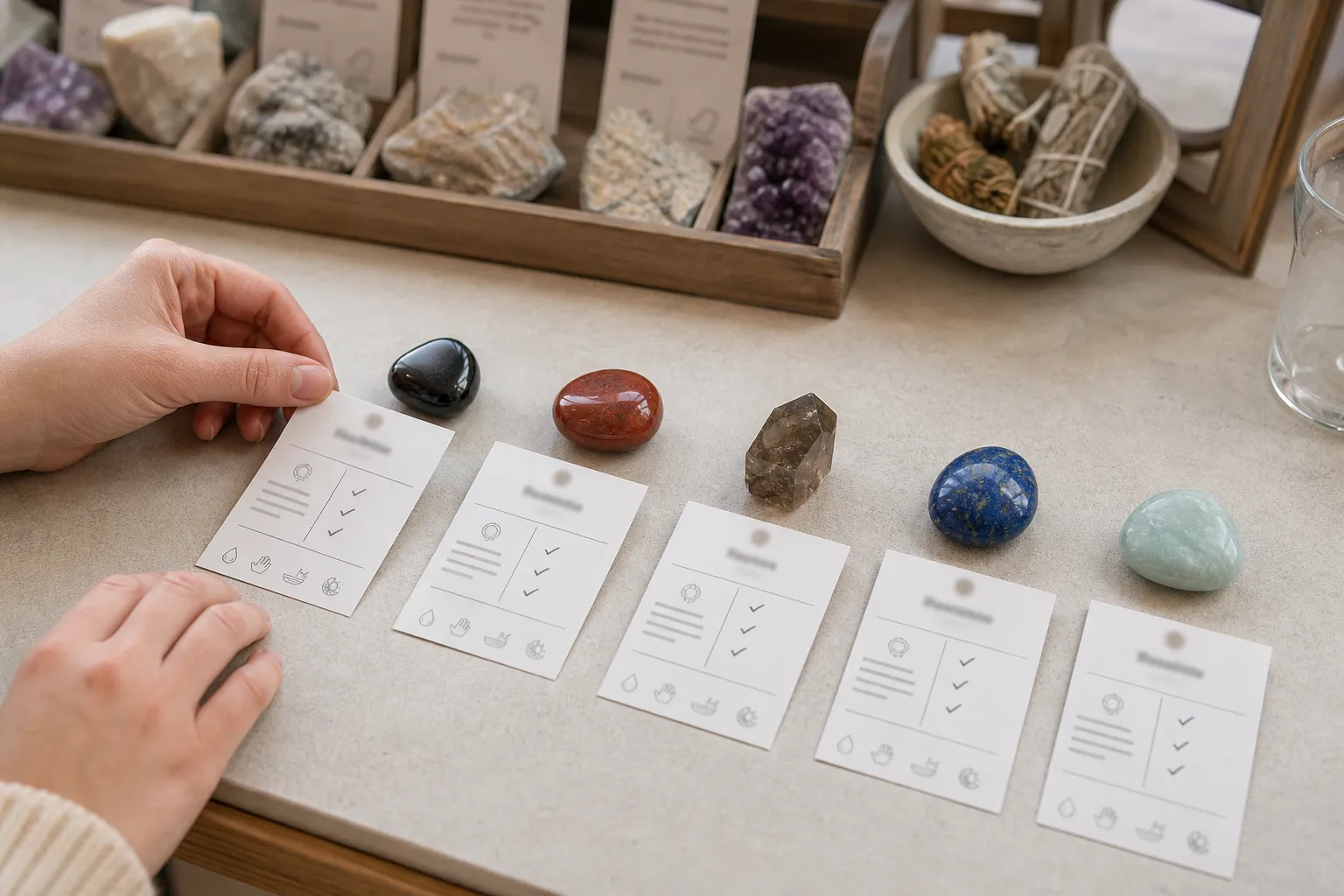
When you see a label or guide entry, read it in layers instead of accepting it as one blended statement.
- First, note the stone name and appearance. Is it red, black, brown, smoky, speckled, glossy, matte, banded, or translucent? These details help you compare stones and ask better identification questions.
- Second, note the chakra category. If it is called a root chakra stone, the label is probably linking it to foundation, steadiness, security, body awareness, or boundaries. That is the root chakra stone symbolism layer.
- Third, note the use suggestion. A guide may suggest carrying it, wearing it, placing it on a desk, or holding it during a personal practice. Treat those as optional ritual ideas, not requirements.
- Fourth, check the care advice. If the instructions say every stone can go in salt water or direct sun, pause. Care should be stone-specific. Look for information about hardness, porosity, coatings, dye, and light sensitivity before using any cleaning method.
- Finally, ask whether the wording respects the difference between stone identity versus meaning. A careful source will let symbolism remain symbolism. It will not make the stone sound like an official tool for changing health outcomes.
Quick answers
Does a root chakra meaning describe the mineral itself?
No. It describes the symbolic or practice-based meaning attached to the stone. The mineral identity, appearance, and care needs should be checked separately.
Why are many root chakra stones red, black, or brown?
Those colors are commonly used as symbolic cues in chakra and crystal-practice systems. They often suggest foundation, earthiness, steadiness, or protection-like language in retail descriptions, but color alone does not define the stone’s identity.
Can two very different stones have the same root chakra meaning?
Yes. A red jasper, a garnet, a smoky quartz, and a black obsidian piece may all appear in root chakra categories even though they are materially different. The shared category comes from interpretation, not from one mineral family.
The useful takeaway
A root chakra stone meaning describes why a stone is placed in a root chakra context and what symbolic themes people attach to it. It may point to grounding and steadiness symbolism, security and boundaries themes, or a personal reminder of foundation and routine.
It does not describe a mineral category, a scientific property, or a guaranteed result. The stone’s identity, appearance, and care needs should be checked separately from its chakra meaning.
For a beginner, the cleanest reading is this: the stone is the object; the root chakra meaning is the interpretation placed around it.