
Personal ritual context
What Does It Mean to Carry a Root Chakra Stone During the Day
Carrying a root chakra stone during the day usually means keeping a small stone or wearable piece nearby as a personal symbol, ritual object, or reminder. In chakra and crystal-practice communities, someone may carry a pocket stone, place one in a pouch, or wear it as jewelry while moving through ordinary activities.
The meaning comes from the person's practice and interpretation. It does not come from a mineral category or from an established physical effect. A stone's color, texture, name, and material identity can be observed separately from the chakra meaning assigned to it.
upward
Start with the broader guide
Use the broader guide first if you need the full scope before this page.
The Everyday Meaning of a Root Chakra Pocket Stone
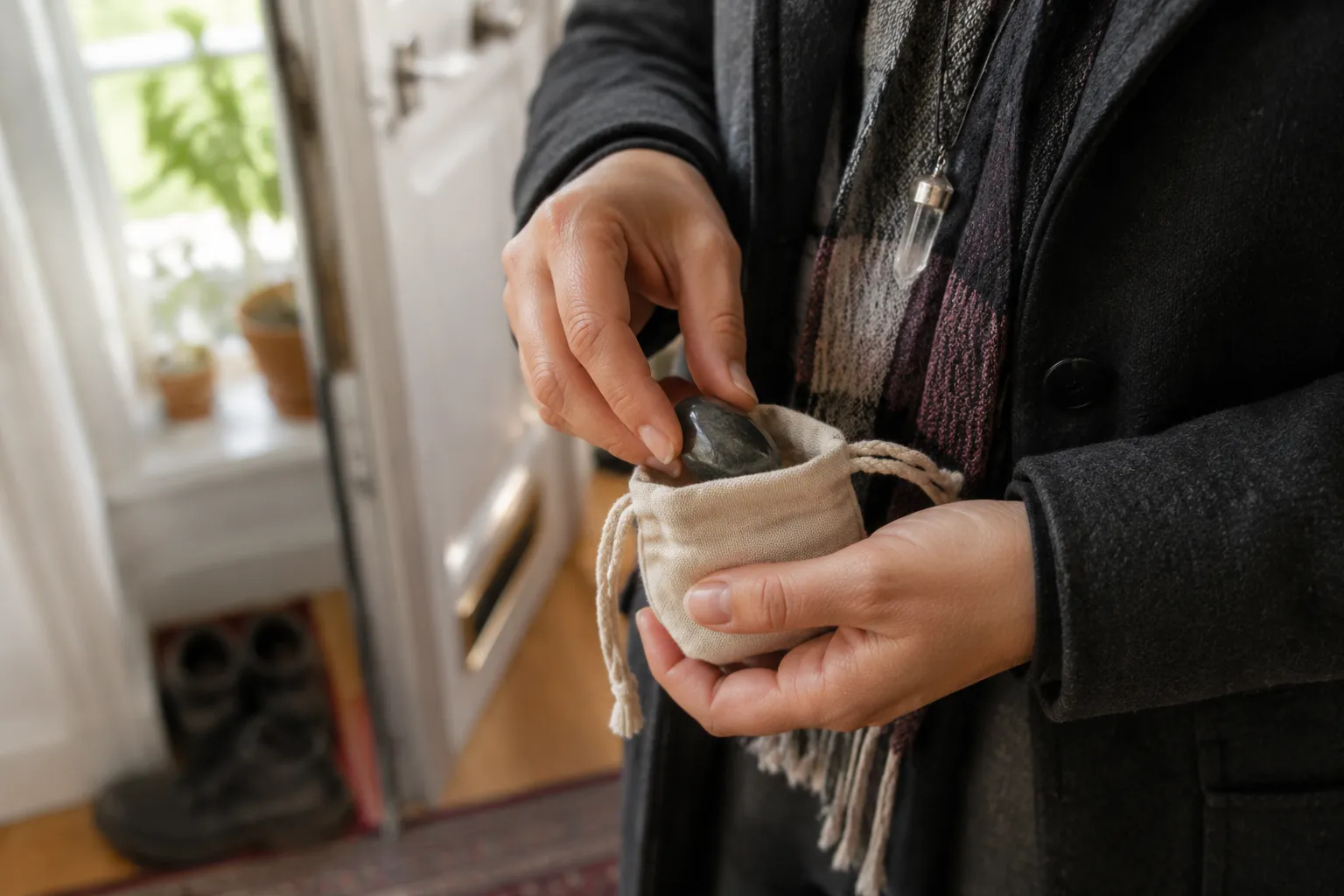
A daytime crystal carry can be simple and private. You might place a loose stone in a trouser pocket, coat pocket, desk pouch, or bag. Someone else may choose a pendant or bracelet so the piece stays visible or easy to touch.
Within a personal ritual, the object may serve as:
- A reminder of an intention chosen for the day
- A physical item connected with a familiar chakra practice
- A quiet pause point during a routine
- A way to mark the beginning or end of a ritual
- A meaningful object selected for its color, surface, or personal association
There is no single required method. Some people hold the stone briefly before leaving home. Others carry it without touching it. The routine might be deliberate, such as placing a particular piece in a pouch each morning, or incidental, such as wearing a pendant because it has sentimental value.
The symbolic meaning of carrying a stone is shaped by the person carrying it. One practitioner may connect a root chakra stone with themes such as steadiness, home, routine, or physical presence in a broad spiritual sense. Another may choose the same stone because they like its color or received it as a gift. The stone itself cannot reveal which interpretation applies.
Why Blue-Green Stones May Appear in a Root Chakra Frame
Beginners sometimes expect every root chakra stone to share one color. Chakra terminology varies across religious, traditional, modern, and commercial contexts, however. “Root chakra stone” is a practice and market term, not a mineral classification. Color alone does not establish a stone's chakra association.
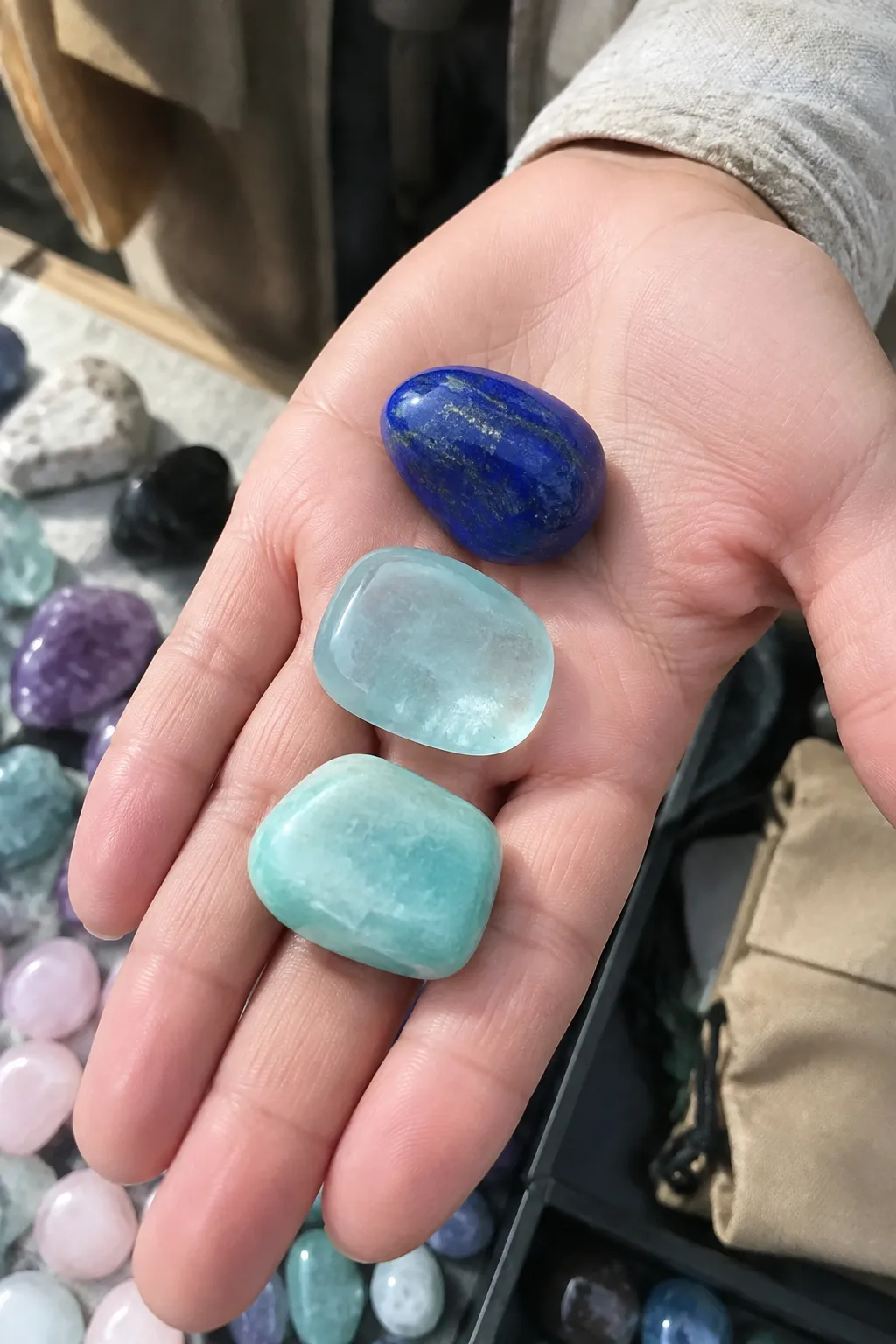
For that reason, selected blue-green crystals may appear in a root chakra-themed routine even when they are commonly discussed in connection with other color associations. A practitioner may choose lapis lazuli, with its deep blue appearance and often contrasting flecks; pale blue-green aquamarine; or green-blue amazonite. The choice may reflect a personal interpretation, a particular school of practice, or the way a community or retailer describes the stone.
The visible material remains a separate question. Lapis lazuli, aquamarine, and amazonite have different appearances and handling considerations. Those qualities help identify the object being carried, but they do not establish its symbolic meaning or demonstrate an effect from wearing or holding it.
Britannica's overview of chakra terminology can help place the word within a wider historical and religious context. Modern crystal practices may use related language in more individualized ways. It is therefore more precise to attribute a meaning to a tradition, practitioner group, or personal ritual instead of presenting one interpretation as universal.
What Changes the Meaning During the Day?
The same stone can represent different things depending on how it is carried, the intention attached to it, and the setting. These variables affect the personal ritual context, not the stone's mineral identity.
A pocket stone
A pocket stone is discreet and easy to keep separate from keys, coins, or other hard objects. For some people, its meaning is connected with carrying it rather than handling it frequently. It may remain an unobtrusive reminder during work, travel, or time at home.
If you handle the piece, you can notice ordinary qualities such as its weight, smoothness, edges, temperature, and surface pattern. These are direct sensory observations. They are not evidence of a change in the body, emotions, or surroundings.
A stone in a pouch
A pouch can keep a small stone together with other personal ritual items. It may also reduce contact with objects in a bag or pocket. The routine of choosing the piece, placing it inside, and putting it away later can become part of the item's personal significance.
A fabric pouch does not make a stone more authentic or more closely connected with a particular chakra. It is a practical carrying and storage choice.
A wearable reminder
A pendant, bracelet, or other wearable piece makes the stone part of clothing or jewelry. Its meaning may be visible to the wearer, noticeable to other people, or entirely private.
Wearable use also changes the practical questions. The setting, fastening, surface finish, and contact with water, perfume, sweat, or other materials may matter more than they would for a stone kept in a pouch.
Care should be considered separately from symbolism. Lapis lazuli is a useful example because the Gemological Institute of America provides stone-specific care information for it. Advice for lapis lazuli should not automatically be applied to aquamarine, amazonite, or another material. When the care requirement matters, check information specific to the stone rather than assuming that all crystals can be cleaned or worn in the same way.
Common Misunderstandings About Carrying One
Carrying a root chakra stone can be meaningful without establishing anything beyond the act and the interpretation attached to it. The available material supports discussion of chakra terminology, mineral characteristics, and stone-specific care. It does not directly establish a measurable result from carrying a stone during the day.
A few distinctions help keep the answer clear:
- A stone's color is not evidence of a particular function.
- A mineral database describes material information; it does not confirm spiritual meanings.
- A care instruction explains how to handle a stone; it does not explain why someone carries it.
- A retail description is not the same as a cultural or mineral classification.
- One person's experience of meaning is not a universal result shared by every wearer.
This does not require dismissing personal ritual. You can say, “I carry this as a reminder connected with my root chakra practice.” That wording identifies the practice without presenting the stone as a source of a guaranteed physical, emotional, or energetic outcome.
The distinction is also useful when reading product descriptions. “Root chakra stone” may describe how an item is positioned within a particular market or community. It does not, by itself, tell you the material's identity, quality, origin, or suitability for a particular form of wear. Those details need to be considered independently.
A Grounded Way to Choose and Carry One
For a beginner, the most useful starting point is a clear reason for choosing the object rather than a promised result.
Ask yourself:
- Do I want a loose stone, a pouch item, or jewelry?
- Which visible qualities appeal to me: deep blue, green-blue, flecked, translucent, polished, or matte?
- Will the piece share space with keys, coins, or other objects that could mark its surface?
- Does the material have a particular care routine?
- What personal meaning am I assigning to it?
- Can I describe that meaning as a practice or reminder?
This keeps the choice practical. Lapis lazuli, aquamarine, and amazonite can all appear in a root chakra-themed setting, but they remain distinct materials with different appearances and handling considerations. The most suitable piece for a personal routine may be the one whose surface, color, size, or story fits your day, not the one paired with the strongest promotional wording.
Storage is part of the same decision. A loose stone may be kept in a soft pouch when it is not being carried. Jewelry can be stored so its chain, setting, or surface is not unnecessarily strained. These are ordinary object-care choices. They support continued handling, but they do not add spiritual authority to the item.
The Short Answer
What carrying a root chakra stone means depends on the personal or community practice behind it. During the day, a pocket stone, pouch item, or wearable piece may function as a symbolic reminder connected with an intention, routine, or chakra tradition.
Its color, texture, mineral identity, and care needs are observable matters. The chakra association is interpretive and belongs to a particular practice context. Choose a form that suits the material and your routine, and keep the symbolic meaning separate from medical, scientific, diagnostic, or guaranteed-effect language.